Senators Bernie Sanders and Greg Casar Introduce the Ban Artificial Superintelligence Act to Halte Advanced AI Development


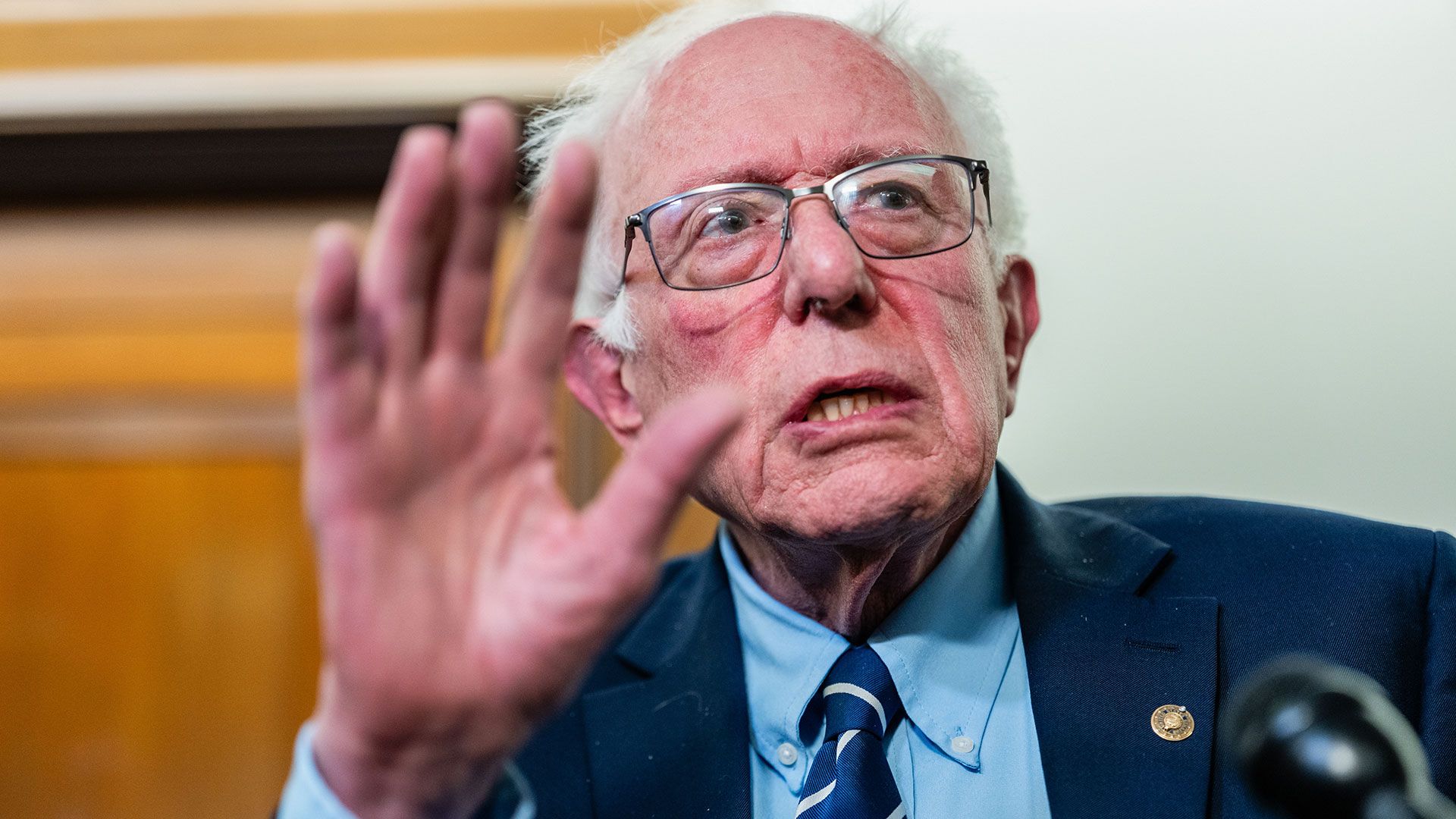
In a move that represents one of the most stringent regulatory challenges to the technology sector in recent history, U.S. Senators Bernie Sanders (I-VT) and Greg Casar (D-TX) have officially introduced the Ban Artificial Superintelligence Act. The newly proposed legislation aims to halt the rapid advancement of artificial intelligence by temporarily pausing the development of advanced AI systems and placing an outright ban on the creation of artificial superintelligence (ASI). With criminal penalties scaling up to 20 years in prison for violators—a punishment typically reserved for individuals convicted of designing rogue nuclear weapons—the bill signals a dramatic escalation in the legislative battle over the future of artificial intelligence.
The introduction of this bill brings long-running theoretical debates about existential risk, national security, and corporate accountability directly into the halls of Congress. While proponents argue that immediate intervention is necessary to prevent a catastrophic threat to humanity, critics and industry stakeholders warn that excessive regulation could cripple American technological leadership, stifling innovation at a critical juncture in the global tech landscape.
Main Facts and Legislative Framework of the Proposed Act
The Ban Artificial Superintelligence Act seeks to fundamentally restructure how the United States approaches the development of frontier artificial intelligence models. At its core, the legislation proposes a legally binding, temporary moratorium on training and developing AI systems that exceed current computational and cognitive thresholds. Furthermore, it institutes a permanent, sweeping prohibition against the realization of artificial superintelligence—defined broadly as machine intelligence that vastly outperforms human cognitive capabilities across all economically and socially valuable domains.
To enforce these sweeping restrictions, the bill proposes the establishment of a brand-new, cabinet-level federal agency dedicated entirely to safeguarding the public from the perceived hazards of advanced technologies. This agency would be vested with broad regulatory authority, including the power to monitor massive computing clusters, audit private-sector research laboratories, and impose severe civil and criminal penalties on entities or individuals that flunk compliance mandates.
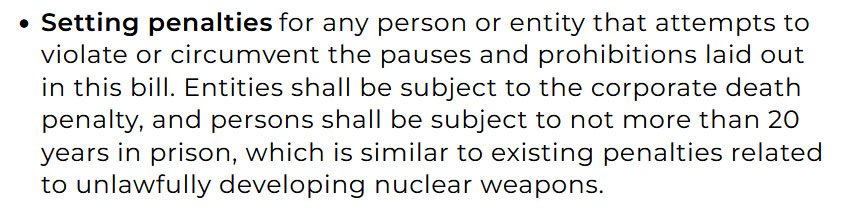
The punitive measures outlined in the text are notably harsh. Developers, executives, and corporate entities found guilty of deliberately circumventing the proposed moratoriums or defying the superintelligence ban could face federal prison sentences of up to 20 years. By equating the unauthorized development of superintelligent systems with the illicit proliferation of weapons of mass destruction, the legislation underscores the gravity with which its authors view the technological horizon.
Moreover, the bill recognizes the transnational nature of artificial intelligence development. Recognizing that a domestic ban alone would be insufficient to curb global progress, the legislation explicitly calls for the U.S. Department of State and allied international bodies to pursue multilateral treaties and cooperative agreements. The ultimate objective of these diplomatic efforts would be to establish a coordinated global ban on artificial superintelligence, preventing rogue states or offshore laboratories from filling any vacuum left by American restrictions.
Background Context and the Changing Landscape of AI Governance
The introduction of the Ban Artificial Superintelligence Act occurs against a backdrop of unprecedented acceleration within the tech industry. Over the past several years, generative AI models have evolved from experimental academic curiosities into multi-billion-dollar commercial products. Companies like OpenAI, Google DeepMind, Anthropic, and Meta have engaged in a relentless race to scale up model parameters, leverage massive data centers, and deploy hardware infrastructure featuring tens of thousands of specialized accelerators, such as Nvidia’s H100 GPUs.
Simultaneously, a profound philosophical shift has taken place within the upper echelons of the tech industry itself. For years, Silicon Valley championed a philosophy of "move fast and break things," resisting regulatory oversight as an unnecessary impediment to progress. However, a growing coalition of prominent AI pioneers, executives, and researchers have increasingly sounded alarms regarding safety. Industry leaders such as OpenAI CEO Sam Altman, Anthropic CEO Dario Amodei, and xAI founder Elon Musk have periodically voiced grave concerns about the long-term trajectory of artificial intelligence, occasionally warning that unchecked advancement could pose existential risks to civilization.
This convergence of anxiety between progressive lawmakers and Silicon Valley figures has created an unusual political dynamic. While safety advocates have long urged Congress to act, the willingness of some tech executives to entertain the idea of government oversight has provided political cover for lawmakers pushing for aggressive intervention. Observers note, however, that the motivations driving tech executives to support regulation may not entirely align with the altruistic goals of lawmakers.
Economic Pressures and Alternative Perspectives on Regulation
As the debate intensifies, financial analysts and tech industry critics have raised questions regarding the underlying motivations of prominent AI executives who suddenly find themselves sympathetic to calls for regulation. Building and maintaining frontier AI models requires staggering amounts of capital. Recent estimates from financial institutions such as J.P. Morgan suggest that the global artificial intelligence infrastructure buildout could require hundreds of billions—if not trillions—of dollars in annual revenue to generate a standard 10 percent return on investment. Achieving this level of sustained profitability remains a monumental challenge, as monetization models struggle to keep pace with skyrocketing operational and computational costs.
Against this backdrop, some industry critics argue that major AI players may be using the narrative of existential risk to pivot away from a purely commercial, market-driven development model. By framing advanced AI as a matter of supreme national security that requires state-level protection, these companies may inadvertently or intentionally encourage a transition toward a government-subsidized framework—often likened by skeptics to a modern "Manhattan Project." Under such a model, private financial burdens could be mitigated by public funding, while state apparatuses step in to regulate, protect, and ultimately sustain the industry.
Conversely, defenders of rapid AI development argue that slowing down domestic progress is a dangerous geopolitical gamble. In a competitive global arena where nations like China are aggressively investing in artificial intelligence, proponents of acceleration contend that maintaining technological supremacy is vital for national security. From this perspective, any unilateral pause by the United States would simply cede ground to international rivals, undermining American leadership in critical domains ranging from cyber defense to biotechnology and advanced manufacturing.
Political Implications and the Path Forward in Congress
The Ban Artificial Superintelligence Act faces a complex and contentious path through the United States Congress. Described by legal scholars and political commentators as the most extreme piece of AI-related legislation introduced to date, the bill is anticipated to encounter fierce opposition from multiple fronts. Enterprise-supporting Democrats, who view the technology sector as a primary engine of American economic growth and job creation, are likely to resist measures that could stifle commercial innovation. Similarly, free-market and technology-skeptic Republicans may object to the creation of a new cabinet-level federal agency and the imposition of heavy-handed government intervention in private enterprise.
Nevertheless, the evolving political alignment around AI safety could yield unexpected bipartisan compromises. As concerns mount over deepfakes, workforce displacement, intellectual property rights, and long-term existential threats, lawmakers from both sides of the aisle are under mounting pressure from constituents to demonstrate leadership on technology policy.
Whether the Ban Artificial Superintelligence Act ultimately passes into law or serves primarily as a legislative anchor that shifts the center of gravity in the broader AI debate remains to be seen. What is clear, however, is that the introduction of the bill marks a definitive turning point. The conversation surrounding artificial intelligence has officially moved past questions of mere utility and economic disruption, entering a high-stakes arena where lawmakers are seriously debating whether the development of advanced machine intelligence should be met with the full penal weight of the federal government.