Creative XF1 Desktop Stereo Speaker System Review: High-Resolution Audio Meets Compact Desktop Engineering

The desktop audio market has long faced a persistent compromise: consumers must either settle for flat, lifeless integrated monitor speakers or invest in bulky bookshelf setups that overwhelm limited workspace real estate. Entering this competitive arena is the Creative XF1 desktop stereo speaker system, retailing at $179 in the United States, £139 in the United Kingdom, and AU$339 in Australia. Positioned as a versatile audio solution for modern professionals, gamers, and audiophiles alike, the XF1 attempts to bridge the gap between high-resolution acoustic fidelity and compact, near-field ergonomics.
With a total power output of 72 watts distributed across a bi-amped architecture, Bluetooth 6.0 connectivity supporting high-end codecs like LDAC, and a native USB-C digital-to-analog converter (DAC) capable of handling 24-bit/96kHz files, the system packs considerable technical capability into a modest footprint. However, achieving high-end sound reproduction at a sub-$200 price point inevitably requires careful engineering trade-offs. This comprehensive review examines the design philosophy, audio performance, feature set, and market positioning of the Creative XF1 to determine its viability for daily desktop deployment.
Design, Build Quality, and Ergonomics
Measuring 191 x 100 x 155 mm (HxWxD), the Creative XF1 has been meticulously engineered for environments where desk space is at a premium. Constructed primarily from Medium-Density Fiberboard (MDF) with smooth, rounded horizontal edges and a tactile soft-touch matte finish, the cabinets project an aesthetic sophistication typically reserved for hardware costing two to three times as much. Available in understated monochrome finishes of matte black and clean white, the units integrate seamlessly into professional office setups and minimalist gaming rigs alike.
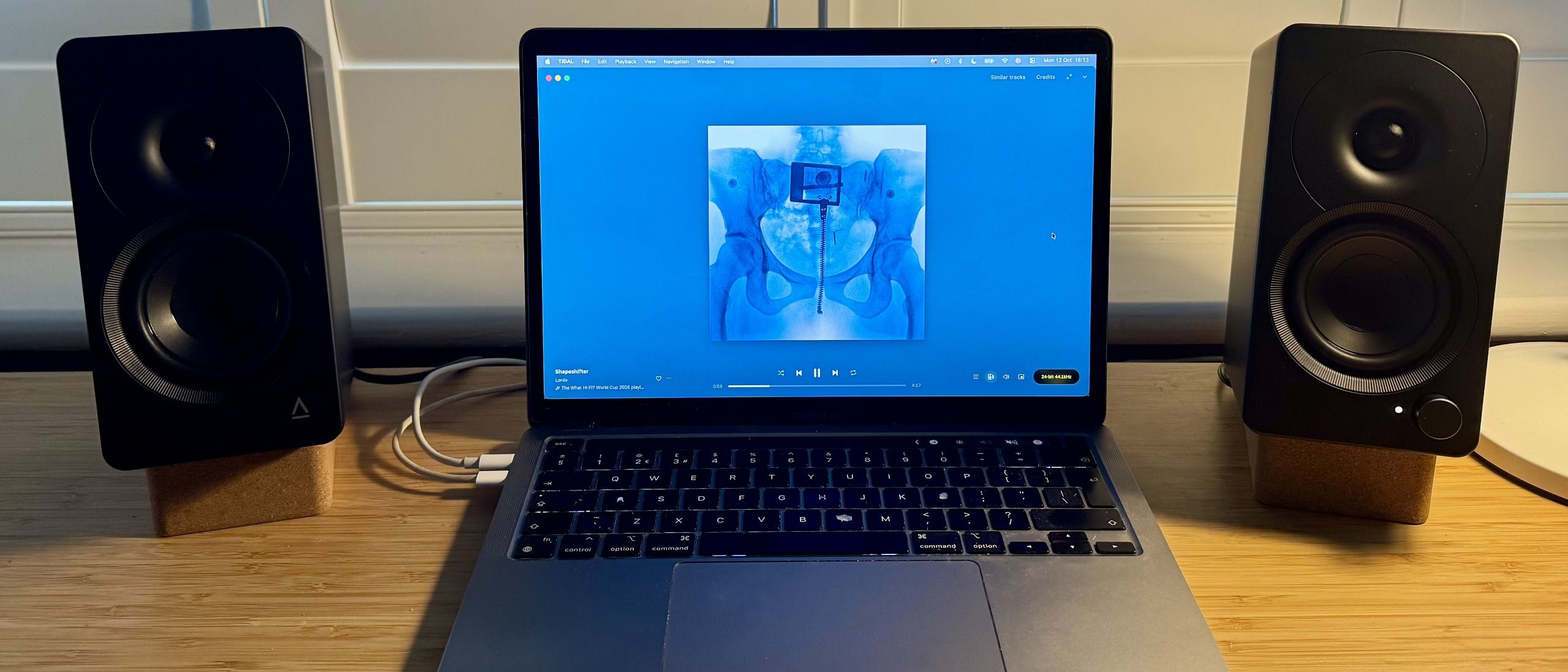
A standout physical inclusion is the pair of detachable cork acoustic wedges. Because standard computer desks typically position audio output below ear level, these angled stands elevate the speakers by 15 degrees, directing the sound profile straight toward the listener’s ears rather than their torso. While users must manually secure the cork stands using the provided hardware, the acoustic and ergonomic benefits are immediately apparent during near-field listening sessions.
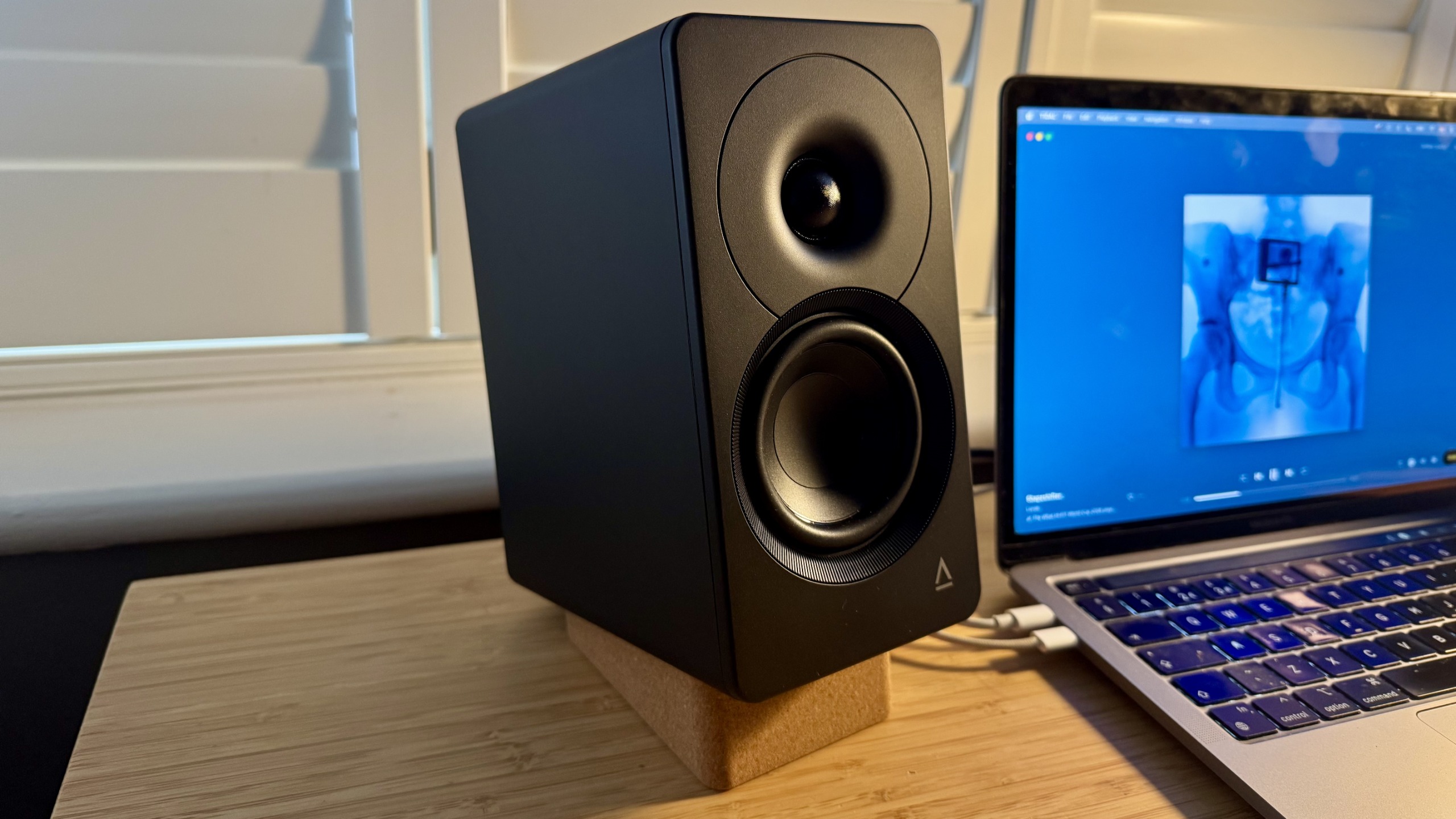
The physical architecture follows a master-slave configuration. The right channel houses the primary control circuitry, power supply input, and all physical connectivity ports, while a single four-pin interconnect cable delivers both power and audio data to the left speaker. This design choice limits layout flexibility—users cannot swap the channel orientations—but it successfully minimizes cable clutter on the desktop. A single tactile rotary push-dial on the front baffle of the right speaker handles power, volume adjustments, and input source selection, accompanied by a subtle status LED.
Connectivity and Technical Specifications
Despite its accessible pricing tier, the Creative XF1 boasts an impressive array of wired and wireless connectivity options. On the rear panel of the master right speaker, users will find a USB-C port for direct digital connection to laptops, PCs, and compatible smartphones, enabling native playback of high-resolution digital audio files up to 24-bit/96kHz. For legacy hardware, a 3.5mm analog auxiliary input is readily available, alongside a dedicated subwoofer pre-out for users looking to expand the low-frequency footprint of the system.
Wireless streaming is handled via Bluetooth 6.0. Crucially for audiophiles, Creative has included support for Sony’s LDAC codec alongside standard SBC and AAC options, allowing for high-bitrate wireless streaming from compatible mobile devices and digital audio players (DAPs). An energy-saving toggle switch on the rear panel allows the system to automatically enter a low-power standby mode when inactive, adhering to modern energy efficiency standards.
Internally, the XF1 utilizes a dedicated Class D amplifier block for each individual driver. Each 19mm soft-dome tweeter is powered by 10 watts, while each 76mm mid/bass driver—designed using finite element analysis to minimize harmonic distortion—receives 26 watts. This bi-amped arrangement yields a combined total of 72 watts of system power. Combined with rear-firing bass reflex ports positioned near the top of each cabinet, the system delivers a stated frequency response ranging from 55Hz to 40kHz.
Acoustic Performance and Sound Quality
When evaluated in a near-field desktop environment, the Creative XF1 punches well above its physical weight class. Operating volumes rarely need to be pushed to their limits, yet the speakers retain impressive dynamic headroom, maintaining composure and tonal balance during sudden volume shifts in movies, games, or dynamic music tracks.
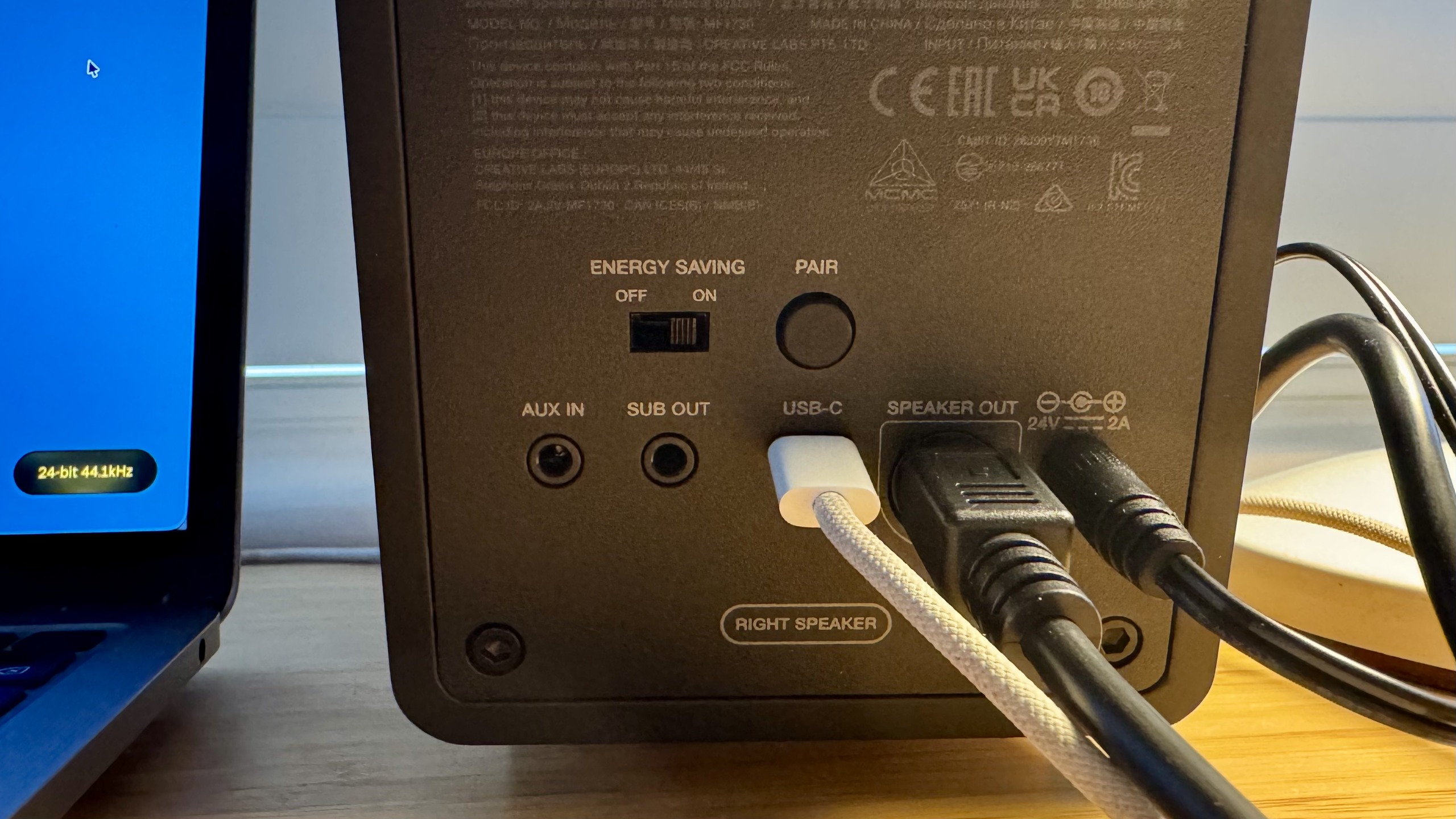
When tethered via USB-C to a high-resolution source streaming a 24-bit/44.1kHz FLAC file—such as Lorde’s Shapeshifter—the XF1 generates a surprisingly expansive and open soundstage. Instrument separation and spatial focus remain remarkably distinct, even when the listener is seated mere inches from the baffles. Midrange communication is a particular strong suit; subtle tonal variations, textures, and vocal timbres are rendered with distinctive character and clarity, lending a human, engaging quality to spoken word and vocal-heavy music.
The high frequencies, driven by the soft-dome tweeters, possess a lively and energetic presentation. While the overall tonal balance is not strictly neutral—carrying a slight warmth designed to counteract listener fatigue—the upper registers occasionally lean toward enthusiasm. Fortunately, this is easily managed via the companion application.
Low-frequency reproduction, however, represents the system’s primary acoustic compromise. While the 76mm mid/bass drivers strike with admirable physical weight, bass control falls short of the precision found in the midrange and treble. The lower end can occasionally sound somewhat one-note and heavy, lacking the fine textural variation required for intricate rhythmic pacing. Transitioning to wireless Bluetooth streaming introduces a minor degradation in micro-detail and stereo focus, though the overall presentation remains remarkably stable and cohesive for casual listening.
Software Integration and Customization
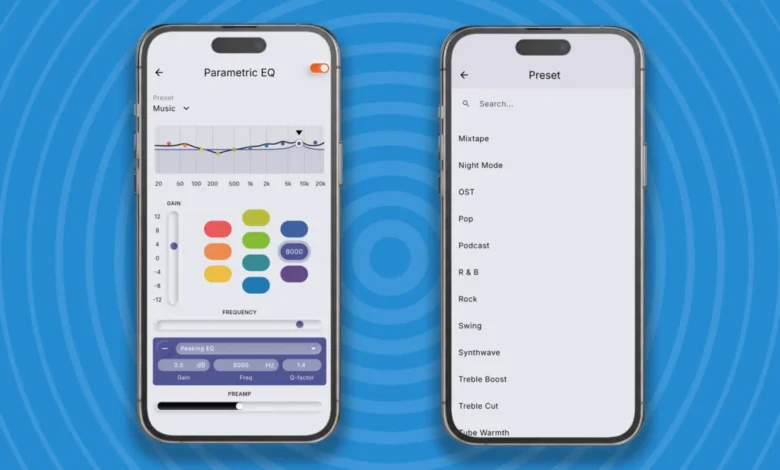
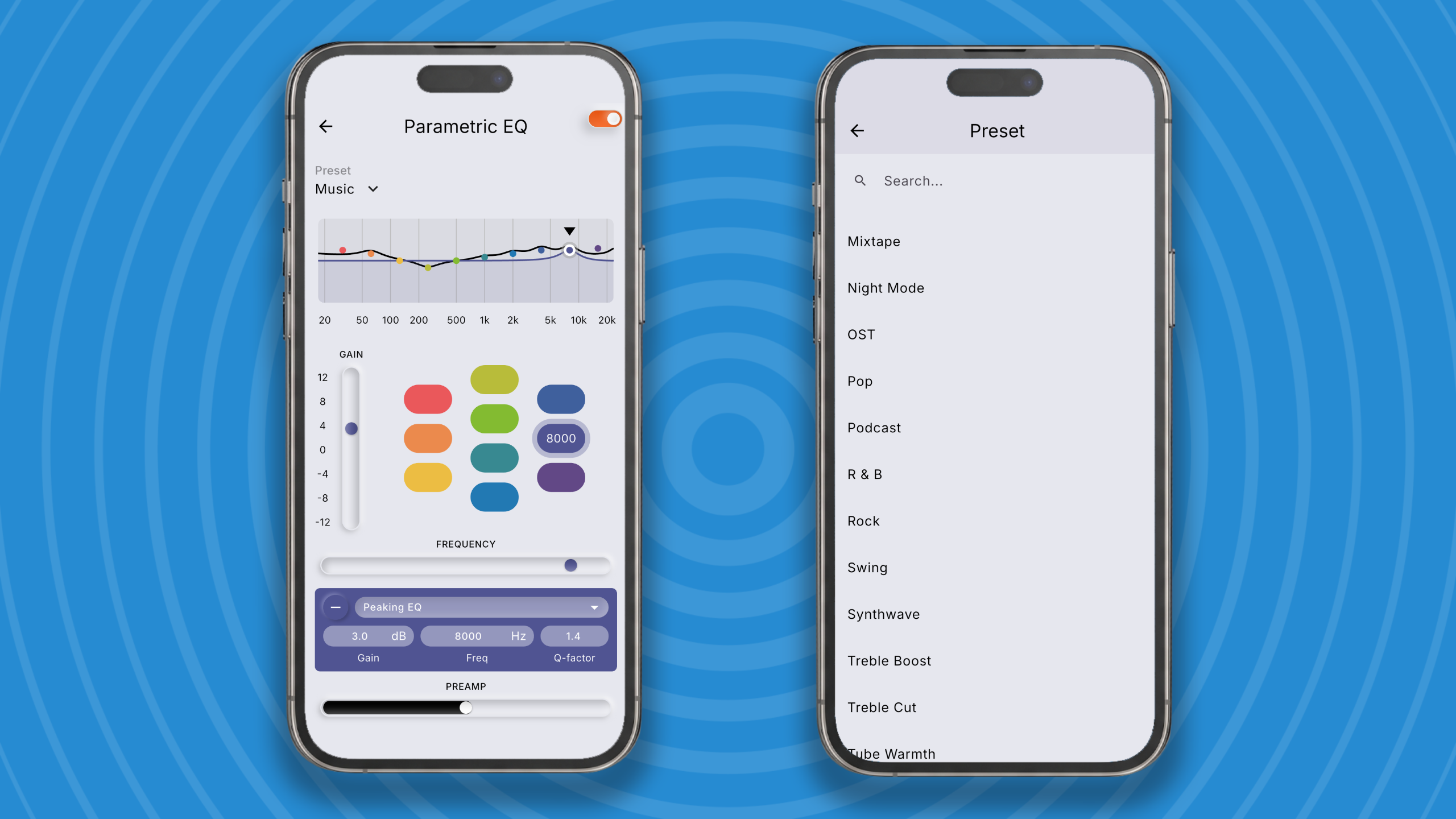
The Creative XF1 is supported by the Creative Nexus companion mobile application. While the app does not feature native media playback controls, it serves as an essential hub for system maintenance, allowing users to install firmware updates and optimize the acoustic profile based on physical placement.
The application’s crown jewel is a comprehensive 10-band Parametric Equalizer (PEQ). This tool provides an extraordinary degree of user input over the final sound signature. Users can craft custom EQ curves from scratch or choose from a vast library of presets—some engineered by Creative’s acoustic team and others uploaded by the user community. Given the XF1’s inherent warmth and singular low-frequency response, the PEQ proves invaluable for tailoring the sound output to specific musical genres or personal preferences.
Market Positioning and Competitive Landscape
Priced at $179 / £139 / AU$339, the Creative XF1 occupies a unique vacuum in the audio market. Traditional bookshelf hi-fi speakers with comparable features typically demand significantly higher investments. For instance, boutique stereo solutions like the Ruark MR1 series command more than double the price point.
The most direct competitor in the budget space is the Logitech Z407, which retails for slightly less and includes a dedicated standalone subwoofer for enhanced low-frequency extension. While the Logitech system provides greater physical bass presence out of the box, it cannot match the structural poise, high-resolution USB-C DAC integration, and extensive EQ customization offered by the Creative XF1.
Final Verdict and Buying Recommendations
The Creative XF1 successfully redefines expectations for sub-$200 desktop audio systems. It is ideally suited for consumers who possess high-resolution digital music sources, appreciate meticulous build quality, and desire extensive sound customization through parametric equalization. Furthermore, its compact footprint and clever acoustic isolation wedges make it a practical addition to cluttered workspaces.
Conversely, prospective buyers seeking a completely wireless battery-powered setup, uncolored studio-neutral sound reproduction, or agile, highly detailed low-frequency bass response may want to explore alternative configurations or budget for an external subwoofer utilizing the XF1’s pre-out port. For the vast majority of desktop users looking to upgrade from integrated monitor audio, however, the Creative XF1 delivers exceptional value, robust connectivity, and engaging acoustic performance.