BMW iX3 Takes On BMW X3 M50 in Real-World Range Test from Sydney to Byron Bay

Range anxiety continues to be one of the most prominent psychological hurdles facing prospective electric vehicle (EV) buyers worldwide. Despite rapid advancements in battery technology, charging infrastructure, and thermal efficiency, the ghost of running out of power on a desolate stretch of highway remains deeply ingrained in the public consciousness. Because internal combustion engine (ICE) vehicles have dominated personal transportation for more than a century, consumers naturally use gas-powered range as the baseline metric for automotive utility and reliability.
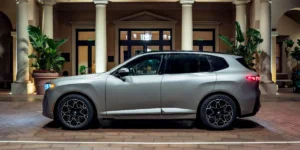
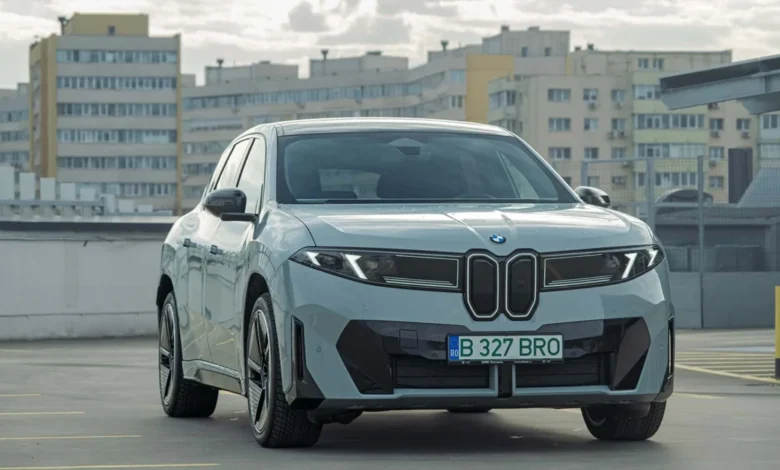
Yet, the automotive landscape is shifting at a remarkable pace. Modern battery-electric vehicles are rapidly closing the distance gap, frequently matching or even surpassing the real-world mileage capabilities of their petroleum-drinking counterparts. To evaluate how these two distinct powertrain philosophies handle identical driving conditions over vast distances, the automotive journalism team at Chasing Cars conducted a rigorous comparative real-world range test. Pitting an all-electric BMW iX3 50 xDrive against its high-performance, piston-powered sibling—the BMW X3 M50 xDrive—the test aimed to determine whether an advanced EV could genuinely keep pace with a traditional combustion vehicle on a grueling, multi-hundred-mile coastal road trip in Australia.
The Route, Parameters, and Testing Methodology
To ensure maximum realism and relevance for everyday drivers, the test was designed to replicate a standard, unassisted long-distance road trip rather than an artificial, closed-course hypermiling exercise. The route spanned 459.8 miles (740 kilometers) of typical Australian asphalt, beginning in the bustling metropolitan environment of Sydney and terminating in the scenic coastal haven of Byron Bay.
Both vehicles were subjected to identical operational protocols. The drivers utilized normal, unrestricted public highways and regional roads, adhering strictly to local posted speed limits without employing slow-speed tactics that might skew efficiency data. To optimize energy usage fairly, both the all-electric iX3 and the turbocharged X3 M50 were locked into their respective "Eco" driving modes. Furthermore, the climate control systems in both cabins were adjusted to the most energy-efficient settings possible while maintaining occupant comfort. Drivers were permitted to make standard stops along the route for personal necessities, mirroring the organic rhythm of a typical family getaway.
Initial Projections and Vehicle Specifications
At the departure point in Sydney, the pre-trip telemetry figures established an intriguing baseline. The battery-electric BMW iX3 50 xDrive displayed an initial estimated battery range of 430 miles (692 kilometers). At a glance, this indicated that the EV might fall slightly short of completing the 459.8-mile journey on a single charge without drafting or conservative driving tricks.

Conversely, the petroleum-powered BMW X3 M50 xDrive displayed an estimated range of 487 miles (784 kilometers) just 30 kilometers into the drive, immediately demonstrating a significant baseline advantage. However, automotive efficiency is rarely static. As the vehicles settled into highway cruising speeds, early efficiency metrics recorded by the iX3 suggested a surprising plot twist. Mathematical extrapolations based on the EV’s initial watt-hour-per-mile consumption indicated that it might actually complete the voyage with a comfortable buffer of kilowatt-hours remaining in its high-voltage battery pack.
The Engineering Under the Hood: Comparing Power and Thirst
The inclusion of the X3 M50 in this test provides a fascinating study in contrasts. Rather than pitting the EV against a base-model, fuel-sipping four-cylinder variant designed purely for economy, BMW’s performance division supplied the heaviest hitter currently occupying the standard X3 lineup—short of a dedicated, full-fat X3 M model.
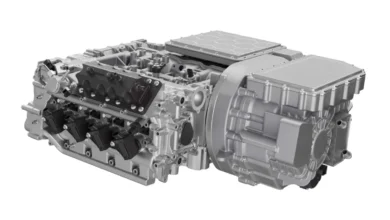
Under the hood of the X3 M50 resides a 3.0-liter turbocharged inline-six engine paired with a 48-volt mild-hybrid system. This aggressive powertrain pumps out a formidable 393 horsepower and 428 lb-ft of torque. Naturally, this makes it the thirstiest iteration of the standard X3 family, engineered to prioritize dynamic responsiveness and straight-line propulsion over hyper-efficient fuel consumption.
Yet, the electric challenger does not back down when it comes to raw output. The BMW iX3 M50 xDrive serves up an even more potent punch, generating 463 horsepower and 476 lb-ft of instant torque. Delivering high performance through dual electric motors while simultaneously managing thermal loads and battery degradation over hundreds of miles represents a monumental engineering feat. The juxtaposition of these two powertrains highlights a modern paradox: the high-performance EV matches or exceeds the muscle of its fuel-fed counterpart while relying entirely on chemical energy stored in lithium cells rather than liquid fossil fuels.
Final Results: The Finish Line in Sight
As the two BMW SUVs neared the conclusion of their grueling 740-kilometer journey, the real-world data painted a picture of two remarkably capable machines.
The all-electric BMW iX3 performed extraordinarily well, defying both conservative initial estimates and official standards. By the time the vehicle finally exhausted its battery reserves, it had traveled an impressive 464 miles (747 kilometers) on a single charge. This figure drastically exceeded its official EPA-rated range of 434 miles, showcasing the tangible benefits of favorable ambient temperatures, efficient vehicle design, and intelligent powertrain management. In practical terms, the iX3 fell a mere 14.2 miles (23 kilometers) short of reaching the ultimate destination of Byron Bay without stopping.

Meanwhile, the petrol-powered BMW X3 M50 successfully completed the entire route without breaking a sweat. More notably, when the X3 M50 pulled into Byron Bay, its fuel gauge and onboard computer confirmed that it still retained a staggering 206 miles (332 kilometers) of remaining range in its fuel tank.
Broader Implications for the Automotive Market
On paper, the results crown the gasoline-powered BMW X3 M50 as the definitive winner of this long-distance challenge, proving that liquid fuel retains a density advantage for sheer uninterrupted touring distance. However, viewing this test purely through the lens of a win-loss binary misses the broader, more significant implication for the electric vehicle segment.
The ability of a mainstream battery-electric SUV like the iX3 to traverse nearly 465 miles on a single charge represents a watershed moment for the industry. Historically, early electric vehicles struggled to break the 200-mile barrier without requiring multiple charging stops on a regional road trip. Achieving nearly 470 miles of real-world highway driving places the iX3 in an elite tier of long-range EVs that can comfortably cover distances previously reserved strictly for diesel and gasoline engines.
Furthermore, industry analysts note that while internal combustion vehicles still hold the crown for absolute convenience on ultra-long continental drives, the frequency of human necessity—such as rest stops, meal breaks, and driver fatigue—frequently aligns with the charging windows required by modern high-capacity EVs. Fast-charging technology capable of replenishing hundreds of miles of range in under twenty minutes means that a minor charging pause hardly disrupts a modern road trip itinerary.
Conclusion and Industry Outlook
The Chasing Cars comparative test between the BMW iX3 and the BMW X3 M50 xDrive illustrates that while internal combustion engines still possess a distinct advantage in total onboard energy storage, the performance gap is narrowing faster than many skeptics anticipated.
As automakers continue to refine solid-state battery chemistry, aerodynamic efficiency, and power electronics, the traditional arguments against electric vehicle adoption are steadily losing their footing. For the everyday consumer considering a transition away from fossil fuels, tests like this confirm that range anxiety is increasingly becoming a relic of the past—replaced by a new era of electric capability where long-distance touring is not just possible, but genuinely practical.