Rivian Quietly Turns Its Electric Delivery Vans Into a High-Revenue Powerhouse Amid Surging Amazon Demand

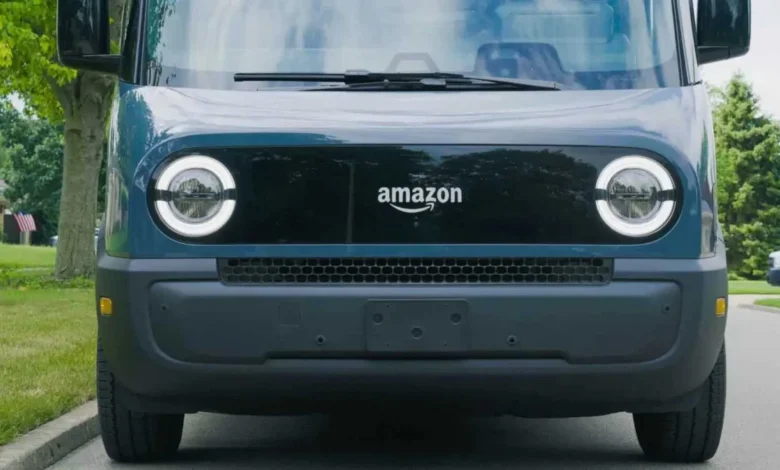
While Rivian Automotive has captured widespread consumer and media attention with its newly launched R2 crossover—a vehicle designed to challenge the dominant Tesla Model Y and accelerate the company’s push toward profitability—a far quieter revolution is taking place within its commercial division. The unassuming, bug-eyed Electric Delivery Van (EDV), commonly seen navigating neighborhood streets on last-mile delivery routes for Amazon, has quietly transformed into a serious revenue engine and a cornerstone of the California-based EV startup’s financial stabilization strategy.
During a recent earnings call, Rivian founder and Chief Executive Officer RJ Scaringe highlighted a notable upward shift in corporate procurement. "This year we have seen a significant step up in the level of demand from Amazon," Scaringe told analysts and investors. He attributed the accelerated adoption to the tangible economic benefits of fleet electrification, driven by lower ongoing maintenance burdens associated with electric vehicles and the consistently high cost of traditional fossil fuels, particularly diesel.
Financial disclosures reinforce Scaringe’s remarks. Although Rivian does not explicitly itemize precise delivery volumes across its diverse product portfolio, corporate financial reports reveal a booming commercial vehicle segment. In the third quarter alone, retail and logistics giant Amazon remitted $596 million to Rivian—surpassing the total payments made during the first three quarters of the previous year combined. Furthermore, Rivian has booked an impressive $1.6 billion in revenue from Amazon year-to-date, almost entirely stemming from EDV acquisitions. This figure represents a nearly threefold increase compared to the same timeframe in the prior fiscal year, solidifying the commercial van division as an indispensable pillar of Rivian’s broader financial recovery.
Navigating a Shifting Competitive Landscape
Rivian’s commercial success is unfolding against a backdrop of widespread contraction and strategic retreat among legacy automakers and rival startups within the medium-duty electric commercial vehicle sector. Competitors attempting to capture a share of the burgeoning commercial EV market have faced considerable operational headwinds, faltering sales, or cancellations.
Ford Motor Company, for instance, has recorded fewer than 700 sales of its E-Transit electric cargo vans, marking an 85% year-over-year decline for the corresponding period. Compounding these struggles, Ford elected to scrap development of its planned next-generation electric van architecture. Similarly, General Motors dealt a significant blow to the segment late last year by entirely terminating production of its BrightDrop electric delivery van line, effectively clearing the competitive field for dedicated, agile EV manufacturers.
Industry experts emphasize that the current trajectory of commercial fleet electrification in North America is being defined almost exclusively by pure-play electric vehicle companies. Ray Minjares, who oversees the heavy-duty vehicles program at the International Council on Clean Transportation, noted that market dynamics are heavily skewed toward specialized manufacturers. According to Minjares, Rivian commands a leading position within the medium-duty electric delivery space, while other specialized players like Tesla make inroads in long-haul freight with the Tesla Semi, and startups such as Harbinger Motors secure substantial fleet contracts, including a recent agreement to supply 2,000 electric trucks to FedEx across the United States and Canada.

Strategic Expansion and Product Evolution
Recognizing the immense potential of its commercial architecture, Rivian is actively scaling its operational footprint and diversifying its customer base. Last year, the company officially opened its fleet order books to corporate entities beyond its foundational partner, Amazon, establishing a starting price of $79,900 for the more compact variant of its commercial vehicle lineup.
To capture a broader share of the logistics market, Rivian announced the rollout of two specialized EDV variants tailored for challenging rural delivery routes. These new configurations address previous operational limitations by incorporating an all-wheel-drive system for adverse weather and unpaved terrain, alongside an upgraded battery pack that extends vehicle range by approximately 30%.
Speculation regarding additional high-profile enterprise partnerships has also intensified. Rumors swirled across logistics and automotive circles this week after a photograph circulated widely online depicting a Rivian EDV outfitted in Walmart livery aboard a commercial transport truck. While Rivian executives declined to explicitly confirm or deny any direct agreement with Walmart during the earnings call, Scaringe acknowledged that ongoing dialogues are actively underway with multiple prospective fleet customers.
"We do see other commercial operators, as they start to really look at ways to drive more efficiency into the business, starting to look at the EDV," Scaringe stated. "And we’re excited for those potential future customers on this program as well."
Financial Implications and Future Outlook
The sustained acceleration of EDV production and delivery arrives at a critical juncture for Rivian. As the company continues pouring capital into scaling production of the consumer-focused R2 crossover at its manufacturing facility in Normal, Illinois—and preparing for future assembly lines—the predictable, high-volume cash flow generated by commercial contracts provides vital financial ballast.
Amazon’s decision to double down on its fleet electrification commitments, spurred by lower structural operating costs and predictable maintenance schedules, validates Rivian’s early bet on commercial-grade electric architecture. By pairing its consumer-facing passenger vehicles with a resilient, highly sought-after commercial arm, Rivian is carving out a distinct dual-track business model.
As regulatory pressures mount and corporations face increasing scrutiny regarding their carbon footprints, the economic advantages of electric delivery vans appear poised to accelerate fleet turnover. With legacy competitors retreating and pure-play EV manufacturers solidifying their market dominance, Rivian’s humble delivery van has quietly positioned itself not just as a familiar neighborhood sight, but as the foundational engine driving the company toward long-term viability and market leadership.