Putin Says He Is in Close Contact With Elon Musk Regarding Russia’s Starlink Competitor

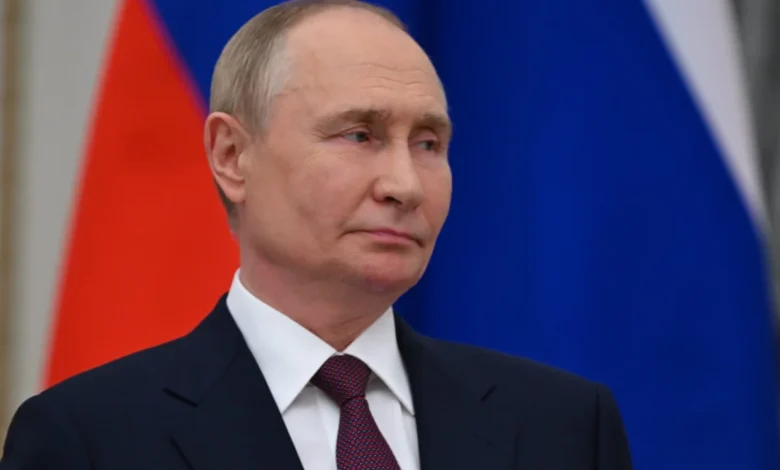
Russian President Vladimir Putin revealed during the Russia-Africa Summit that he and SpaceX Chief Executive Officer Elon Musk are maintaining close lines of communication concerning "Rassvet," Russia’s burgeoning domestic alternative to Starlink. The announcement, delivered on Wednesday, underscores an unexpected intersection between Moscow’s geopolitical ambitions and the commercial space industry. Praising the billionaire entrepreneur as "truly a genius," Putin highlighted the vast disparity between SpaceX’s orbital dominance—boasting a constellation exceeding 5,000 active internet satellites—and Russia’s nascent steps in developing its own low-Earth orbit (LEO) broadband infrastructure.
This burgeoning dialogue arrives at a particularly sensitive juncture for international relations, global telecommunications, and the ongoing armed conflict in Eastern Europe. Musk’s central role in providing satellite internet infrastructure has made him an unprecedented private stakeholder in modern geopolitics. The acknowledgment from the Kremlin adds a complex layer to ongoing debates surrounding the security, neutrality, and sovereign oversight of commercial space assets utilized in active combat zones.
The Strategic Importance of Rassvet and Low-Earth Orbit Constellations
For years, the global race for low-Earth orbit satellite dominance has been dominated by Western private enterprises, most notably SpaceX’s Starlink network. LEO constellations have revolutionized telecommunications by providing high-speed, low-latency internet access to remote regions, maritime vessels, and—crucially—military forces operating in areas with degraded terrestrial infrastructure.
Russia’s Rassvet project represents Moscow’s strategic endeavor to bridge a critical technological gap. Western economic sanctions, implemented following the escalation of the Russia-Ukraine war in 2022, severely restricted Russia’s access to advanced microelectronics, aerospace-grade components, and foreign launch markets. Despite these hurdles, the Russian government has prioritized the deployment of sovereign satellite networks to ensure domestic digital resilience and secure military communications.
During his address, President Putin candidly assessed Russia’s current positioning relative to SpaceX. Pointing to Musk’s thousands of operational satellites, the Russian leader framed Rassvet as an urgent national priority. Industry analysts note that while Russia possesses a historic legacy in rocketry and space exploration, its commercial manufacturing capabilities for mass-producing small satellites have lagged behind the agile, vertically integrated model pioneered by SpaceX.
Musk’s Entanglement in the Russia-Ukraine Conflict
The revelation of direct contact between Putin and Musk carries profound implications for the war in Ukraine, where Starlink has served as the backbone of Ukrainian military communications, tactical coordination, and drone operations since the early days of the 2022 invasion.
In recent months, tensions have escalated regarding the operational boundaries of these services. Musk has openly voiced mounting frustration with Ukrainian leadership, including President Volodymyr Zelensky. Concerns among Ukrainian officials intensified following a U.S. decision to ease certain economic sanctions on Russia earlier in the month, raising anxieties that Western policy shifts could inadvertently undermine Kyiv’s technological lifeline.
These concerns materialized into operational reality earlier in October, when Ukrainian front-line units experienced significant connectivity disruptions. For roughly ten days, Ukrainian drone operators faced frequent communication blackouts. According to reporting from The Wall Street Journal, the disruption stemmed from a directive issued by Musk instructing SpaceX to limit Ukraine’s access to Starlink capabilities. Conversely, competing intelligence reports suggested that the order to restrict Starshield—the specialized military variant of the network—originated from within the White House amid broader strategic recalibrations.

Addressing the controversy publicly, Musk took to the social media platform X to defend the restrictions, asserting that Ukrainian forces had violated Starlink’s established terms of service. Specifically, Musk claimed that the technology was being employed for "offensive drone strikes to kill people," running counter to the humanitarian and civilian-focused framework under which the service was ostensibly provided. Following the brief hiatus, Starlink connectivity across the Ukrainian front lines reportedly resumed normal operations.
The episode reignited a fierce debate over the concentration of critical geopolitical infrastructure in the hands of private corporate entities. Emphasizing the absolute indispensability of the network to Kyiv’s defense, Musk wrote on X: "Were Starlink to be turned off, the Ukrainian front line would collapse immediately. This is NOT a threat, it is simply a statement of fact."
Chronology of Recent Events
To understand the current friction between commercial space technology and international diplomacy, a clear timeline of recent developments is essential:
- Early October 2026: The United States government eases select economic sanctions on Russia, prompting quiet concern among Ukrainian officials regarding the long-term stability of Western military aid and commercial technology access.
- Mid-October 2026: Ukrainian drone units experience severe, repeated connectivity losses lasting approximately ten days. Reports emerge attributing the throttling of Starshield/Starlink access either to internal SpaceX directives ordered by Elon Musk or to pressure from the White House.
- Late October 2026: Musk posts on X explaining that the restrictions were enforced due to Ukrainian violations of terms of service regarding offensive military operations. He follows up by stating that the collapse of the Ukrainian front line would be imminent without Starlink.
- October 24, 2026: Normal operations of the Starlink network in Ukraine are restored, alleviating immediate tactical pressures on the ground.
- October 29, 2026: Speaking at the Russia-Africa Summit, President Vladimir Putin publicly praises Elon Musk as a "genius" and confirms that Moscow and the SpaceX CEO are in "close contact" regarding the Rassvet satellite internet initiative.
Geopolitical and Economic Implications
The public acknowledgment of dialogue between the Kremlin and the world’s most prominent commercial satellite operator introduces unprecedented variables into global security frameworks. Traditionally, satellite communications and reconnaissance assets were strictly the domain of sovereign nation-states and heavily regulated defense contractors. The rise of billionaire-owned commercial space enterprises has disrupted this paradigm, vesting immense diplomatic and military leverage in single individuals.
For Western policymakers, the prospect of communication channels opening between Musk and adversarial leaders like Vladimir Putin raises acute national security concerns. Governments that rely on commercial innovations for defense must now grapple with the reality that private corporate leaders possess independent agency, distinct philosophical viewpoints, and, in some cases, direct diplomatic engagements with hostile foreign powers.
From an economic perspective, cooperation or even technological alignment—however informal—between Russian state entities and private Western aerospace figures could signal a shifting landscape for international technology controls. While formal sanctions remain in place, the sheer scale of SpaceX’s technological advantage creates pressures that traditional regulatory frameworks struggle to manage.
Furthermore, the development of Russia’s Rassvet system, bolstered by insights or inspiration drawn from SpaceX’s architectural successes, could eventually reduce Moscow’s technological isolation. As Russia seeks to court international partners—particularly across the Global South, as highlighted at the Russia-Africa Summit—offering alternative telecommunications infrastructure could serve as a valuable instrument of soft power.
Broader Industry and Regulatory Outlook
As the boundaries between private enterprise and statecraft continue to blur, international legal and regulatory bodies are facing mounting calls to establish clearer frameworks governing the use of commercial dual-use technologies in active combat zones. Analysts suggest that future defense procurement contracts involving LEO satellite networks will likely incorporate much stricter stipulations regarding service continuity, sovereign control, and operational autonomy.
For now, the international community remains watchful. The intersection of Elon Musk’s commercial empire and Vladimir Putin’s strategic space ambitions highlights a transformative era where the fate of military campaigns and global digital infrastructure can be swayed as much by Silicon Valley boardrooms and social media posts as by traditional geopolitical alliances.
Related posts: