Apple Finally Brings Touch and Tandem OLED to the MacBook Pro: A New Standard for Laptop Displays

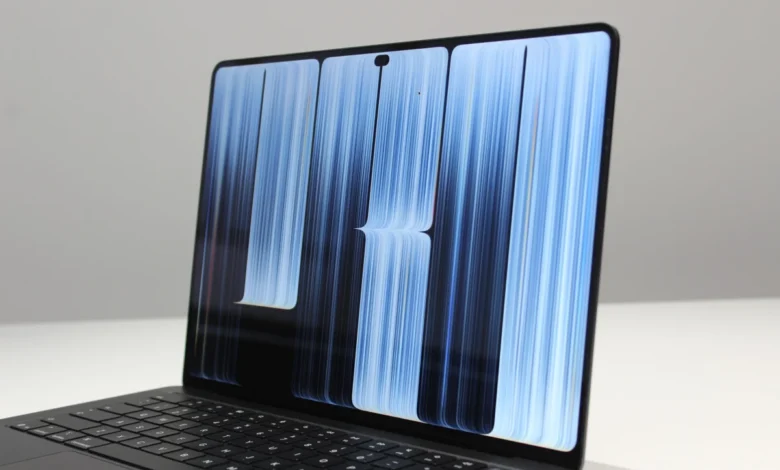
The arrival of the 2026 MacBook Pro marks a significant milestone in Apple’s hardware evolution, as the company finally integrates touchscreen functionality and high-performance tandem OLED display technology into its flagship professional laptop line. For over a decade, Apple resisted the industry trend of touchscreen laptops, favoring the trackpad and the dedicated iPad product line. However, the introduction of the new PROLED XDR display suggests a shift in design philosophy: if Apple is to adopt a feature, it must transcend the current industry standard.
A Decade of Speculation and Strategic Patience
The history of the MacBook display is one of methodical iteration. While Windows-based manufacturers began experimenting with touchscreens shortly after the launch of Windows 8 in 2012, Apple maintained that the vertical orientation of a laptop screen was ergonomically unsuitable for touch interaction. This position was solidified by the 2016 introduction—and subsequent 2021 discontinuation—of the Touch Bar, which many critics labeled a compromise that failed to deliver a true touch-first experience.
Apple’s long-standing preference for Mini-LED technology further delayed the transition to OLED. Mini-LED provided excellent peak brightness and helped avoid the burn-in concerns that plagued early OLED panels. By refining Mini-LED in the 2021 and 2023 MacBook Pro models, Apple achieved industry-leading HDR performance. However, as tandem OLED technology matured—first appearing in the 2024 iPad Pro—the limitations of Mini-LED, specifically "blooming" effects and physical thickness, reached their ceiling. The 2026 MacBook Pro represents the culmination of this transition, moving away from backlighting to a self-emissive architecture.
Engineering the PROLED XDR Display
The core innovation of the new MacBook Pro is the PROLED XDR display, which utilizes a tandem OLED structure. Unlike standard OLED panels that rely on a single layer of organic light-emitting diodes, the tandem approach stacks two emission layers. This configuration allows the screen to achieve a sustained brightness of 2,000 nits, effectively solving the brightness gap that has historically kept OLED laptops from being viable in high-glare, professional environments.
To provide context on the magnitude of this brightness: entry-level OLED laptops typically peak at 300 to 400 nits, while premium Windows alternatives often hit 1,000 nits only when displaying HDR-encoded content. The Apple implementation is distinct in that it maintains this high brightness threshold for both Standard Dynamic Range (SDR) and High Dynamic Range (HDR) content. This consistency ensures that the display does not feel "dim" during routine tasks like web browsing or document editing, a common complaint among OLED laptop users.
Addressing the Glare and Reflection Paradox
One of the most persistent issues with OLED screens is their tendency to exacerbate reflections, particularly when displaying deep black levels. In traditional displays, ambient light bouncing off the screen often interacts with the internal layers, creating a mirror-like effect. Apple has addressed this through a dual-pronged strategy. First, the sheer intensity of the 2,000-nit output serves to physically "overpower" external light sources, making the image visible even under harsh lighting.
Second, the company has refined its anti-reflective coating, which, according to preliminary hardware assessments, appears to be the most effective iteration to date. For users requiring absolute precision—such as color graders, film editors, or designers—Apple has also retained the option for a nano-texture glass upgrade. By etching the surface at the nanometer level, the display scatters ambient light rather than reflecting it directly into the user’s eyes, a technology previously reserved for the Pro Display XDR and Studio Display.

The Integration of Touch: A Measured Approach
The inclusion of a touchscreen on the 2026 MacBook Pro is characterized by a "software-first" implementation. Rather than simply enabling hardware touch, Apple has ported specific interaction frameworks from iPadOS to macOS.
Key features include:
- Intelligent UI Scaling: When the system detects a finger touch, interface elements such as window controls and menu bar items temporarily increase in size to accommodate the lower precision of human touch compared to a cursor.
- Gestural Fluidity: The display supports native macOS gestures, including pinch-to-zoom and three-finger swipe-to-switch, providing a tactile continuity that mimics the MacBook trackpad experience.
- Window Management: Users can now drag and flick windows to trigger system-level layout features, such as Split View, directly from the display.
Despite these advancements, the omission of Apple Pencil support suggests that the company still views the MacBook as a keyboard-and-trackpad-first device. Analysts note that this represents a strategic divide: the iPad remains the company’s primary stylus-supported device, while the MacBook Pro touch interface is optimized for navigation and supplementary input rather than creative illustration.
Impact on Hardware Ergonomics and Portability
The shift to tandem OLED has yielded secondary benefits in physical chassis design. Because the OLED display panel requires fewer layers and components than a Mini-LED assembly, Apple has successfully reduced the overall weight of the 14-inch MacBook Pro to three pounds—a 12 percent reduction from its predecessor. This weight reduction is achieved without compromising the structural integrity of the aluminum unibody, maintaining the rigid, premium feel expected of the "Pro" moniker.
Industry Implications and Competitive Landscape
The release of this hardware puts significant pressure on the Windows ecosystem. While Microsoft has pushed touch-first designs for years, the optimization of third-party software remains a hurdle. Apple’s challenge will be to encourage developers to update their apps to take full advantage of the new touch-friendly APIs. In the professional space, software like ZBrush and the Adobe Creative Cloud suite are already seeing early integration of touch-enabled controls, but widespread adoption remains a long-term goal.
Market analysts suggest that the PROLED XDR display will likely become the benchmark against which all professional-grade laptop screens are measured. By combining the contrast ratios of OLED with the brightness of high-end Mini-LED, Apple has effectively eliminated the "HDR trade-off."
A Note on Adaptive Performance
It is important to clarify that while the display is capable of 2,000 nits, it is factory-capped at 1,000 nits for general use. The system utilizes an advanced adaptive brightness sensor that monitors ambient light levels; when the device detects extreme outdoor glare or specific high-contrast HDR workflows, it pushes the display to its 2,000-nit maximum. This approach is designed to balance power consumption and thermal management, ensuring that the battery longevity of the MacBook Pro is not sacrificed for constant high-intensity output.
As Apple moves forward with this technology, the broader implication for the industry is clear: the era of "good enough" laptop displays is ending. With the 2026 MacBook Pro, the display has moved from being a passive output device to an active participant in the user’s workflow. Whether the market follows Apple’s lead in combining touch with high-output tandem OLED remains to be seen, but for the time being, Apple has firmly set a new gold standard for portable computing.