Pentagon Secures Multi-Million Dollar Budget for AI-Driven Polygraph Plus Project Amid Internal Security Scrutiny

The United States Department of Defense has set its sights on modernizing century-old lie detection methodologies, requesting $30.3 million over the next five years to fund an advanced truth-verification initiative known as Polygraph+ or Polygraph Next. Detailed within a recent Department of Defense budget justification for fiscal year 2027, the proposed program aims to overhaul federal credibility assessment frameworks by deeply integrating artificial intelligence, machine learning scoring algorithms, and contactless monitoring techniques. This aggressive push toward next-generation security screening arrives during a period of heightened institutional tension within the Pentagon, where leadership has leaned heavily on physiological testing to combat high-profile information leaks and perceived internal disloyalty.
The initiative will be spearheaded by the Defense Counterintelligence and Security Agency, the federal body responsible for administering background checks, security clearances, and insider threat mitigations across the defense apparatus. While the budget proposal awaits final congressional approval, the program’s dual focus on algorithmic data analysis and standoff sensing signals a radical departure from traditional polygraph administration. However, the proposal has reignited a fierce debate among legal scholars, biometric researchers, and civil liberties advocates who question the scientific validity of attempting to quantify human deception through automated means.
The Historical Evolution of Lie Detection and Its Enduring Flaws
To understand the scale of the Pentagon’s new endeavor, one must examine the foundational limitations of current lie detection technology. The traditional polygraph, largely unchanged since its invention in the 1920s, relies on a rudimentary set of physiological metrics. During an examination, a human operator tracks changes in a subject’s blood pressure, pulse, respiration rate, and electrodermal activity—commonly measured as skin conductivity or sweat.
The underlying premise of the test rests on the assumption that deception triggers a unique physiological stress response. Examiners formulate a baseline by asking neutral questions, such as whether the sky is blue, and compare the subject’s reactions to target questions concerning criminal behavior, security violations, or trustworthiness.
Despite the federal government conducting tens of thousands of these evaluations annually for employee screening and security vetting, the scientific community has consistently challenged the reliability of the practice. Landmark evaluations by federal oversight bodies have repeatedly cast doubt on the methodology. In 1983, the congressional Office of Technology Assessment concluded that there was exceptionally limited scientific evidence supporting the utility of polygraphs in personnel security screening. Two decades later, a 2003 report by the U.S. National Research Council reaffirmed these concerns, stating that the scientific evidence for the polygraph’s efficacy was weak at best.
Critics note that the human capacity to detect deception without technical assistance hovers just above random chance, at roughly 54 percent. While the American Polygraph Association contends that valid polygraph tests maintain an accuracy rate between 80 and 94 percent, researchers emphasize that even high nominal accuracy rates produce catastrophic statistical consequences when applied at scale. Given that the Department of Defense employs approximately 2.8 million individuals, the implementation of an imperfect screening mechanism across such a vast workforce risks generating thousands of false positives, unfairly casting suspicion on loyal personnel.
Furthermore, the interpretation of polygraph charts remains inherently subjective. Independent examiners evaluating the exact same testing data frequently arrive at divergent conclusions. Research has also demonstrated that members of certain minority groups may exhibit physiological responses that are disproportionately misread as deceptive by standard scoring metrics. Finally, the traditional polygraph is notoriously vulnerable to physical and psychological countermeasures. Knowledgeable subjects can artificially manipulate their baseline physiological responses—such as by altering their breathing patterns or applying hidden physical stimuli, like a tack inside a shoe—to successfully manipulate the examination.
The Geopolitical and Organizational Catalyst
The timing of the Polygraph+ funding request is intimately connected to recent internal security crises within the Department of Defense. Under the leadership of Defense Secretary Pete Hegseth, the Pentagon has faced intense scrutiny regarding unauthorized disclosures to the press, prompting a series of sweeping internal investigations.
The friction reached a notable peak in September, when investigative reporting by major media outlets detailed the systematic depletion of critical U.S. weapon stockpiles amid the ongoing conflict involving Iran. In the wake of these disclosures, the Pentagon launched an extraordinary joint staff leak probe. Approximately 50 high-ranking officers and staff members on the Joint Staff were subjected to mandatory polygraph examinations in an urgent bid to identify the sources of the classified leaks.
This climate of suspicion has directly accelerated the search for technological upgrades. The DCSA’s Polygraph Next initiative is designed to address these vulnerabilities by tightening insider threat detection and screening prospective personnel with greater stringency. While the DCSA has not publicly disclosed the exact proprietary technologies that will comprise the final Polygraph+ architecture, recent developments within the broader defense ecosystem offer clear indicators of the direction being pursued.
Paving the Way: Prototypes and Standoff Sensing
The Defense Innovation Unit, an organization within the Pentagon tasked with accelerating commercial technology integration for military use, laid the groundwork for these advanced capabilities in 2023. The DIU launched an open solicitation process aimed at identifying commercial vendors capable of delivering state-of-the-art deception detection solutions.

Following the evaluation phase, the DIU selected two distinct commercial entities to develop functional prototypes: Presage Technologies and Altec Research. Presage Technologies asserted an ability to monitor and analyze core physiological indicators—specifically heart rate and breathing frequency—utilizing standard, off-the-shelf optical cameras rather than physical body sensors.
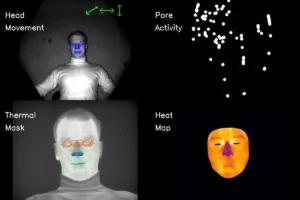
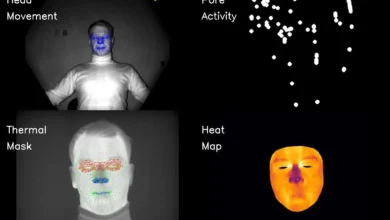
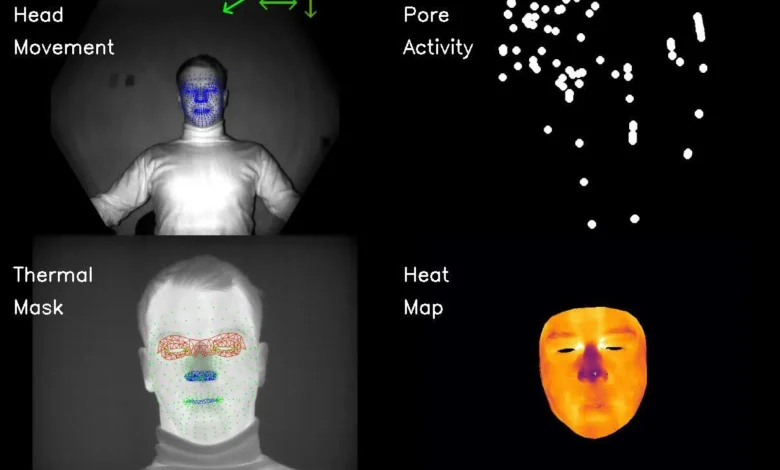
Concurrently, Altec Research, a traditional medical sensor manufacturer expanding into non-contact biometric applications, developed a multi-metric monitoring prototype. Released documentation and technical screenshots provided by the DIU revealed that Altec’s system tracks a complex array of involuntary physical manifestations, including micro-head movements, fluctuations in facial skin temperature, and localized pore activity.
These technological trials highlight the military’s primary objective: the implementation of "standoff sensing." By eliminating the need to physically attach wires, cuffs, and pneumatic tubes to a subject’s body, developers hope to reduce the psychological friction of the testing environment while gathering a higher volume of continuous data. Despite the public unveiling of these prototypes, representatives for Presage Technologies, Altec Research, and the DIU have consistently declined requests for detailed comment on the ongoing maturation of these systems.
The Theoretical Promise of Artificial Intelligence and Multi-Modal Detection
Proponents of modernizing lie detection argue that artificial intelligence and machine learning offer a viable path past the limitations of traditional polygraph equipment. Theoretically, machine learning algorithms can ingest vast datasets of physiological and behavioral metrics, uncovering complex patterns and correlations that human examiners are incapable of detecting manually.
Furthermore, AI facilitates "multi-modal" deception detection. Researchers note that human deception involves three distinct psychological and physiological phenomena: heightened physiological stress, increased cognitive load as the brain actively fabricates a false narrative, and the conscious behavioral effort required to mask the deception. Traditional polygraphs measure little beyond physiological stress. By combining multiple data streams—such as thermal imaging for facial blood flow, ocular tracking for pupil dilation and gaze fixation, acoustic voice analysis, and automated micro-expression tracking—multi-modal systems aim to construct a comprehensive deception score.
This pursuit is not entirely unprecedented. Over the past two decades, various academic and governmental institutions have attempted to build automated lie detectors. In the United Kingdom, researchers at Manchester Metropolitan University developed "Silent Talker," a computer-based system designed to analyze facial video footage to generate deception metrics. This technology later served as a foundational component for iBorderCtrl, an experimental, EU-funded automated border control pilot program. Similarly, the United States Department of Homeland Security previously experimented with a border-screening tool known as Automated Virtual Agent for Truth Assessments in Real-Time, or AVATAR, which incorporated automated eye-tracking, voice modulation analysis, and body movement monitoring. Ultimately, these ambitious projects failed to achieve widespread operational deployment, frequently fading away due to unresolved scientific and reliability hurdles.
The Scientific Critique and the Problem of Ground Truth
Despite the allure of artificial intelligence, legal scholars and biometric experts remain deeply skeptical of the Pentagon’s new investment. Critics argue that merging advanced machine learning with fundamentally flawed underlying methodologies compounds the risk of systemic error, creating a dangerous illusion of scientific objectivity.
Kyri Kotsoglou, a legal scholar at Northumbria University in the United Kingdom who specializes in the integration of forensic and biometric technologies within the justice system, characterizes the initiative as a fundamental misunderstanding of human behavior. "It’s a misguided effort to reduce the complex to something that is tangible," Kotsoglou observes, emphasizing that human credibility cannot be neatly captured by algorithmic scoring.
A central philosophical and scientific dilemma facing AI-driven lie detection is the complete absence of a reliable "ground truth." Machine learning models require vast, accurately labeled datasets to train algorithms effectively. In the context of lie detection, however, developers rarely possess absolute certainty regarding whether a historical subject was genuinely lying or telling the truth during a baseline test.
"Even if you have all the records in the world from polygraph tests, you don’t know whether those polygraph tests are right or not," notes Marion Oswald, a professor of law who has collaborated with Kotsoglou on research examining the deployment of polygraph technologies in legal and security settings. Oswald suggests that the renewed government interest in automated lie detection is primarily an institutional reaction to leadership anxiety over information leaks and organizational loyalty, rather than a genuine quest for empirical accuracy.
"It seems very much a response to the concern of the current administration to leaks and perceived lack of loyalty," Oswald explains. "It’s being used as a threat, to intimidate and force people to confess to things, as opposed to anything that’s actually getting valid information."
This perspective is echoed by Sophie van der Zee, an associate professor at Erasmus University in Rotterdam who studies behavioral deception and the limits of detection technologies. Van der Zee notes that the primary efficacy of polygraph tests has historically been psychological deterrence rather than scientific inquiry. Subjects frequently offer confessions prior to the administration of the test simply out of fear of the machine. "That only works if people think a polygraph works," she points out.
With no universal behavioral indicator of dishonesty—what researchers colloquially refer to as a "Pinocchio’s nose"—scholars warn that investing tens of millions of dollars into algorithmic lie detectors risks institutionalizing pseudoscience under the guise of national security innovation. As the Pentagon moves forward with its budget request for Polygraph+, the friction between institutional demand for absolute loyalty and the stubborn complexities of human psychology remains unresolved.