The Best Laptops Under $500 for 2025: Navigating Value and Performance in the Budget Market

Securing a reliable, high-performing laptop for under $500 is an increasingly complex challenge as hardware requirements for modern software continue to rise. In the current economic climate, characterized by fluctuating supply chains and shifting consumer demand, manufacturers are balancing cost-cutting measures with the necessity of providing functional devices for students, casual users, and remote workers. While the budget segment—often defined by lower-tier processors, smaller eMMC storage drives, and modest display quality—rarely competes with premium ultrabooks, current market data from 2025 indicates that specific models have successfully optimized performance, battery longevity, and build quality to offer significant value.

The Evolution of the Budget Laptop Market
The landscape for affordable computing has undergone a significant shift over the last decade. Historically, "budget" was synonymous with "disposable," as low-cost devices frequently suffered from poor thermal management, fragile chassis construction, and batteries that failed to sustain more than a few hours of use. However, the rise of cloud-based computing and the maturation of ChromeOS have redefined expectations.
Industry analysis suggests that the pivot toward Chromebooks has been the primary driver for quality improvements in the sub-$500 category. Because the ChromeOS environment is inherently lighter than Windows 11, manufacturers can extract better performance from entry-level hardware. Consequently, consumers are finding that their dollar stretches further when they opt for a device optimized for web-based productivity rather than a Windows-based machine struggling to run resource-heavy operating systems.
Top Performers for 2025: A Curated Overview
Our latest evaluation of the market highlights four distinct devices that stand out for their reliability, build, and user experience.
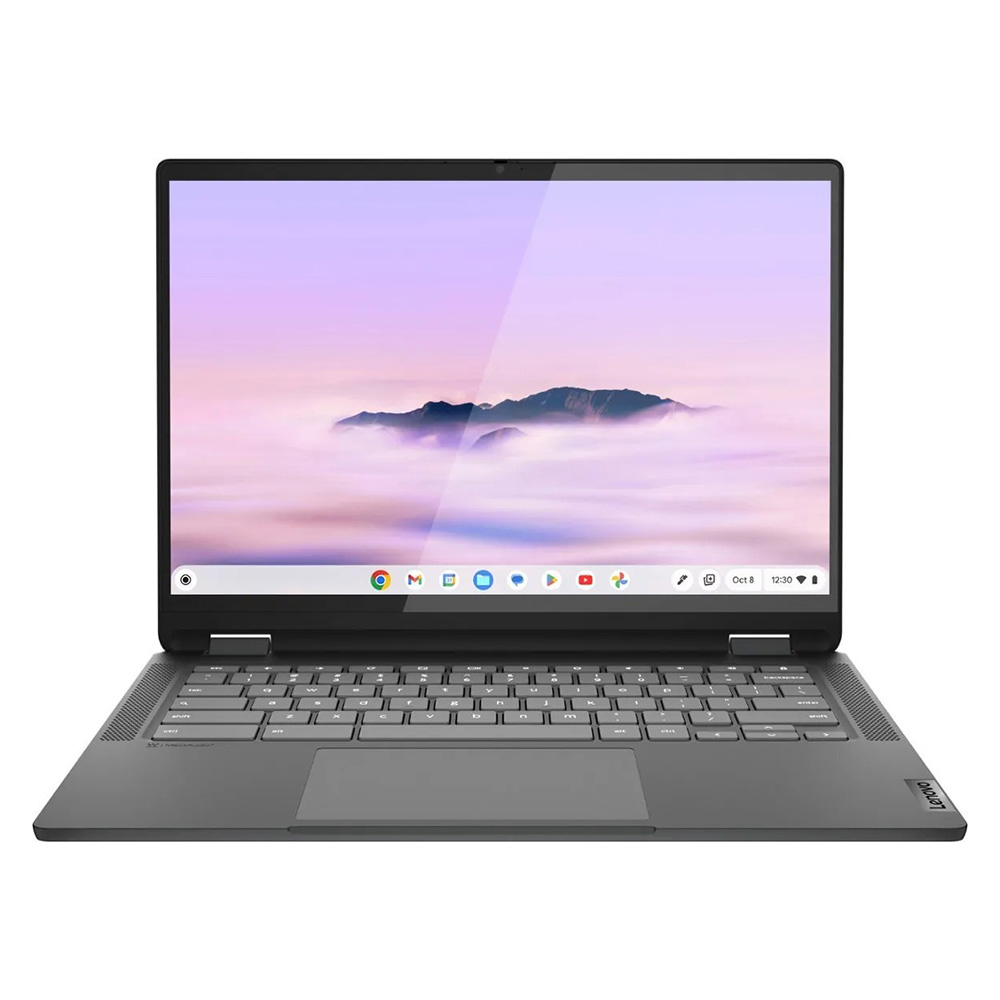
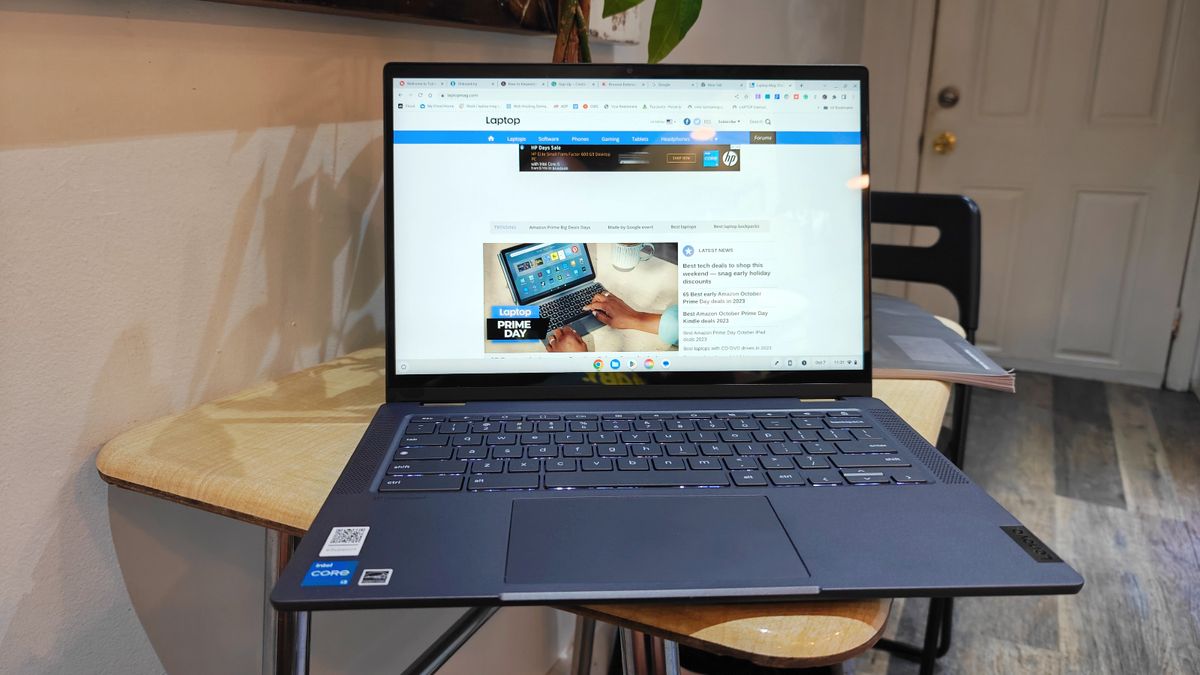
1. Lenovo IdeaPad Flex 5i Chromebook Plus: The Performance Leader
The IdeaPad Flex 5i represents the current benchmark for what a budget-friendly 2-in-1 device can achieve. Powered by the Intel Core i3-1315U, this device provides a seamless experience for multitasking, browsing, and AI-assisted productivity tools. With a Geekbench 6 multi-core score of 5,384, it significantly outperforms the average Chromebook, which typically hovers around the 2,253 mark. Its 14-inch, 1920 x 1080 IPS display and 16:10 aspect ratio provide ample vertical screen real estate, making it an ideal choice for document editing and research.
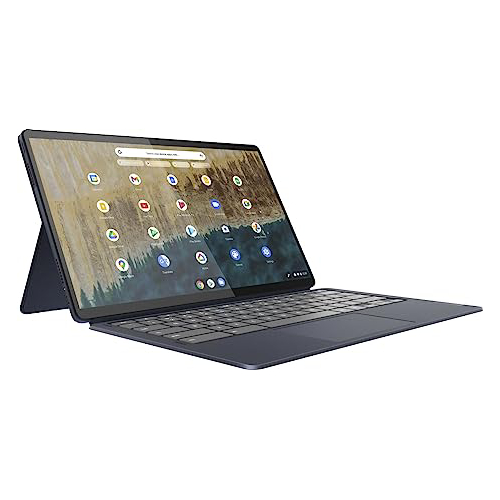
2. Lenovo Duet 5 Chromebook: The Best Value Under $300
For users prioritizing portability and media consumption, the Duet 5 remains an industry favorite. Featuring an OLED display—a rarity in this price bracket—it delivers vivid colors and deep blacks that surpass many premium laptops costing double the price. While its synthetic performance metrics (1,727 on Geekbench 5) are modest, its 13-hour, 31-minute battery life and detachable keyboard design offer unmatched versatility for students or commuters who require a tablet-laptop hybrid.
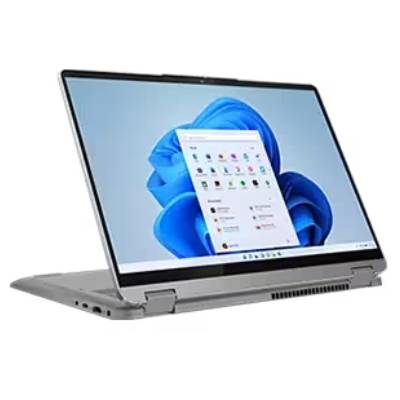
3. Lenovo IdeaPad Flex 5 14 (Intel): The Windows Representative
Finding a Windows laptop under $500 that does not compromise on essential functionality is difficult. The IdeaPad Flex 5 14 is a notable exception. By utilizing an Intel Core i5-1135G7 processor, it handles standard office tasks with stability. Its standout feature is its battery longevity, which exceeds 14 hours in real-world testing. While it may lack the cutting-edge aesthetic of higher-end machines, its tactile keyboard and sturdy build quality make it a reliable workhorse for those who require a Windows environment.
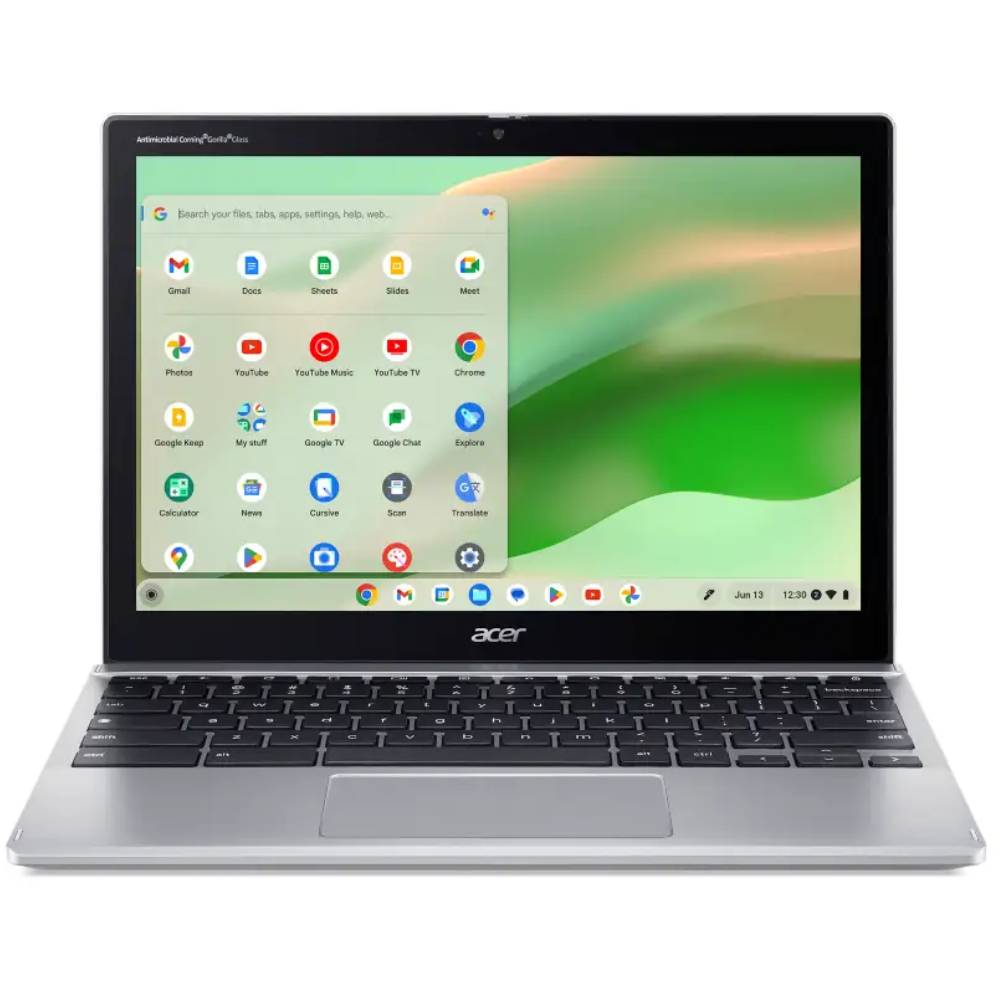
4. Acer Chromebook Spin 312: The Student Essential
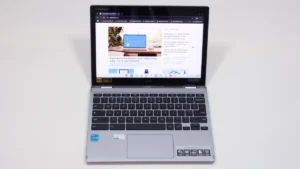
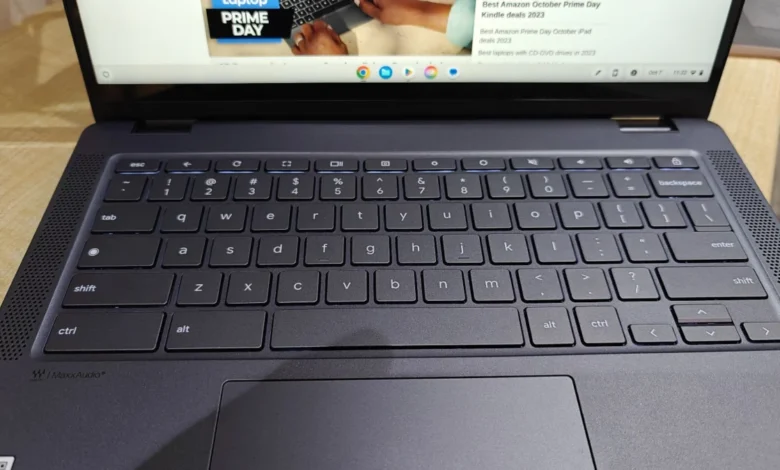
Designed with the classroom in mind, the Acer Chromebook Spin 312 addresses the specific needs of students: durability and battery life. Its OceanGlass touchpad is a standout, offering a premium tactile feel that is rarely found in laptops retailing for $450. Although its display color coverage (55% of the DCI-P3 gamut) is modest, its 2-in-1 functionality and 10-hour battery life provide the necessary longevity for a full day of academic work.
Comparative Benchmark Analysis
The following data reflects the technical performance of these devices, illustrating why hardware specifications remain the most critical factor for potential buyers.
| Model | Geekbench 6 (Multi-core) | Battery Life (Web Browsing) | Display Brightness (Nits) |
|---|---|---|---|
| Lenovo IdeaPad Flex 5i | 5,384 | 9:43 | 306 |
| Lenovo Duet 5 | N/A | 13:31 | 361 |
| Lenovo IdeaPad Flex 5 14 | N/A | 14:16 | 200 |
| Acer Chromebook Spin 312 | 4,477 | 10:33 | 277 |
Strategic Considerations for Consumers
When evaluating these options, buyers must distinguish between "cheap" and "inexpensive." An inexpensive laptop provides value by lasting longer and performing consistently, whereas a truly cheap laptop often incurs hidden costs, such as the need for early replacement due to battery degradation or thermal failure.
Key Factors for Purchase:

- Operating System: If the user’s primary tasks are web-based (Google Docs, web research, streaming), a Chromebook is objectively the superior choice in the sub-$500 segment.
- Portability: 12-to-14-inch models offer the best balance between screen space and weight.
- Longevity: Look for devices with 8GB of RAM. While 4GB may suffice for the simplest tasks, 8GB is becoming the standard for preventing system slowdowns as web browsers become more memory-intensive.
Market Implications and Future Outlook
The volatility of the laptop market is influenced by global trade policies, including potential tariff adjustments on electronic imports. Analysts have noted that the average price of a laptop has remained relatively stable over the past several years, but this stability is under pressure. If future import tariffs are enacted, the "under $500" category may shrink significantly, forcing consumers to accept lower specifications for the same price point.
Furthermore, the integration of AI features is beginning to permeate even the budget segment. The Lenovo IdeaPad Flex 5i Chromebook Plus, for example, highlights how manufacturers are using AI to enhance performance on lower-tier hardware. As AI-optimized processors become more affordable, we can expect the gap between "budget" and "premium" performance to narrow, provided that supply chains remain stable.
Conclusion: Making an Informed Decision
For the consumer, the goal remains unchanged: identifying a machine that aligns with specific functional requirements while minimizing long-term costs. The models listed above provide a starting point for anyone looking to invest in a device that balances performance, battery, and build quality. Before making a final purchase, prospective buyers are encouraged to verify current market pricing—as these devices frequently go on sale during major retail events—and to prioritize devices with a proven track record of longevity in independent laboratory testing. As of 2025, the budget laptop is no longer a compromise, but a strategic purchase for those who know exactly what they need.