Pentagon Seeks $30 Million for AI-Powered Polygraph Next Initiative Amid Rising Leak Investigations

The United States Department of Defense is seeking a federal investment of $30.3 million over the next five years to develop and deploy an advanced version of the traditional lie detector. According to budget justification documents released for fiscal year 2027, the initiative—formally designated as "Polygraph+" or "Polygraph Next"—represents a significant modernization effort aimed at updating federal credibility assessment technologies. Managed primarily by the Defense Counterintelligence and Security Agency (DCSA), the proposed project intends to integrate artificial intelligence (AI), machine learning algorithms, and "standoff sensing" techniques, which allow for physiological measurements to be taken without physically attaching devices to a subject’s body.
This budgetary push arrives during a period of heightened internal security concerns within the Pentagon. Under the leadership of Defense Secretary Pete Hegseth, defense officials have increasingly relied on polygraph testing to identify and root out sources responsible for unauthorized disclosures of classified information to the press. The urgency behind the technology upgrade underscores a broader institutional struggle over information security, loyalty, and the efficacy of tools long criticized by the scientific and legal communities.
Chronology and Escalating Tensions at the Pentagon
The current push for next-generation deception detection is deeply intertwined with recent security breaches within the military establishment. The timeline of events leading up to the budget request highlights a reactive posture by defense leadership facing high-profile intelligence leaks:
- September 2025: The New York Times published investigative reporting revealing that roughly 50 high-ranking officers on the Joint Staff were subjected to polygraph examinations following media coverage detailing the alarming depletion of United States weapons stockpiles amid ongoing military commitments related to Iran.
- Late 2025 to Early 2026: Internal investigations expanded, prompting senior defense officials to scrutinize workforce loyalty and evaluate the current technical limitations of existing background vetting procedures.
- Fiscal Year 2027 Budget Proposal: The Department of Defense formally submitted its justification documents for the DCSA, outlining the $30.3 million, five-year funding allocation for the Polygraph+ program to overhaul workforce screening and insider threat detection.
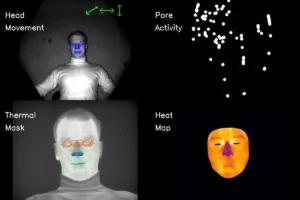
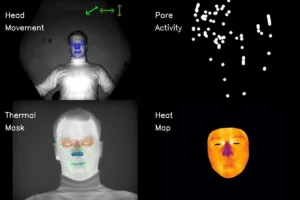
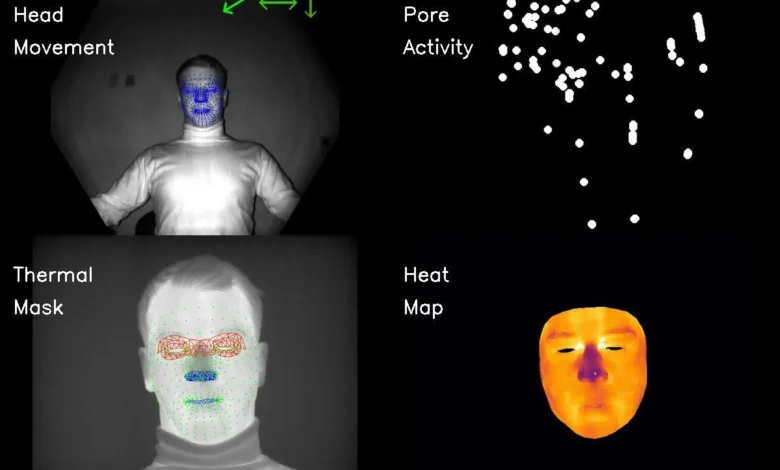
While the budget request awaits formal approval by Congress, the DCSA’s proactive planning mirrors prior experimental initiatives sponsored by the Pentagon’s innovation arms. In 2023, the Defense Innovation Unit (DIU) initiated an open solicitation process seeking commercial prototypes capable of non-invasive deception detection. The DIU ultimately selected two private entities: Presage Technologies, which asserts an ability to measure heart rate and respiratory patterns via standard digital cameras, and Altec Research, a medical sensor firm developing contactless monitoring tools capable of tracking head movements, facial skin temperature variations, and microscopic pore activity.
A Century of Questionable Science
The traditional polygraph instrument, fundamentally unchanged since its invention in the 1920s, monitors autonomic nervous system responses—specifically blood pressure, pulse, respiration, and electrodermal activity (sweat). Examiners establish a baseline by asking innocuous control questions ("Is the sky blue?") and comparing physiological reactions to relevant target inquiries ("Have you ever committed a crime?").
Despite the federal government administering tens of thousands of these evaluations annually for employment vetting and security clearances, the scientific validity of the polygraph has faced continuous academic and judicial skepticism. In 1983, a landmark report by Congress’s Office of Technology Assessment concluded that empirical evidence supporting the validity of polygraph testing for personnel security screening was severely limited. Two decades later, a 2003 comprehensive review by the United States National Research Council (NRC) echoed these findings, determining that the scientific evidence regarding the accuracy of polygraph testing was "weak at best."
Legal systems have long recognized these vulnerabilities. Polygraph results are rarely admissible as evidence in federal and state courts due to their unreliability. While the American Polygraph Association asserts accuracy rates ranging between 80% and 94%, critics emphasize the severe mathematical risks associated with applying imperfect tests at scale. With the Department of Defense employing approximately 2.8 million personnel, even a small margin of error could result in thousands of false positives, incorrectly flagging loyal personnel as deceptive.
Furthermore, human subjectivity remains a critical flaw. Different examiners evaluating the same recorded physiological data frequently arrive at conflicting conclusions. Studies have also indicated that demographic minorities face disproportionate rates of false-positive determinations. Additionally, the test is notoriously susceptible to countermeasures; interviewees can successfully manipulate outcomes by artificially altering their physiological baselines through physical discomfort, such as concealing a tack in a shoe to induce pain during control questions.

The Illusion of the Pinocchio’s Nose
Deception experts argue that the utility of the traditional polygraph lies primarily in its psychological deterrence rather than its scientific precision. Sophie van der Zee, an associate professor studying deception at Erasmus University in Rotterdam, notes that the machine often induces confessions before testing even begins, provided the subject believes in its infallibility.
"If you know how it works, you can beat it," van der Zee explains, noting that investigators continue to chase an elusive technological solution. "There is still no Pinocchio’s nose."
Over the decades, various modalities—ranging from thermal imaging and pupillometry to functional magnetic resonance imaging (fMRI) brain scans—have been explored to detect deception. None have achieved consistent reliability outside controlled laboratory environments. The core scientific barrier remains the absence of a universal physiological indicator of lying that applies uniformly across diverse populations under varying contextual pressures.
Can Artificial Intelligence Solve the Polygraph Problem?
Proponents of the Pentagon’s Polygraph+ initiative argue that artificial intelligence and machine learning could theoretically elevate deception detection by uncovering complex, multidimensional patterns in physiological data that human examiners fail to perceive. Modern AI-driven concepts often focus on "multi-modal" detection, attempting to simultaneously measure three underlying psychological phenomena: physiological stress, cognitive load, and the conscious behavioral suppression required to maintain a falsehood.
This approach is not entirely novel. Over the past twenty years, various experimental systems have attempted to automate deception scoring using multi-sensor inputs. Projects such as the United Kingdom’s "Silent Talker," the European Union’s iBorderCtrl pilot program, and the United States Department of Homeland Security’s AVATAR system—which incorporated automated eye-tracking, voice analysis, and postural monitoring at border checkpoints—all sought to amalgamate behavioral cues into a composite score. Ultimately, these high-profile projects failed to achieve widespread adoption or long-term operational viability.
Legal scholars and privacy advocates remain deeply skeptical of incorporating artificial intelligence into flawed foundational frameworks. Kyri Kotsoglou, a legal scholar at Northumbria University specializing in the use of polygraphs within criminal justice systems, characterizes the marriage of AI and polygraphy as "the worst of both worlds" because it compounds systemic uncertainty with methodological invalidity.
"Even if you have all the records in the world from polygraph tests, you don’t know whether those polygraph tests are right or not," observes Marion Oswald, a law professor who has collaborated with Kotsoglou on research regarding credibility assessment technologies. Oswald suggests that the Department of Defense’s renewed focus on advanced lie detection is less about acquiring objective scientific truth and more about reacting to institutional anxiety regarding internal dissent and security leaks.
"It seems very much a response to the concern of the current administration to leaks and perceived lack of loyalty," Oswald adds. "It’s being used as a threat, to intimidate and force people to confess to things, as opposed to anything that’s actually getting valid information."
As the congressional committees review the Department of Defense’s fiscal budget request, the debate over Polygraph+ highlights a fundamental tension within modern governance: the persistent desire for technological certainty in national security vetting, contrasted against the enduring scientific reality that human deception resists simple, automated quantification.