Inside the iPhone 18 Pro Teardown reveals a delicate balance between innovation and repairability

The consumer electronics industry stands at a crossroads between the rapid advancement of hardware capabilities and the growing global mandate for sustainability and longevity. iFixit, the preeminent authority on device disassembly and repair advocacy, has completed its comprehensive teardown of the newly released Apple iPhone 18 Pro. The resulting analysis provides a granular look at the engineering decisions defining Apple’s latest flagship, revealing a device that maintains a steady, if modest, trajectory toward accessibility while introducing significant new complexities in its optical systems.
A Measured Repairability Score
iFixit has awarded the iPhone 18 Pro a repairability score of 7 out of 10. This rating mirrors the assessment of its predecessor, the iPhone 17 Pro, released in 2025. In the lexicon of repair advocates, a 7/10 represents a middle ground; the device is neither hermetically sealed against maintenance nor a modular dream that can be disassembled with common household tools. The consistent rating highlights that while Apple has improved the accessibility of high-frequency replacement components like battery assemblies and camera modules, the overarching architecture of the device remains resistant to casual intervention.
The teardown process serves as a critical diagnostic for the repair community. By stripping the device to its chassis, engineers at iFixit identified that the removal of the camera and battery assemblies has been streamlined. However, the requirement to pry open a glued-on display remains a significant barrier to entry for the average consumer, representing a persistent "sticking point" in the repair workflow.
The Engineering Paradox: Variable Aperture Innovation
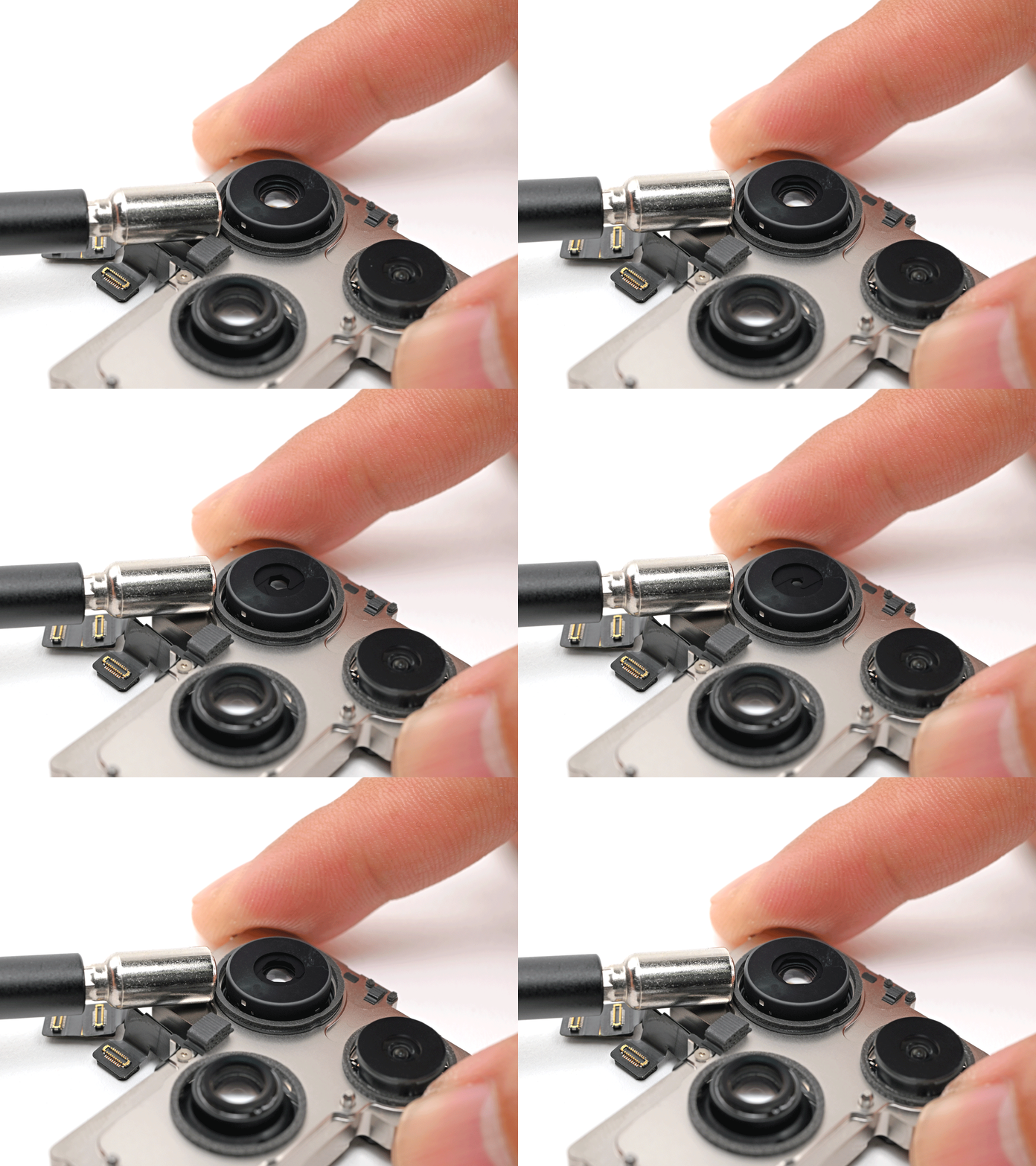
The most notable technological leap in the iPhone 18 Pro—and simultaneously its most significant vulnerability—is the integration of a variable aperture lens within the primary 48-megapixel camera module. While variable apertures have appeared in smartphone iterations as early as the Samsung Galaxy S9, this marks the first time Apple has implemented the technology into its hardware ecosystem.
The mechanism consists of six rotating aperture blades, each as thin as a human hair. These blades allow the camera to physically adjust the size of the lens opening, providing superior control over depth of field and light intake. From a photographic standpoint, this is a substantial upgrade, offering professional-grade versatility in a mobile form factor. From a repair perspective, however, it introduces a mechanical fragility that did not previously exist.
iFixit’s analysis concludes that the intricacy of these micro-blades makes individual repair of the aperture assembly functionally impossible. Should the mechanism fail, the entire camera module must be replaced as a single, consolidated unit. This structural design choice shifts the burden of repair from a potential low-cost component fix to a higher-cost modular replacement, underscoring the trade-offs inherent in modern miniaturization.
Chronology of the Right to Repair Movement
The journey toward the current state of iPhone repairability is marked by a decade of legislative pressure and public advocacy. The timeline of this tension is essential for understanding why a 7/10 score is viewed as both a success and a point of contention:
.gif)
- 2015–2019: The "Right to Repair" movement gains momentum in the United States, with advocacy groups lobbying for legislation that would force manufacturers to provide parts, tools, and schematics to independent repair shops and consumers.
- 2021: Facing mounting pressure, Apple announces its Self Service Repair program. Critics initially panned the rollout, citing exorbitant costs for tool rentals and restrictive software locks that paired components to specific logic boards, rendering third-party repairs difficult.
- 2023–2024: The European Union passes landmark legislation mandating that consumer electronics, including smartphones, must feature user-replaceable batteries and repair-friendly designs by 2027.
- 2025: Apple releases the iPhone 17 Pro, which shows the first signs of design-for-repair, earning a 7/10 from iFixit.
- 2026: The PIRG (Public Interest Research Group) issues a D-rating for the iPhone 17, arguing that despite improvements, software-based "parts pairing" still creates significant barriers for owners seeking to use non-Apple parts.
- 2027 (Present): The iPhone 18 Pro launch continues the trend of design-for-repair but highlights the emerging issue of mechanical complexity in specialized components.
Analysis of Regulatory and Market Implications
The discrepancy between the repairability improvements and the "D-rating" from groups like PIRG lies in the distinction between physical accessibility and software autonomy. While the iPhone 18 Pro’s battery is no longer glued to the chassis—a victory for physical repair—the device remains tethered to Apple’s proprietary software environment.
"Parts pairing"—the practice of cryptographically linking hardware components to the device’s main processor—remains the primary obstacle for independent repairers. Even if a user successfully removes and replaces a component, the device may flag the new part as "unauthorized," potentially disabling features such as FaceID or True Tone display adjustments. This represents a shift in the debate from physical "openness" to digital "sovereignty."
Furthermore, the introduction of the variable aperture lens serves as a case study for future regulatory challenges. As smartphones incorporate increasingly complex, delicate, and integrated mechanical parts, the threshold for what constitutes a "repairable" device becomes more difficult to define. If a component is physically easy to remove but economically impractical to repair due to its integrated design, lawmakers may eventually be forced to look beyond mere physical access and address the design of the components themselves.
The Corporate Stance and Industry Response
Apple has consistently maintained that its repair restrictions are primarily motivated by safety and security. In official documentation accompanying the iPhone 18 Pro, the company emphasizes the importance of authorized service centers in ensuring that battery chemistry is handled correctly and that camera calibration meets factory standards.
However, the shift toward a "repair assistant" tool within the device settings suggests that Apple is internalizing the demand for self-service options. By providing guided, step-by-step software walkthroughs for component replacements, Apple is attempting to bridge the gap between its controlled service ecosystem and the growing demand for user autonomy.
Independent repair advocates view this as a tacit acknowledgment of the movement’s success, yet they remain vigilant. The contention is no longer about whether repair is possible, but whether it is affordable and equitable. As long as the cost of a modular camera replacement exceeds the value of the repair, advocates argue, the "Right to Repair" remains only partially realized.
Conclusion: A Look Ahead
The iPhone 18 Pro is a microcosm of the current state of consumer technology. It is a marvel of engineering that pushes the boundaries of mobile photography, yet it remains a closed system by design. The 7/10 score from iFixit is a testament to the fact that manufacturers are listening to the market and regulatory demands, moving away from permanent adhesives and towards modular construction.
As the industry moves toward 2028 and beyond, the focus will likely shift from the difficulty of opening a phone to the difficulty of keeping it functional without vendor-locked software. The iPhone 18 Pro will serve as a benchmark for this transition—a device that is physically easier to mend, yet still governed by the invisible, restrictive threads of software verification. For the consumer, the takeaway is clear: while the hardware is becoming more accessible, the path to true device ownership remains an ongoing negotiation between the architect and the user.