Dyson CameraJet Launch Stalls Amid Reports of Widespread Technical Failures

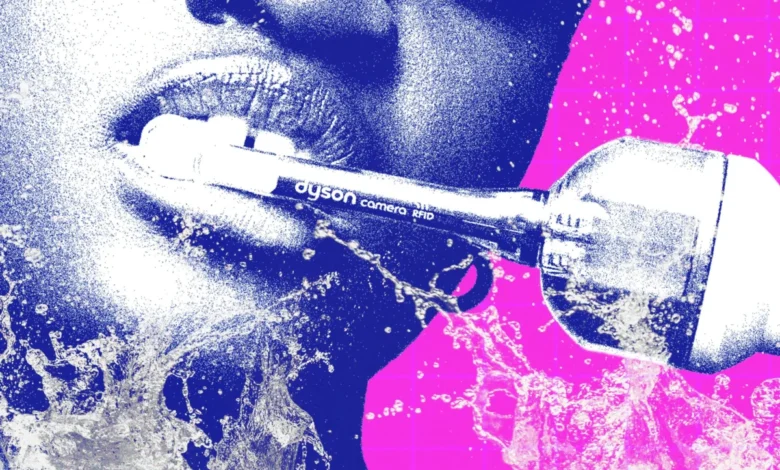
The pursuit of technological perfection often leads manufacturers down a path of increasing complexity, where the line between innovation and over-engineering becomes dangerously thin. This philosophy, which has yielded successful disruption in the vacuum and hair care industries, appears to have encountered a significant obstacle with the Dyson CameraJet. Billed as the next evolutionary step in oral hygiene, the $499 device promised to revolutionize brushing through AI-driven optical targeting. However, within days of its global release, the product has effectively vanished from the market, sparking a wave of consumer frustration and expert scrutiny regarding its fundamental design integrity.
The history of the electric toothbrush is defined by a slow, incremental progression. From the 1937 patent of the Motodent to the modern sonic vibration technology that dominates current dental care, the core mechanism of the device—a motor vibrating bristles—has remained largely consistent. Dyson’s approach, however, sought to integrate a high-definition macro-lens camera into the handle, paired with a sophisticated "Gap Optical Targeting" system. This system, reportedly trained on a database of 470,000 dental images, was designed to identify interdental gaps and precisely deploy 12.5 milliliters of rinsing fluid from an onboard reservoir. The ambition was clear: to automate the flossing process. Yet, the transition from prototype to mass-market consumer good has proven remarkably difficult.
A Chronology of the CameraJet Launch
The launch of the CameraJet followed a rigorous six-year development cycle involving 38 separate patents. On September 8, the product debuted in the United States with substantial marketing investment, including a high-profile launch event in Paris led by Sir James Dyson.
The excitement was short-lived. By September 9, reports from early adopters began surfacing on social media and consumer technology forums, describing critical hardware failures. Users reported instances of water ingress within the battery compartment, with some devices becoming entirely non-functional within 30 seconds of their first use. By September 11, the French tech publication Numerama confirmed that the device had been pulled from Dyson’s official French web store and brick-and-mortar locations. Within four days of the initial reports, the withdrawal appeared global, with outlets in the United Kingdom, Singapore, and the United States reporting that the product was no longer available for purchase.
Technical Analysis and Failure Modes
The primary point of failure, according to early reports and independent experts, relates to the device’s waterproofing—an ironic outcome for a product specifically engineered to operate in a high-moisture environment. Kyle Wiens, CEO of iFixit, suggests that the failures are indicative of a fundamental breakdown in manufacturing tolerances.
"Making products at scale with the tolerances required for true waterproofing is an immense engineering challenge," Wiens noted. He posits that the failure likely stems from a mismatch in component mating or a breakdown in the adhesive-curing process during manufacturing. Such defects can often pass initial factory quality control, only to manifest as catastrophic failures once the devices are subjected to the thermal and humidity fluctuations of global shipping and subsequent daily use in bathrooms.
Adam Toner, founder of the UK-based electronic design consultancy Ripcord Designs, corroborates this assessment. Analyzing the device’s architecture, Toner points to the battery compartment as a critical vulnerability. "On a product like this, there should never be any water ingress into the internals," Toner explained. "If the battery access point allows fluid to reach the main circuit board, you are guaranteed to see charging failures, short-circuiting, and immediate product death." According to Toner, even a minor failure in a gasket or an O-ring could be the difference between a successful consumer product and a $500 paperweight.
The Corporate Response
Dyson’s official stance remains at odds with the current market reality. Liv Thomas, the company’s head of Beauty Communications, has categorically denied that a formal recall has been issued. Instead, Dyson attributes the disappearance of the CameraJet to "strong global demand" and "supply chain scaling."

When pressed on the specific reports of leaking and battery failure, the company acknowledged that it had identified a "single component issue" affecting a limited number of early production batches. However, Dyson has declined to disclose the nature of the component, the number of units affected, or a definitive timeline for when the product will be available for purchase again. This lack of transparency has fueled speculation on platforms like Reddit, where users have begun referring to the device as the "ScameraJet," highlighting the gap between the product’s premium price point and its reported performance.
Implications for the Future of Dyson
The CameraJet situation represents a rare public relations and technical stumble for a company that prides itself on engineering excellence. Historically, Dyson has been successful in reinventing domestic staples, but the company’s recent attempts to diversify—such as the air-purifying headphones—have faced criticism for being overly niche or unnecessarily complex.
The current situation also raises broader questions about repairability. As Wiens points out, Dyson’s closed-system design philosophy makes it difficult for consumers to perform minor fixes, forcing reliance on the company’s internal warranty and support channels. "Dyson is currently behind the industry on making repair parts and information available," Wiens says. "The CameraJet should serve as a wake-up call for the company to prioritize modularity and repairability, which would not only aid the consumer but also make it significantly easier for the company to rework or address manufacturing defects."
Economic and Strategic Impact
The financial implications of the CameraJet rollout are significant. Beyond the immediate costs of returns, potential replacements, and the reputational damage associated with a failed product launch, there is the question of the "sunk cost" of six years of R&D. The incident also invites scrutiny from industry analysts who watch how premium brands manage quality assurance when pushing the boundaries of "smart" hardware.
The failure also underscores the difficulty of integrating advanced AI and optical sensors into small-scale, handheld electronics. While the ambition to use a macro-lens to assist in dental hygiene is technologically impressive, it assumes a level of robustness that the current manufacturing process has failed to deliver.
Moving Forward
As of mid-September, the Dyson CameraJet remains absent from global markets. Whether the company will return with a redesigned, more resilient version of the device or quietly pivot away from the concept remains to be seen. For the consumer, the event serves as a reminder of the risks associated with "first-generation" smart technology.
Dyson faces a delicate balancing act in the coming months. To restore consumer confidence, the company will likely need to provide more transparency regarding the "single component" defect and clarify the terms of support for those who purchased the faulty units. If the company chooses to ignore the mounting criticism, it risks alienating the premium customer base that has been central to its decades of growth.
The CameraJet serves as a modern case study in product development: innovation is only as valuable as the reliability of the underlying hardware. For a company that has built its reputation on "reimagining" everyday items, the lesson of the CameraJet may be that the most important feature of any product is not the camera, the AI, or the patent, but the ability to perform its core function—in this case, brushing teeth—without failing under the simple pressure of a drop of water. As the industry watches, the onus is now on Dyson to prove that they can learn from these failures and implement the necessary quality controls to maintain their status as a leader in consumer technology.
Related posts: