Insta360 Mic Pro Review: Redefining Wireless Audio Versatility in a Crowded Market

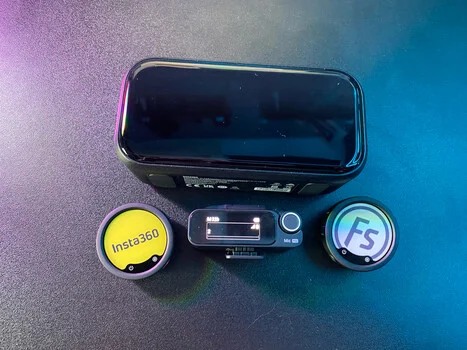
The wireless microphone landscape has evolved significantly over the past five years, shifting from niche broadcast equipment to essential tools for content creators, journalists, and corporate communicators. As the market reaches a point of high saturation, dominated by industry stalwarts such as DJI and Rode, the introduction of the Insta360 Mic Pro represents a strategic effort by the Shenzhen-based camera manufacturer to capture a larger share of the professional audio segment. Rather than attempting to disrupt the market through price competition alone, the Mic Pro utilizes a multi-faceted approach, integrating advanced recording technology, AI-driven signal processing, and high-degree hardware versatility to address the evolving requirements of modern video production.
Context and Market Evolution
For nearly a decade, 2.4 GHz wireless microphone systems have been the industry standard for short-to-medium-range audio acquisition. However, these systems have historically struggled with signal stability in crowded RF environments and limitations regarding dynamic range. The emergence of 32-bit float recording—a technology that allows for massive headroom and prevents audio clipping during high-decibel incidents—has become the new benchmark for professional-grade field recorders. By incorporating 32-bit float support into the Mic Pro, Insta360 is signaling its intent to move beyond its reputation as an action camera manufacturer, positioning itself as a comprehensive ecosystem provider for professional filmmakers.
Technical Architecture and Design Innovation
A notable departure from traditional wireless audio design is the integration of E-Ink display technology on the transmitters. Unlike standard OLED or LED screens, which are power-intensive and difficult to read in direct sunlight, the E-Ink display is bistable, meaning it only consumes power when the image is refreshed. This design choice provides a functional advantage: it allows users to assign custom labels or status identifiers to transmitters that remain visible even when the device is powered off.
From an engineering perspective, the microphone array represents a departure from the industry-standard single-capsule lavalier. The Mic Pro utilizes a three-microphone array capable of switching between four distinct polar patterns: Cardioid, Figure-8, Omnidirectional, and Voice Focus. This flexibility allows the device to function as a traditional lavalier, a desktop conference microphone, or a portable shotgun-style boom mic. Such adaptability is particularly relevant for solo creators who often pivot between "talking-head" interviews, b-roll field recording, and desk-based voiceover work.
Performance Metrics and Field Testing
In controlled testing environments, the Mic Pro demonstrates a clean, albeit mid-heavy, frequency response. While the sound profile is highly usable, it requires minor equalization to achieve the transparency often preferred in professional broadcast settings. The device’s standout feature, however, is its AI-enhanced noise cancellation.
The system employs a two-tier AI processing engine designed to strip environmental noise, such as traffic, wind, and ambient chatter, without introducing the "underwater" artifacts typically associated with aggressive digital noise suppression. In real-world field tests, the system maintains voice clarity in high-wind conditions—a common failure point for cheaper wireless systems. However, users should be aware of the physical limitations inherent in the 2.4 GHz frequency band. While the manufacturer specifies a maximum range of 400 meters, signal integrity is highly dependent on line-of-sight. When the transmitter is obscured by the human body or dense physical barriers, the effective range decreases significantly. This is a characteristic limitation of the technology rather than a specific fault of the hardware, but it remains a critical consideration for production planning.
Ecosystem Integration and Connectivity
One of the most significant value propositions of the Mic Pro is its direct-to-camera connectivity. For users invested in the Insta360 camera ecosystem, the Mic Pro can pair directly with select cameras, bypassing the need for a separate receiver unit. This consolidation reduces the weight of the camera rig and simplifies the setup process, which is essential for run-and-gun documentary or vlogging workflows. For third-party users, the device maintains universal compatibility with smartphones, computers, and traditional mirrorless cameras through standard USB-C and 3.5mm interfaces.
Limitations and Practical Considerations
Despite its technical merits, the Mic Pro is not without minor design oversights. The proprietary charging case, while robust and well-constructed, lacks an integrated compartment for essential accessories such as charging cables, windshields, and adapters. In a fast-paced production environment, the requirement to store these items separately can lead to the loss of accessories or increased setup time. Additionally, the user interface for the case—specifically the latching mechanism—lacks the intuitive, "one-handed" ease of use found in some competitor products.
Analytical Overview: The Impact on Content Production
The introduction of the Insta360 Mic Pro reflects a broader industry trend toward "all-in-one" professional equipment. As content platforms continue to demand higher production values, the barrier between professional broadcast gear and consumer-level equipment has effectively dissolved. By combining 32-bit float recording with multiple polar patterns, Insta360 is effectively offering three distinct types of microphones in a single package.
The implications for the industry are twofold. First, it forces incumbent manufacturers to reconsider the feature-to-price ratio of their entry-level and mid-range audio systems. Second, it highlights the increasing importance of software-driven features like AI noise cancellation. Where once audio quality was determined solely by the diaphragm and preamp quality, it is now defined by the effectiveness of the digital signal processing (DSP) embedded within the firmware.
Future Outlook
As of mid-2024, the wireless audio market continues to grow, with professional demand rising for equipment that minimizes post-production time. The Mic Pro’s ability to record high-fidelity audio with a "safety net" through 32-bit float, combined with its versatile pickup patterns, positions it as a highly competitive option for independent production houses and freelance videographers.
While the device requires minor post-production EQ to achieve a neutral sound, the breadth of its utility—spanning from professional interviews to smartphone content creation—suggests that the Mic Pro will serve as a viable alternative to more expensive, specialized systems. The future success of this product line will likely hinge on firmware updates that improve the UI and the potential for the manufacturer to refine the accessory storage solutions in future iterations.
Ultimately, the Insta360 Mic Pro succeeds not by reinventing the microphone, but by aggregating essential professional features into a compact, durable, and highly versatile package. It serves as a testament to the current direction of the audio industry: a focus on reliability, flexibility, and the integration of smart technology to solve the unpredictable challenges of field recording. For those seeking a single, multi-functional audio solution that bridges the gap between different camera systems and recording environments, the Mic Pro represents a sophisticated, if imperfect, leap forward.
Related posts: