The Billion-Dollar Fog: Why the AI World Model Industry Is Operating in a Dark Forest

The artificial intelligence sector is currently fixated on a frontier that promises to bridge the gap between digital computation and physical reality: world models. This week, industry leaders gathered at the All In conference to discuss the trajectory of spatial intelligence, bringing to light one of the most enigmatic yet heavily funded corners of the technology landscape. At the center of this movement are high-profile organizations such as Yann LeCun’s AMI Labs and Fei-Fei Li’s World Labs. Despite commanding massive valuations and driving significant buzz, these enterprises rank near the bottom of traditional commercial viability scales, opting for prolonged periods of research over immediate revenue generation.
World models represent a fundamental shift in machine learning. Rather than merely processing static text or two-dimensional images, these systems are designed to understand, simulate, and predict the physical dynamics of three-dimensional environments. At their core, world models automate spatial intelligence, unlocking a multitude of prospective applications ranging from advanced robotics and interactive entertainment to complex autonomous navigation systems. Yet, beneath the veneer of limitless potential lies a profound lack of transparency regarding commercialization timelines, product deployment, and definitive revenue streams.
The Quest for Commercial Clarity and Corporate Secrecy
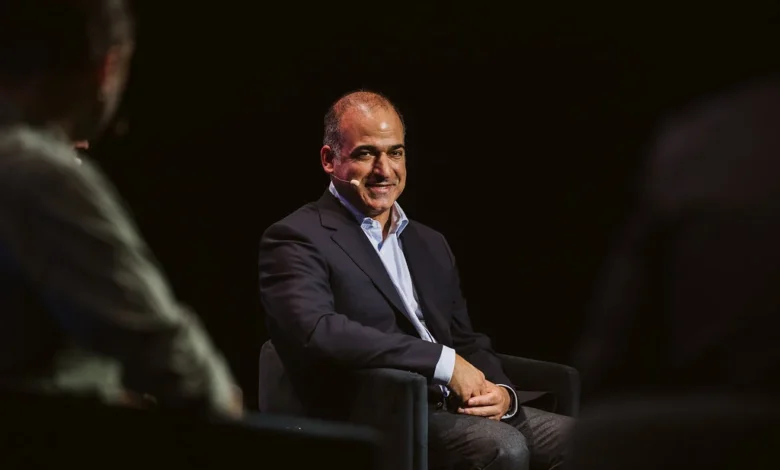
When pressed on how and when these technologies will reach the consumer or enterprise market, industry stakeholders offer guarded responses. Michael Rabbat, co-founder of AMI Labs and vice president of world models, addressed the panel at the conference, maintaining a measured stance on the organization’s developmental milestones. When directly questioned about specific product pipelines, Rabbat remained noncommittal, noting that the firm will disclose details when the time is appropriate. In subsequent correspondence, he reiterated that AMI remains firmly entrenched in a foundational research and building phase, intentionally withholding public disclosures regarding product roadmaps or launch dates.
To some extent, this defensive posture is understandable. AMI Labs is less than a year old, and early-stage deep-tech ventures typically protect their intellectual property fiercely during the formative phases of research. However, this cloak-and-dagger methodology is not isolated to AMI; it permeates the entire ecosystem of spatial intelligence. World Labs, another prominent player, has developed platforms like Marble, which showcases impressive capabilities in media generation, CGI effects, and explorable virtual environments for video games. While robotics applications are frequently cited as viable targets, Marble and similar platforms often function more as capability demonstrations than as ready-to-deploy commercial products.
This pervasive secrecy extends even to the upstream suppliers who feed data into these machine-learning pipelines. On the sidelines of the conference, Alex de Vigan, CEO of Physicl—a specialized data supplier catering to the burgeoning world model sector—expressed frustration regarding the lack of transparency from his clients. While de Vigan acknowledges that Physicl’s data inputs are actively utilized in shaping these models, he and his team remain largely in the dark regarding the precise nature of the end products. According to de Vigan, greater clarity from foundational labs would allow data suppliers to optimize their collection methodologies and deliver significantly more targeted datasets, yet developers continue to operate behind closed doors.
The Versatility Dilemma and Strategic Diversification
The shroud of mystery surrounding world models is compounded by their inherent versatility. Unlike narrow AI applications designed for singular tasks, a comprehensive world model functions as a navigable, predictive map of physical reality. The underlying algorithmic architecture capable of guiding an autonomous vehicle through dense urban traffic can, in theory, be repurposed to instruct a humanoid robot in warehouse logistics, or to transform hours of raw video footage into a fully interactive three-dimensional simulation.
AMI Labs has already explored an array of disparate sectors, including manufacturing, biomedicine, advanced robotics, and clinical software solutions through its partnership with Nabia. It is statistically improbable that any single organization will successfully commercialize all of these verticals simultaneously. Instead, these broad explorations suggest that companies are currently testing multiple hypotheses to determine which market sector offers the most viable path to sustainable monetization.
Furthermore, the abundance of venture capital and research funding removes the immediate operational pressure to narrow their focus. In the current economic climate, as long as fundraising remains frictionless, foundational labs have the luxury of exploring diverse applications without committing prematurely to a single product category.
The Dark Forest Dynamic of Competitive AI
Paradoxically, the very financial abundance that enables prolonged, stealthy research also dictates extreme caution. In a market where capital is readily available, premature public disclosures serve as an invitation to aggressive competition. If a leading laboratory were to announce a breakthrough—such as a proprietary humanoid robotics platform or a revolutionary cinematic rendering engine—it would instantly trigger a race among rival startups, well-funded neolabs, and tech giants like OpenAI and Anthropic.
This dynamic closely mirrors the sociological thought experiment known as the dark forest hypothesis, popularized by science fiction author Cixin Liu. In a competitive environment populated by entities capable of rapid growth and lethal rivalry, the safest survival strategy is absolute silence. By revealing their precise vectors of development, labs risk attracting unwanted attention from well-resourced competitors who can quickly reverse-engineer or outspend them to market. Consequently, maintaining ambiguity acts as a defensive moat, delaying the inevitability of fierce market competition for as long as possible.
Implications for the Future of Spatial Intelligence
As the artificial intelligence industry navigates this phase of deep research, the implications of the world model boom extend far beyond Silicon Valley boardroom strategies. The convergence of spatial intelligence and physical automation will eventually redefine labor, entertainment, and transportation. However, the path from theoretical simulation to robust, revenue-generating commercial enterprise remains obscured by strategic secrecy.
For now, the ecosystem will continue to operate under a veil of calculated ambiguity. As suppliers, investors, and competitors attempt to chart the trajectory of spatial computing, the true capabilities of labs like AMI and World Labs will remain hidden within the digital wilderness, waiting for the right moment to emerge into the light.