Motorola heard you like cameras so it put a lot of them on the Signature 27

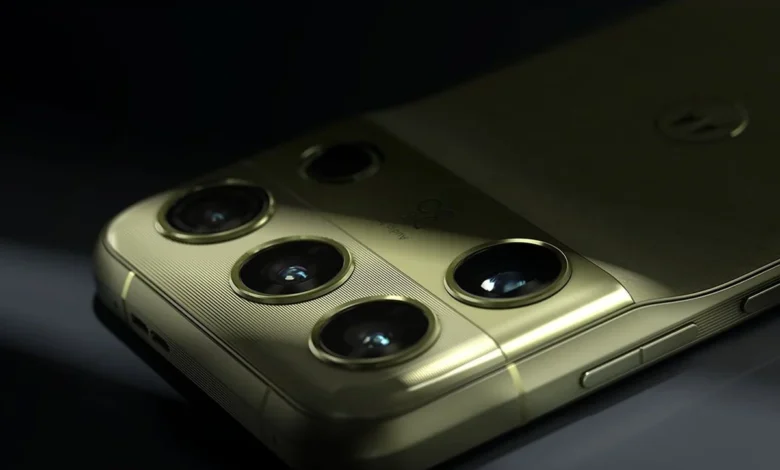
The global mobile technology landscape is bracing for a significant high-end hardware showcase as Motorola prepares to officially unveil its next-generation flagship smartphone, the Motorola Signature 27. Scheduled for a prominent debut during the annual Qualcomm Snapdragon Summit, the device has already begun generating considerable industry interest following a series of aggressive pre-announcement marketing campaigns. In the final hours leading up to the official unveiling, Motorola has released official imagery detailing the device’s rear panel aesthetics, prominently highlighting a remarkably dense and complex camera island configuration that signals an ambitious pivot back into the ultra-premium mobile segment. Alongside this visual teaser, the Lenovo-owned brand has confirmed a major strategic alliance with iconic Danish audio manufacturer Bang and Olufsen, a move designed to elevate the multimedia capabilities of its forthcoming premium portfolio. These dual developments underscore a concerted effort by Motorola to challenge established market leaders in the flagship arena by delivering heavily differentiated hardware centered on advanced imaging systems and high-fidelity acoustics.
Chronology of the Pre-Launch Campaign
The trajectory toward the formal announcement of the Motorola Signature 27 has been carefully orchestrated through a series of systematic leaks, official teasers, and strategic industry disclosures. The timeline commenced weeks prior with initial supply chain murmurs and regulatory filings indicating that Motorola was developing a true tier-one flagship device intended to supersede its previous generation of foldable and upper-mid-range offerings.
As September progressed, Motorola initiated a targeted promotional campaign across various digital and social media channels. The earliest official teaser arrived in mid-September, establishing the "Signature 27" nomenclature and setting expectations for a device positioned at the absolute apex of the company’s hardware hierarchy. This initial teaser was closely coordinated with Qualcomm’s official announcements regarding the schedule of the upcoming Snapdragon Summit, confirming that Motorola would utilize the high-profile industry event as the primary stage for the device’s global introduction.
The chronology accelerated significantly just twenty-four hours before the keynote presentation, when Motorola released explicit visual documentation of the device’s rear camera housing. This sudden disclosure shifted public discourse from generalized speculation regarding chipset specifications to intense analysis of the multi-lens optical array. Simultaneously, the official announcement of the Bang and Olufsen partnership was broadcast via corporate social media channels, effectively anchoring the hardware reveal with a heavy emphasis on auditory engineering. This calculated drip-feed of information has ensured sustained media attention, positioning the Signature 27 as one of the most anticipated mobile hardware releases of the current product cycle.
Detailed Analysis of the Camera System Design
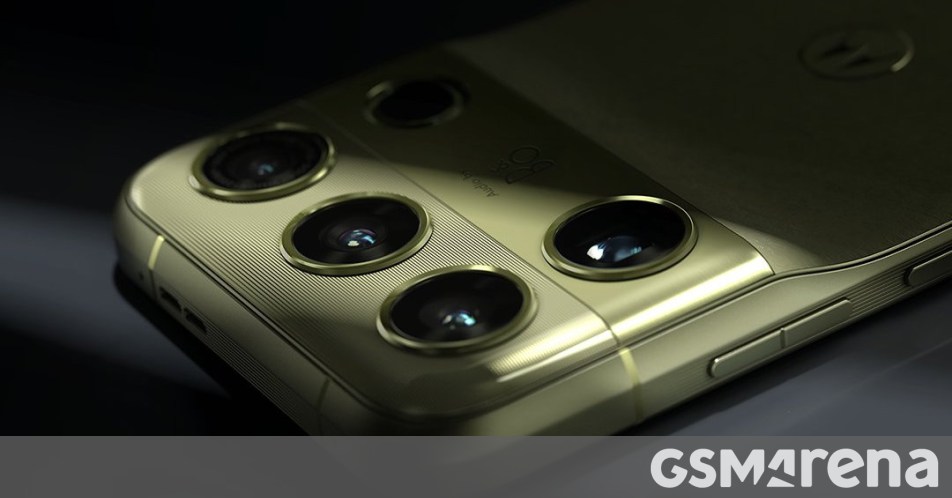
The most immediately striking aspect of the Motorola Signature 27 revealed thus far is the physical architecture of its rear camera island. Eschewing the minimalist, streamlined camera modules that have dominated smartphone design trends over the past several fiscal quarters, Motorola has opted for a maximalist approach. The newly published promotional imagery reveals a sprawling camera housing that accommodates a remarkably high concentration of individual optical sensors and associated hardware components.
While official technical specifications regarding sensor resolutions, physical optical formats, and focal lengths remain officially embargoed until the full keynote presentation, the sheer surface area and lens count of the module suggest a multi-faceted imaging strategy. Industry analysts observing the trend indicate that manufacturers adopting such complex arrays are typically attempting to cover an extensive range of focal lengths without relying exclusively on aggressive digital cropping, or are incorporating specialized hardware such as dedicated depth-sensing LiDAR, macro-specific optics, or advanced multi-spectrum color sensors.
This design choice represents a bold aesthetic and functional statement. In a market where competitors often prioritize thinness and understated elegance, Motorola’s design language for the Signature 27 leans heavily into industrial functionality and technical prowess. The visual weight of the camera island communicates to consumers that advanced computational photography and versatile optical capture are core pillars of the device’s value proposition. Whether this layout translates into tangible superiority in low-light performance, zoom capabilities, and video stabilization will be a critical metric evaluated by reviewers once retail units become available for comprehensive benchmarking.
Strategic Partnership with Bang and Olufsen
Complementing the hardware-heavy imaging disclosures, Motorola’s newly announced global partnership with Bang and Olufsen represents a significant evolution in the company’s approach to mobile multimedia reproduction. The collaboration introduces "Audio by Bang and Olufsen" branding and acoustic tuning to Motorola’s premium device portfolio, signaling a departure from previous audio collaborations or in-house acoustic management.
Bang and Olufsen, a brand globally recognized for its uncompromising commitment to luxury industrial design and high-end acoustic engineering, brings decades of audio processing expertise to the partnership. According to joint corporate statements released by both entities, the collaboration aims to combine Motorola’s hardware innovation with Bang and Olufsen’s proprietary sound tuning methodologies to deliver a more immersive and faithful acoustic experience.
In practical terms, the integration of Bang and Olufsen technology is expected to encompass both internal stereo loudspeaker performance and advanced audio software profiles for headphone usage. For mobile consumers increasingly utilizing their smartphones as primary media consumption devices for streaming video, mobile gaming, and high-resolution music playback, enhanced acoustic fidelity represents a major selling point. Historically, partnerships between consumer electronics manufacturers and heritage audio brands have varied in execution—ranging from superficial marketing badges to deep hardware and software integrations. The success of the Motorola and Bang and Olufsen alliance will ultimately depend on the depth of the acoustic calibration and the physical capabilities of the Signature 27’s internal speaker chambers and digital-to-analog conversion hardware.
Industry Context and Market Implications
The launch of the Motorola Signature 27 arrives at a crucial juncture in the global smartphone market. For several years, Motorola—under the stewardship of Lenovo—has successfully maintained a strong market share through its competitively priced Moto G series and its innovative, design-forward Razr foldable line. However, the company has occasionally lacked a definitive, traditional slab-format flagship capable of competing directly against the highest-tier offerings from established market leaders such as Apple, Samsung, and various prominent Chinese original equipment manufacturers.
By utilizing the Qualcomm Snapdragon Summit as its launchpad, Motorola is explicitly signaling that the Signature 27 will incorporate Qualcomm’s most advanced mobile platform, presumably the latest generation Snapdragon 8-series flagship processor. This positions the device squarely within the performance tier required to run demanding on-device artificial intelligence models, high-frame-rate mobile games, and intensive computational photography algorithms.
The broader market implications of this release point toward an intensifying competition in the ultra-premium tier, where hardware differentiation is increasingly difficult to achieve. As consumer upgrade cycles lengthen, manufacturers are under mounting pressure to offer compelling, tangible upgrades that justify premium pricing structures. By doubling down on an unorthodox, feature-rich camera array and securing a high-prestige audio partnership, Motorola is attempting to carve out a distinct identity for its flagship line.
Furthermore, the timing of the announcement during the Snapdragon Summit aligns Motorola closely with Qualcomm’s broader narrative of mobile technological advancement. As the summit commences, industry observers will be closely monitoring not only the full specification sheet of the Signature 27—including battery capacity, display technology, charging speeds, and pricing structure—but also Motorola’s global distribution strategy.
Ultimately, the Motorola Signature 27 appears poised to test consumer appetite for a bold, uncompromised flagship design philosophy. With the official unveiling just hours away, the technology sector awaits the definitive confirmation of whether Motorola’s ambitious hardware choices and strategic partnerships will successfully re-establish the brand as a dominant force in the upper echelons of the global smartphone industry.