Level-5 CEO Akihiro Hino addresses generative AI controversy following digital showcase backlash

The landscape of modern game development is undergoing a seismic shift, and recent events involving Japanese developer Level-5 have brought the industry’s reliance on generative artificial intelligence into sharp focus. Following the studio’s highly anticipated "Level-5 Vision 2026" digital showcase, president and CEO Akihiro Hino issued a formal apology after viewers identified what appeared to be unauthorized or intrusive use of generative AI in the event’s presentation materials. The incident has ignited a wider conversation regarding the ethical boundaries of AI in creative media, specifically where promotional content ends and the integrity of the artistic product begins.
The Chronology of the Controversy
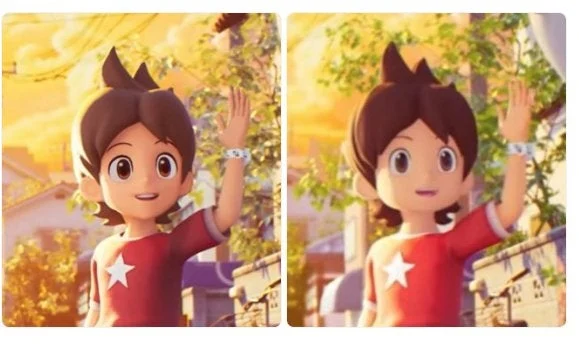
The friction began on September 12, 2026, when Level-5 hosted its digital showcase, a major event intended to reignite excitement for the studio’s flagship franchises, including Professor Layton, Decapolice, and Yo-Kai Watch. Fans, who had been waiting years for updates on these titles, were eager to see progress on the long-gestating projects. However, almost immediately after the stream concluded, eagle-eyed viewers on social media platforms began highlighting specific segments of the trailer footage that exhibited the tell-tale visual artifacts associated with generative AI, such as inconsistent frame transitions, morphing textures, and unnatural object rendering.
Within hours, the discourse on platforms like X (formerly Twitter) transitioned from excitement to skepticism. Critics argued that the use of AI in a presentation for titles known for their distinct, hand-crafted artistic style felt disingenuous. By the following day, the backlash had gained enough momentum to reach the studio’s leadership, forcing an immediate public response from Hino to clarify the studio’s development philosophy and the specific role technology played in the showcase.
Official Responses and Technical Clarifications
In his response, Akihiro Hino sought to differentiate between the studio’s internal production pipeline and the promotional material showcased at the event. Hino’s statement, translated from Japanese, emphasized that the decision to use AI for the showcase was driven by a desire to create a "flashy" and "spectacular" presentation to match the intensity of the event. He explicitly stated that the integration of AI was an experimental measure intended to speed up the creation of high-fidelity visual assets for the trailer.
"It appears that some people felt uncomfortable about this, so I deeply apologise," Hino noted in his public address. He was careful to draw a firm line between the marketing materials and the actual software development process. According to Hino, the core components of Level-5’s titles—including narrative scenarios, character designs, and world-building settings—remain exclusively the domain of human creators. He further clarified that the company is exploring AI as a tool for "digitizing" creative workflows, such as converting traditional 2D art into 3D polygons, rather than relying on AI to generate original game content from scratch.
The Strategic Shift Toward Development Efficiency
The controversy occurs against the backdrop of Level-5’s broader corporate mandate: a goal to reduce their product development lifecycle from five years down to two. In the high-stakes world of triple-A and AA game development, the "five-year cycle" has become an unsustainable burden for many studios, leading to burnout and ballooning budgets. Hino has framed the adoption of new technologies as a necessary evolution to keep the studio competitive and financially viable.
By utilizing AI for trial-and-error tasks, Level-5 aims to automate the more repetitive aspects of asset production. This is part of a growing trend across the industry, where companies are increasingly turning to machine learning to handle technical hurdles that would otherwise require hundreds of man-hours. However, the disconnect between this efficiency-first mindset and the expectations of a consumer base that values human craftsmanship has created a significant PR challenge for the studio.

Industry Context and the AI Paradigm
Level-5 is far from alone in its experimentation with generative technology. Over the past twenty-four months, the gaming industry has seen a massive influx of capital into AI-driven development. Major players, including Electronic Arts (EA), Square Enix, and the South Korean conglomerate Krafton, have all publicly declared their intentions to integrate AI at the "core" of their business models.
For instance, Square Enix has previously discussed using generative AI to automate portions of their quality assurance (QA) processes, aiming for a 70% automation rate by 2027. Similarly, Krafton has branded itself an "AI-first" company, suggesting that the future of interactive entertainment will rely on procedural generation and AI-assisted animation to create larger, more responsive worlds. A recent industry report from the Tokyo Game Show organizers revealed that over 50% of Japanese game companies are currently incorporating some form of AI into their production pipelines, signaling that the "Level-5 incident" is likely the first of many such conflicts between developers and their audiences.
The Ethics of "Spectacle" vs. Authenticity
The core of the backlash lies in the perceived deception. When fans of franchises like Professor Layton watch a trailer, they are looking for the "charm and individuality" that Hino himself highlighted in his defense. These titles are beloved precisely because of their distinct aesthetic—often characterized by detailed, hand-drawn animation and meticulous art direction. When that aesthetic is filtered through a generative model, even for a promotional trailer, it can create a sense of cognitive dissonance for the viewer.
The incident highlights a growing gap in expectation: studios view AI as a neutral, efficiency-boosting utility, while a significant portion of the audience views it as a threat to the "soul" of the creative process. The challenge for companies like Level-5 is not just technical but communicative. They must now navigate a landscape where they are expected to be transparent about their tools while simultaneously maintaining the prestige and artistic integrity that their brand relies upon.
Future Implications and Takeaways
As Level-5 looks toward its next presentation, the studio has promised to take the recent criticism as a "lesson." This likely means more rigorous vetting of promotional assets and a more transparent communication strategy regarding how technology is utilized. However, the incident serves as a bellwether for the entire industry. As development timelines tighten and the demand for higher-fidelity graphics grows, the temptation to use AI to bridge the gap will only increase.
For the gaming sector, the path forward requires a delicate balancing act. While the economic argument for AI—reducing costs and development time—is compelling for shareholders, the cultural argument for human-led design remains the primary driver of consumer loyalty. The events of the past week have proven that even a minor lapse in transparency can lead to a significant loss of goodwill. As companies continue to adopt these tools, the industry will need to establish clear standards for what constitutes "AI-assisted" versus "AI-generated" content, and, perhaps more importantly, determine how to communicate these technical shifts without alienating the very fans who sustain the industry’s success.
Level-5’s experience illustrates that in the era of generative AI, the technical capability to produce content is only half the battle; the other half is maintaining the trust of an audience that is increasingly wary of the role that machines play in the stories they love. Whether this will lead to a industry-wide standard for "human-made" labeling or a continued cycle of backlash remains to be seen. For now, the studio’s commitment to keeping the creative heart of its games in human hands will be under intense scrutiny from fans and critics alike.