WhatsApp Expands Cross-Device Ecosystem with Enhanced CarPlay Integration Standalone iPad Support and New Multimedia Features

WhatsApp is undergoing a significant transformation from a mobile-centric messaging application into a comprehensive cross-device communication platform, signaling a strategic shift by its parent company, Meta. In a series of updates announced this week, the service has introduced a revamped experience for Apple CarPlay and Android Auto, a standalone registration process for iPad users, and enhanced multimedia capabilities including in-app PDF editing and music sharing. These developments represent a broader effort to unify the user experience across various hardware environments, ensuring that the world’s most popular messaging app remains indispensable whether a user is at their desk, on their couch, or behind the wheel.
Redefining the Automotive Communication Experience
The integration of messaging apps into vehicle infotainment systems has historically been limited by safety concerns and technical constraints. While WhatsApp has been available on Apple CarPlay and Android Auto for several years, its functionality was previously restricted to basic tasks: users could dictate messages via voice assistants and receive incoming calls. The latest update, however, significantly expands this utility.
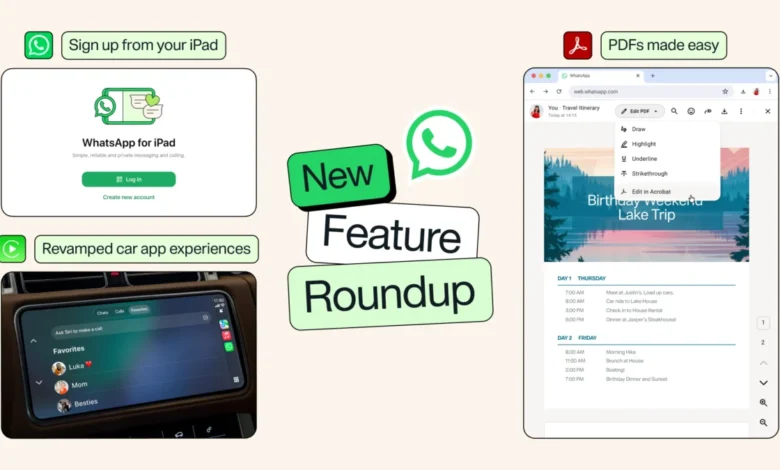
Under the new framework, users can now access their full call history and a list of favorite contacts directly from the vehicle’s display. Perhaps more importantly, the update improves the way messages are handled while driving. Users can now hear incoming messages read aloud with greater clarity and reply using more intuitive voice-to-text workflows. By streamlining the interface to prioritize "Favorites," WhatsApp is attempting to reduce driver distraction, allowing users to reach their most frequent contacts without navigating through long lists of conversations.
This move comes at a time when automotive software is becoming a primary battleground for tech giants. Apple recently previewed the next generation of CarPlay, which will take over multiple screens within the vehicle, while Google continues to push Android Automotive as a native operating system for cars. By deepening its integration now, Meta ensures that WhatsApp remains the default communication layer within these evolving ecosystems.
The Long-Awaited Standalone iPad Experience
For years, the absence of a native, standalone iPad app was a point of contention for the WhatsApp user base. While a beta version for iPad was launched last year, it operated primarily as a "linked device," requiring a primary smartphone to be active and authenticated. The latest update removes this friction by allowing users to register for an account directly on the iPad.
According to company statements, this new registration flow allows the iPad to function as a standalone account. While a valid phone number is still required to receive a one-time passcode (OTP) for verification, the iPad app no longer needs to be tethered to a "primary" phone once the setup is complete. This is a technical milestone for the platform, which has historically relied on a 1:1 link between a phone number and a physical handset.
A WhatsApp spokesperson confirmed that this change is designed to cater to users who may use a tablet as their primary computing device. This shift aligns WhatsApp more closely with competitors like Telegram and iMessage, which have long offered robust, independent tablet experiences. For Meta, this expansion increases user engagement by capturing "lean-back" time—periods when users are at home on a tablet rather than on the go with a smartphone.
Productivity Enhancements and In-App PDF Editing
In a move that targets professional users and the growing "WhatsApp for Business" segment, the platform is introducing native PDF editing capabilities. Previously, when a user received a PDF, the app required them to download the file and open it in a third-party application to view or modify it.
The new feature allows users to open PDF documents directly within the WhatsApp interface on web and desktop versions. Beyond simple viewing, the update includes "lightweight" editing tools, such as highlighting text and adding annotations. These changes are then saved within the chat context. This functionality positions WhatsApp as a more viable tool for quick document reviews and collaborative workflows, reducing the "app switching" fatigue that often hampers productivity.
Industry analysts suggest that this is part of Meta’s larger play to compete with workplace communication tools like Slack and Microsoft Teams, particularly in markets like India, Brazil, and parts of Europe where WhatsApp is already the de facto standard for business communication.
Social Expression Through Music and Status
On the consumer side, WhatsApp is leaning into the "Status" feature—its version of Stories—by integrating with major music streaming services. Users can now share songs directly from Apple Music or Spotify to their WhatsApp Status.
This feature functions similarly to Instagram Stories, where a snippet of the music can be played, providing a soundtrack to the user’s photos, videos, or text updates. Meta noted that the goal is to allow users to "express themselves" and make their profiles more unique. By leveraging the existing APIs of Spotify and Apple Music, WhatsApp is fostering a more interconnected social experience, encouraging users to spend more time within the app’s social features rather than just its messaging threads.
A Chronology of WhatsApp’s Rapid Evolution
The updates announced this week are the latest in a rapid-fire series of deployments aimed at modernizing the aging platform. To understand the significance of these changes, it is helpful to look at the timeline of WhatsApp’s recent development:
- Late 2021: WhatsApp officially rolls out "Multi-Device" support, allowing users to use the app on up to four linked devices even if their phone is offline.
- Early 2023: The "Companion Mode" is introduced, allowing users to link the same WhatsApp account to multiple smartphones simultaneously.
- May 2024: Meta launches "WhatsApp Plus," a subscription-based model for power users and businesses. This includes features like custom profile URLs and advanced reaction tools.
- June 2024: The platform introduces "Usernames," a landmark privacy feature that allows users to connect with others without sharing their personal phone numbers.
- July 2024 (Current): Integration with CarPlay/Android Auto is overhauled, standalone iPad registration is enabled, and in-app PDF editing is launched.
This aggressive release schedule indicates that Meta is no longer treating WhatsApp as a static utility, but as a dynamic platform capable of generating revenue and maintaining long-term user retention.
Market Context and Data Analysis
WhatsApp’s expansion into more diverse hardware and professional use cases is backed by impressive, yet plateauing, user data. As of 2024, WhatsApp boasts over 2.7 billion monthly active users globally. However, in saturated markets, growth is increasingly found not in new users, but in increasing the "Average Revenue Per User" (ARPU) and total time spent on the platform.
Data from market research firms indicates that messaging apps are increasingly being used for "social searching" and commerce. In regions like Southeast Asia, over 60% of consumers interact with businesses through messaging apps. By adding PDF editing and standalone tablet support, WhatsApp is securing its place in the professional sphere.
Furthermore, the introduction of the "WhatsApp Plus" subscription plan represents a pivot toward monetization that does not rely on traditional advertising. By offering premium features to the millions of small businesses that use the app, Meta can generate significant recurring revenue while keeping the core messaging experience free for casual users.
Official Responses and Strategic Implications
While Meta executives have remained focused on the "user experience" narrative, industry observers see a more calculated strategy. Mark Zuckerberg has frequently spoken about the "private social square," a concept where communication moves away from public feeds (like Facebook) and into encrypted, private groups.
"The goal is to make WhatsApp the one app you never have to leave," says digital strategist Elena Rossi. "By adding PDF tools, music, and better car integration, Meta is building a ‘super-app’ ecosystem similar to WeChat in China. They want to own the entire pipeline of human interaction—from a quick ‘I’m driving’ text to a professional document sign-off."
The reaction from the tech community has been largely positive, particularly regarding the iPad update. Privacy advocates have also praised the recent introduction of usernames, noting that it solves a decade-old privacy flaw where users were forced to give out their phone numbers to strangers for one-time transactions or group chats.
The Path Forward: AI and Interoperability
Looking ahead, the next frontier for WhatsApp appears to be the integration of Meta AI. The company has already begun testing AI-powered chatbots and image generators within the app in select markets. These tools are expected to eventually assist with the new PDF editing features—perhaps by summarizing long documents or drafting replies to complex queries.
Additionally, WhatsApp is facing regulatory pressure in the European Union under the Digital Markets Act (DMA), which mandates "interoperability" between large messaging platforms. The recent technical shifts—moving away from a phone-tethered model to a more flexible, device-agnostic architecture—may be part of the groundwork necessary to allow WhatsApp users to eventually message users on other platforms like Signal or Telegram without compromising security.
As WhatsApp continues to roll out these features globally, the distinction between a "messaging app" and a "mobile operating system" continues to blur. By successfully migrating to the car, the tablet, and the desktop with native, high-utility features, WhatsApp is positioning itself to remain the dominant communication protocol for the next decade of the digital age.