Nvidia Reinvents DLSS 5 at SIGGRAPH 2026, Addressing Criticisms with Modular AI and Enhanced Control

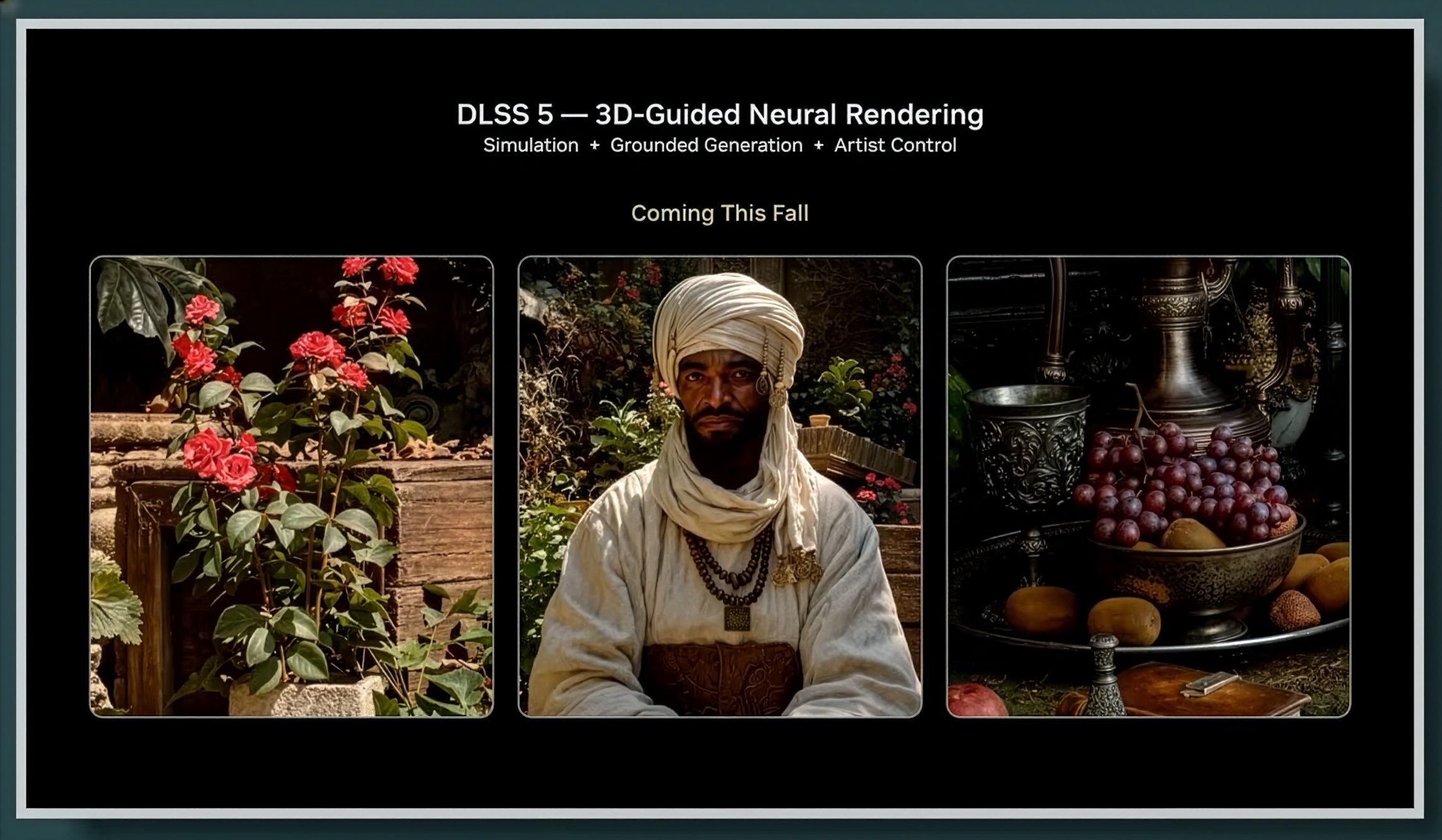
Nvidia first debuted its ambitious Deep Learning Super Sampling (DLSS) 5 technology earlier this year, a reveal that was met with a strong, often critical, response from both the press and gaming enthusiasts. The core of the criticism centered on the perception that the advanced upscaling tech had overstepped its traditional boundaries, venturing too far into AI-driven image generation that some feared could compromise artistic intent in video games. Nvidia, keen to address these concerns, has now presented a significantly refined vision of DLSS 5 at SIGGRAPH 2026, showcasing a more nuanced and controllable approach that aims to integrate AI enhancements without dictating the creative output.
The Evolution of AI in Gaming Graphics: A Brief History of DLSS
To fully appreciate the significance of DLSS 5’s re-unveiling, it’s crucial to understand the trajectory of Nvidia’s Deep Learning Super Sampling technology. Introduced in 2018 with the RTX 20-series GPUs, DLSS was groundbreaking, leveraging dedicated Tensor Cores on Nvidia’s graphics cards to upscale lower-resolution images to higher resolutions while maintaining or even improving visual fidelity. The initial iteration, DLSS 1.0, faced a mixed reception due to visible artifacts and a limited game library, but it laid the groundwork for future advancements. Early adopters noted the performance benefits but often questioned the visual trade-offs.
The real breakthrough came with DLSS 2.0, launched in 2020. This version vastly improved image quality, significantly reducing ghosting and artifacting, and became much easier for developers to integrate into their titles due to its more generalized AI model. It transformed from a niche feature into a widely adopted industry standard, proving the immense potential of AI in real-time rendering. DLSS 2.0 effectively allowed gamers to achieve higher frame rates at higher resolutions without a significant perceived loss in visual quality, often making high-resolution gaming, such as 4K, viable on hardware that would otherwise struggle to maintain smooth frame rates. Its widespread adoption solidified AI upscaling as a critical technology for modern gaming.
Nvidia continued its innovation with DLSS 3.0, introduced with the RTX 40-series in 2022. This iteration brought the revolutionary Frame Generation technology, which uses AI to synthesize entirely new frames between traditionally rendered ones, dramatically boosting frame rates beyond what was previously possible through upscaling alone. While undeniably impressive in terms of raw performance gains, Frame Generation also introduced a slight, albeit measurable, increase in input latency. Nvidia later sought to mitigate this with technologies like Reflex, aiming to provide the best of both worlds: high frame rates and low latency. Following this, DLSS 3.5 added Ray Reconstruction, an AI-powered denoiser designed to improve the quality of ray-traced lighting by replacing traditional hand-tuned denoisers with an AI model trained on Nvidia’s supercomputers, further solidifying AI’s role in complex rendering pipelines.
The consistent theme through these iterations has been Nvidia’s relentless push to leverage AI for both performance and visual enhancement. However, the initial announcement of DLSS 5 earlier this year marked a notable departure. Its emphasis on "AI-infused tech transforms pixels with photorealistic lighting and materials" implied a more generative role for AI, potentially allowing the technology to create or alter visual elements in a more fundamental way rather than merely upscaling or reconstructing them. This raised immediate red flags among many within the gaming and creative communities, who worried about a future where AI might override the meticulous work of human artists and designers, leading to a homogenized or unintended visual style, which some colloquially termed "AI slop." Jensen Huang, Nvidia’s charismatic CEO, publicly addressed these concerns, initially stating that "gamers didn’t understand it" but later adopting a more empathetic tone, reassuring the community that DLSS 5 would indeed "preserve artistic intent" while simultaneously "decrying AI slop." This pivot in messaging underscored the company’s recognition of the deep-seated apprehension within the creative and gaming communities regarding AI’s potential to dilute artistic vision.
SIGGRAPH 2026: A New Narrative for DLSS 5
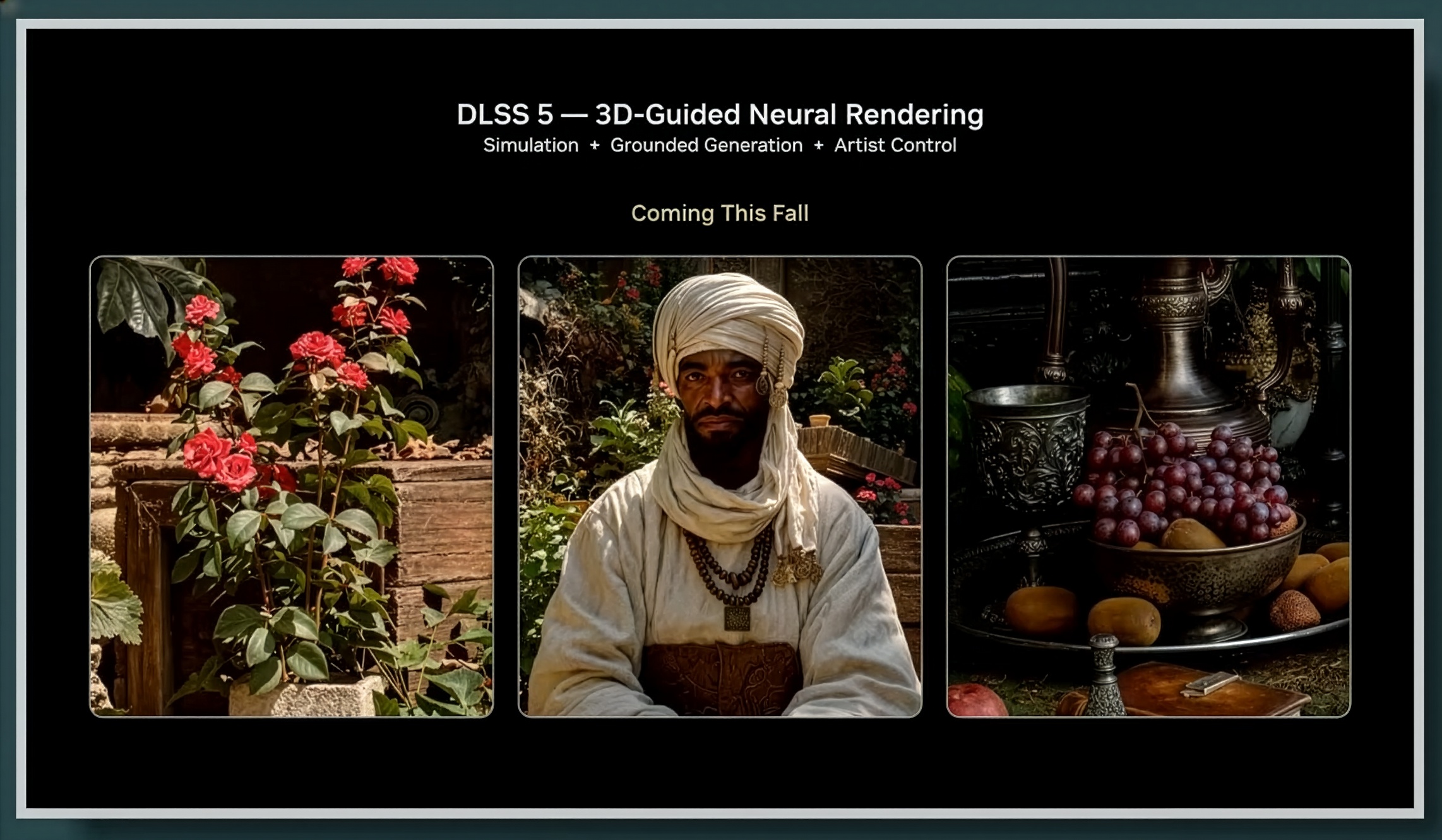
The choice of SIGGRAPH 2026 for the re-showcase of DLSS 5 is highly strategic. SIGGRAPH (Special Interest Group on Computer Graphics and Interactive Techniques) is the premier international conference on computer graphics and interactive techniques, attended by leading researchers, developers, and artists in the field. Presenting a refined DLSS 5 here, amidst an audience deeply invested in the nuances of visual fidelity and creative control, signals Nvidia’s commitment to addressing the technical and philosophical concerns of the industry’s most discerning minds. The demonstrations at SIGGRAPH reportedly presented a DLSS 5 that looked "different this time around," indicating a significant re-evaluation and adjustment of its core philosophy and implementation details.
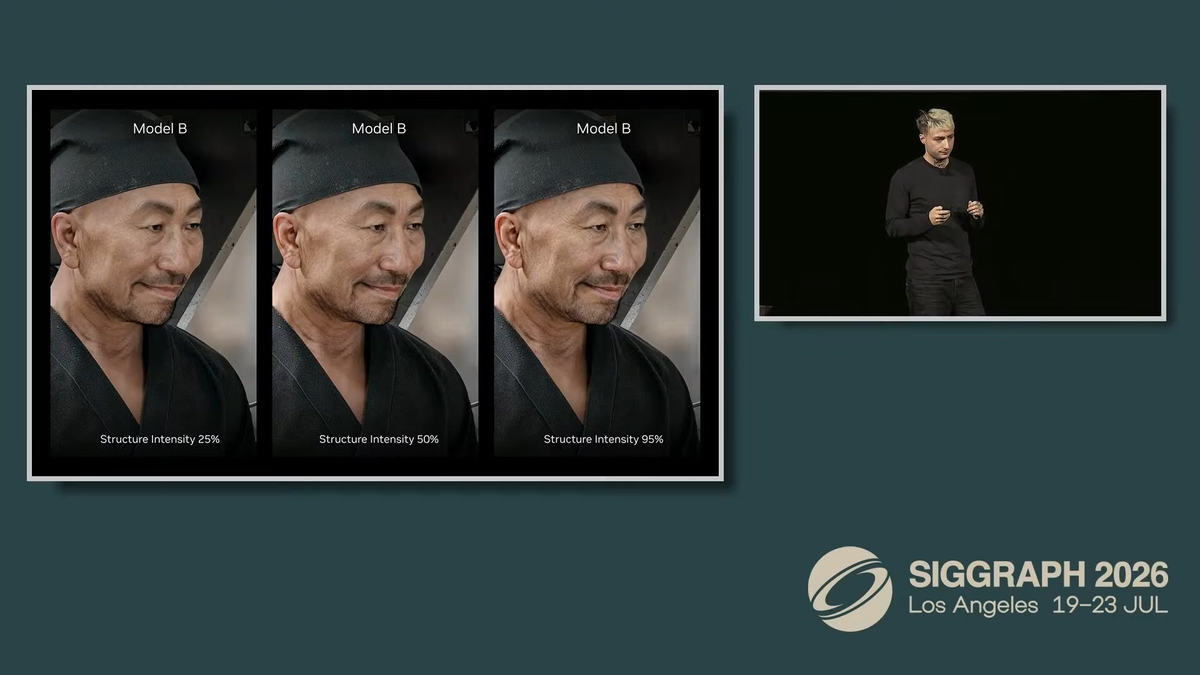
The most critical takeaway from the SIGGRAPH presentation is the introduction of three distinct models within DLSS 5, each offering varying levels of detail and impact on performance. This modular approach is a direct and thoughtful response to the earlier criticisms regarding artistic control. Instead of a monolithic AI system that applies a uniform set of enhancements across the board, developers now possess granular control over how and where DLSS 5’s AI capabilities are deployed. A game doesn’t need to be confined to a single model throughout its entirety; instead, developers can intelligently employ different models for different scenes or even specific elements within a scene. For instance, a developer might opt for a lighter AI touch on meticulously designed character models to ensure their unique artistic style remains untouched, while applying a more aggressive "beautification" model to environmental assets like distant landscapes, intricate foliage, or complex material surfaces, where AI can significantly enhance photorealism and detail without compromising primary artistic intent.
This newfound flexibility extends to individual elements of a scene, allowing developers to fine-tune how much DLSS 5 "touches up" characters versus the world, or even specific textures, particle effects, and lighting phenomena. Crucially, Nvidia demonstrated the ability to seamlessly switch between these models in real-time without incurring noticeable latency. This is a vital feature for dynamic gameplay scenarios, where visual settings might need to adapt on the fly based on player action or environmental conditions, or for developers to rapidly prototype and iterate on their visual targets during the development cycle, accelerating creative workflows.
DLSS 5, in its current iteration, uses a sophisticated combination of techniques. The foundational upscaling part continues to function conventionally, leveraging temporal data and motion vectors to reconstruct the original rendered frame, intelligently inferring missing pixel data to enhance its lighting, geometry, and base textures. This ensures that the core visual data, representing the developer’s original artistic intent, is preserved and forms the basis for any subsequent enhancements. The part that garnered such heavy criticism—the AI-driven "beautification features" that augment photorealism by potentially generating new detail or enhancing existing materials and lighting—is now distinctly positioned as an optional layer, applied after the initial upscaling process. This distinction is paramount. It means that the controversial generative aspects are not inherently baked into the image’s fundamental structure but rather serve as an additional, controllable visual flourish. However, a lingering question remains: whether developers (and by extension, end-users) will have the explicit, readily accessible option to completely disable these post-upscaling beautification features, or if they are simply adjustable in intensity. Clarification on this user-level control will be key to fully assuaging concerns about artistic integrity among the most discerning players.
Addressing the Core Development Challenges
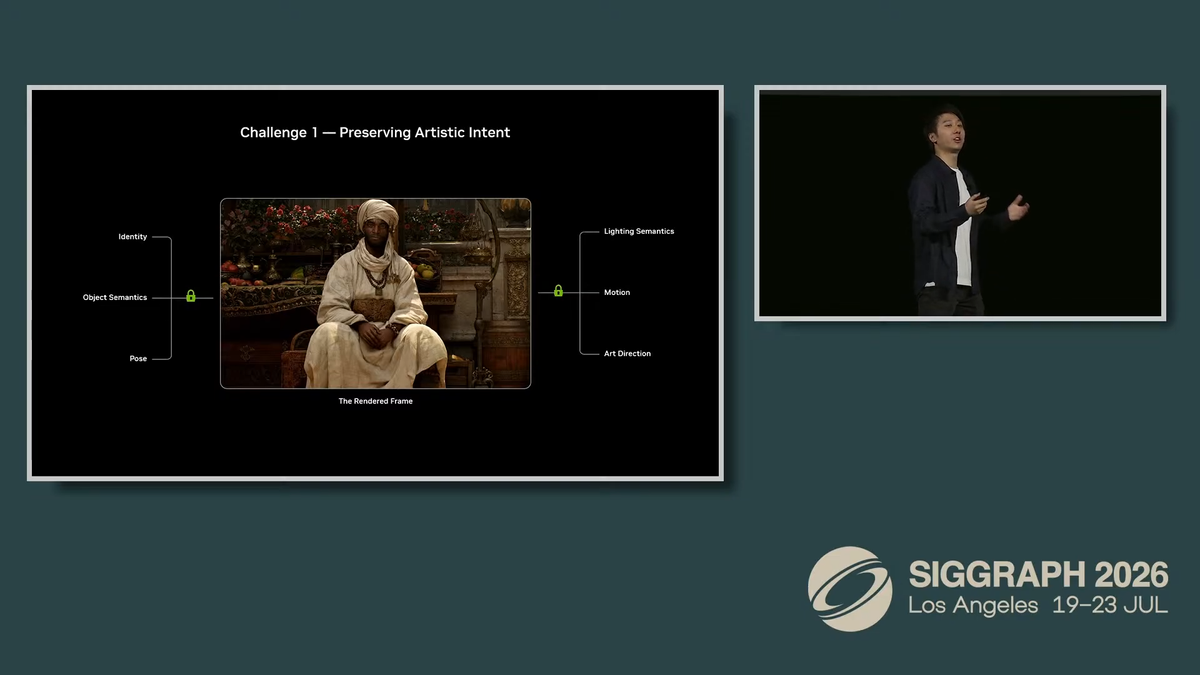
Nvidia candidly outlined three main challenges faced during the development of DLSS 5, many of which appear to be direct responses to the feedback received after the initial reveal. These challenges highlight the complex engineering required to integrate advanced AI into real-time rendering.
-
Preserving Original Creative Vision: This was identified as the paramount concern, directly stemming from the "AI slop" fears. Nvidia’s solution, as showcased at SIGGRAPH, is the modular, multi-model approach. By offering developers a spectrum of AI intervention, from subtle, almost imperceptible enhancements to more pronounced photorealistic transformations, they can integrate DLSS 5 in a way that complements, rather than overrides, their artistic vision. The ability to apply different models to different scene elements or entirely disable the generative aspects for critical assets provides a robust framework for maintaining artistic control. This is a significant shift from the potentially "all-or-nothing" implication of the initial announcement, offering a tailored approach to AI integration.
-
Handling One Frame at a Time: Generative AI models, particularly large diffusion models trained for image or video generation, often process multiple frames or even entire sequences together to create coherent, high-quality output. While this can lead to stunning results in content creation, it’s fundamentally incompatible with real-time interactive gaming, where extremely low latency and immediate responsiveness are critical for a fluid user experience. If DLSS 5 were to introduce significant delays by processing multiple frames in a batch, it would negatively impact input response times, making games feel sluggish, unresponsive, and unplayable—a fatal flaw for any gaming technology. Nvidia emphasized that DLSS 5 has been engineered from the ground up to process one frame at a time, ensuring that it does not negatively affect response times or introduce perceptible input lag. This technical achievement implies the development of highly optimized and efficient neural network architectures that can infer and apply complex enhancements with extreme speed, maintaining the responsiveness crucial for competitive and immersive gameplay. This is a key differentiator from many general-purpose generative AI tools that prioritize output quality over real-time constraints.
-
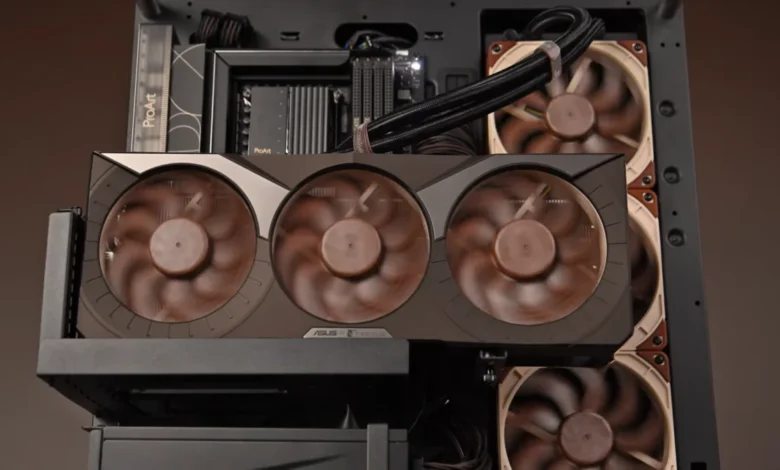
Optimization of DLSS 5: The third challenge pertained to the practical deployment and accessibility of the technology. Initial reports and demonstrations of DLSS 5 suggested immense computational demands, with some early previews reportedly running on systems equipped with two Nvidia RTX 5090 GPUs – the then-highest-end Blackwell gaming graphics cards. This raised significant concerns that DLSS 5 would be limited to an ultra-niche segment of the market, effectively inaccessible to most high-end gamers. At SIGGRAPH, Nvidia proudly announced significant optimization breakthroughs. The new, modular DLSS 5 models are now capable of running effectively on a single GPU and are described as "VRAM efficient." This is a monumental improvement, suggesting that DLSS 5 will be accessible to a much broader range of high-end and enthusiast-tier RTX GPUs, rather than being confined to only the most expensive, dual-card setups. Nvidia achieved this remarkable optimization by developing a "more compact model that has learned from a larger diffusion model." This refers to a sophisticated technique known as model distillation, where a smaller, more efficient neural network is trained to replicate the performance and quality of a larger, more complex one. The result is a highly optimized AI model that can deliver real-time 4K performance, even with its advanced beautification capabilities, on a single, albeit powerful, consumer-grade GPU. This optimization is crucial for widespread adoption and demonstrates Nvidia’s commitment to making this cutting-edge technology practical for the gaming mainstream.
The Broader Landscape of Upscaling Technology
The ongoing evolution of DLSS 5 is happening within a fiercely competitive landscape, where AI-powered upscaling has become an indispensable component of modern PC gaming. Technologies like Nvidia’s DLSS, AMD’s FidelityFX Super Resolution (FSR), and Intel’s Xe Super Sampling (XeSS) are now "mandatory parts of the equation," serving not only as preferred anti-aliasing solutions but also as crucial enablers for demanding features like ray tracing. These technologies collectively allow gamers to push visual settings to their limits and enjoy high-resolution experiences without sacrificing playable frame rates. The industry has largely embraced these solutions as a necessary tool to bridge the gap between increasing graphical demands and hardware capabilities.
Just as Nvidia refines DLSS 5, its competitors are also advancing rapidly. AMD, for instance, recently brought official FSR 4.1 support to its RX 7000 series GPUs, featuring an INT8 model that is now available in over 300 games, with RDNA 3 APUs also slated to receive FSR 4.1 soon. This indicates a continuous innovation cycle, where each company pushes the boundaries of what’s possible with real-time rendering and AI integration. Intel, with its XeSS, also continues to refine its offering, further solidifying the "upscaling war" as a key battleground in GPU innovation. This fierce competition ultimately benefits consumers by driving faster development, better performance, and more refined image quality across the board.
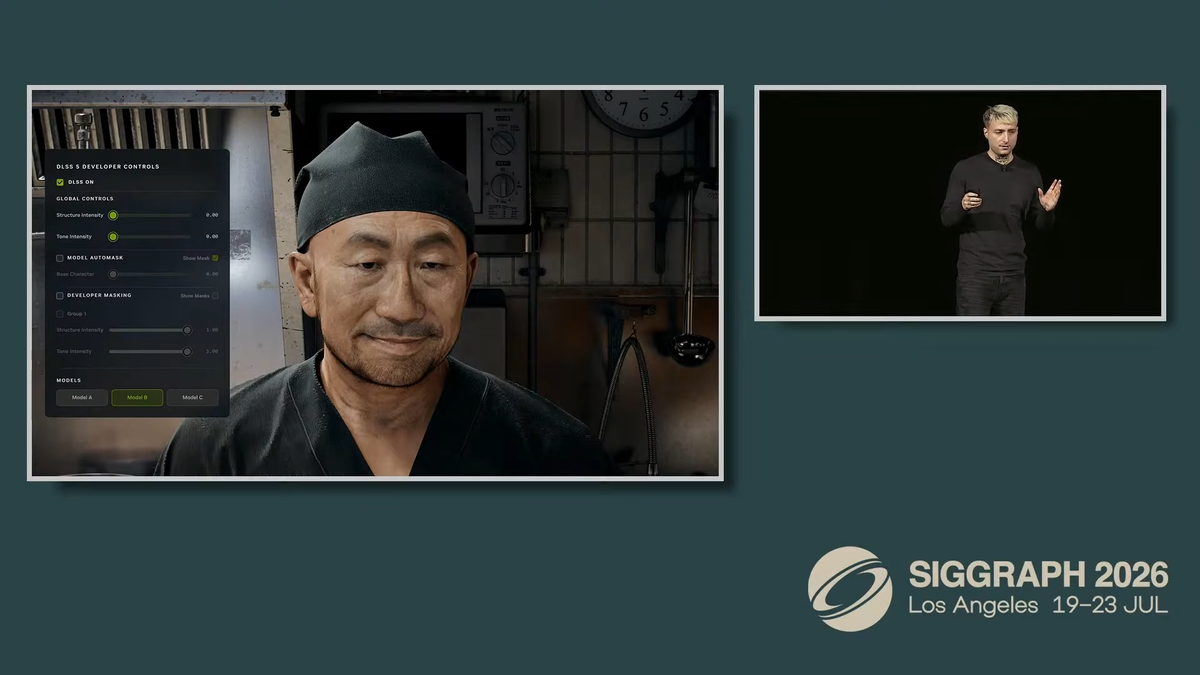
The implications of DLSS 5, particularly its modularity and enhanced control, extend beyond mere performance boosts. It signals a future where AI is not just an additive layer but a deeply integrated, yet customizable, component of the rendering pipeline. This could lead to games with unprecedented levels of detail, realism, and dynamic visual effects, while still allowing developers to preserve their unique artistic vision through selective application. The success of DLSS 5 will hinge on developer adoption, ease of implementation, and the ultimate level of control offered to both creators and players. It also sets a precedent for how future generative AI technologies might be integrated into interactive experiences without alienating creative professionals.
Looking Ahead: Release and Remaining Questions
While the SIGGRAPH 2026 presentation showcased a significantly more mature and developer-friendly DLSS 5, the debate around artistic intent is unlikely to disappear entirely. Even with the option for developers to choose the level of AI intervention, some purists may still prefer an untouched, native rendering, or demand full user-level control to disable all AI-driven "beautification" features, irrespective of developer choice. The philosophical discussion about whether AI should generate or merely enhance visuals will continue to evolve as these technologies become more powerful and pervasive. The balance between AI-driven augmentation and pure artistic fidelity will remain a critical point of contention.
There is currently no official, firm release date for DLSS 5. However, Nvidia has indicated a projected launch during Q3 2026. This extended timeline suggests that the company is committed to further tweaking the models and their parameters, actively incorporating community and developer feedback to ensure a robust, polished, and well-received launch. This iterative development process, especially in response to initial criticisms, highlights Nvidia’s understanding that broad adoption requires not just technological prowess but also trust and collaboration with the creative community. The period leading up to launch will likely see more technical deep-dives and demonstrations from Nvidia, further elaborating on the specific controls available to developers and users.
The journey of DLSS 5, from its controversial debut to its refined showcase at SIGGRAPH, underscores the dynamic tension between technological advancement and artistic integrity in the rapidly evolving world of computer graphics. If Nvidia can successfully deliver on its promises of modularity, single-GPU performance, VRAM efficiency, and respectful integration of AI, DLSS 5 could indeed mark a significant step forward for upscaling technology, offering a new paradigm for visual fidelity in gaming. The industry will be watching closely to see how these ambitious promises translate into the hands of developers and, ultimately, into the immersive experiences of gamers worldwide.