Tesla Full Self-Driving version 15 Reality View latency addressed by Elon Musk with software optimization

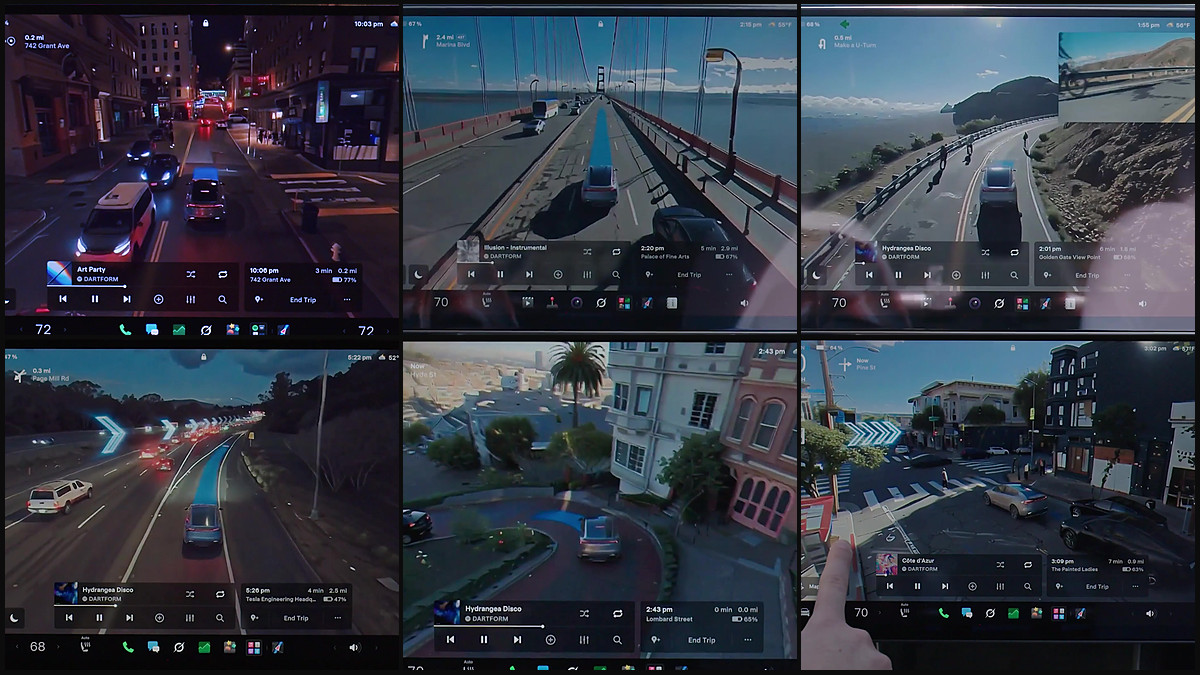
The recent rollout of Tesla’s Full Self-Driving (FSD) version 15 has introduced a highly anticipated feature known as Reality View, a real-time, high-fidelity visualization of the vehicle’s surroundings. While early adopters have lauded the visual clarity and depth of the new system, users have reported a discernible input lag when interacting with the interface. Specifically, the rendering of the environment occasionally falls a fraction of a second behind the actual view through the windshield, and the UI response time when adjusting perspectives shows a slight delay compared to previous iterations of Tesla’s Driver Visualization.
In response to the feedback from the community and early reviewers, Tesla CEO Elon Musk has publicly acknowledged the performance bottleneck. Musk attributed the latency to existing compute constraints within the vehicle’s hardware but provided a clear roadmap for a software-based resolution. By leveraging existing architectural capabilities, Tesla intends to reduce the current latency by approximately 35 percent, ensuring a more seamless experience for drivers without requiring hardware retrofits.
Understanding the Reality View Architecture
The Reality View feature operates as a sophisticated, independent system within the vehicle’s broader Full Self-Driving stack. It is powered by a 1-billion-parameter diffusion model that functions separately from the primary 3-billion-parameter model responsible for vehicle maneuvering and decision-making.
Technically, the system generates short video segments—eight images at 36 frames per second at the resolution of the vehicle’s infotainment display. The rendering process utilizes approximately 50 percent of a single TRIP accelerator engine, processing Universal Vision Encoder (UVE) features at 18 Hz and distributing the computational workload across four cycles.
The primary cause of the reported lag is the time required for the model to "denoise" the environment into a coherent, real-time visual output. Because the system takes the previous frame, adds noise, and then denoises it to create the current visualization, any delay in processing cycles becomes immediately apparent to the human eye.

The Software-Driven Solution
Musk’s proposed fix involves an optimization strategy rather than a hardware upgrade. Tesla plans to interleave newer UVE features directly along the layers of the diffusion transformer. By injecting fresher encoder data deeper into the denoising process—rather than relying on the traditional, linear sequence of earlier features—the system can converge on accurate visualizations with greater speed.
This optimization technique is designed to maximize the efficiency of the existing AI4 (Hardware 4) compute platform. By reallocating the order and priority of data processing, Tesla believes it can significantly reduce the latency gap, bringing the visual output into closer synchronization with the real-world environment. This approach is consistent with Tesla’s historical focus on software-defined vehicle improvements, where incremental updates frequently unlock better performance from existing onboard hardware.
Contextualizing FSD v15 and Hardware Evolution
The release of FSD v15 represents a significant milestone in Tesla’s pursuit of unsupervised autonomy. Throughout 2026, the company has navigated a complex landscape of hardware transitions and software advancements. The distinction between the AI4 computer and the upcoming AI5 chip has been a central point of discussion among enthusiasts and owners.

As of November 2026, Tesla has clarified that the AI4 computer is considered sufficient for achieving "superhuman" driving capabilities. Consequently, the company has pivoted its high-performance AI5 silicon toward its Optimus humanoid robot project and internal AI training infrastructure. This strategic allocation of resources underscores Tesla’s belief that its current vehicle hardware is already equipped to handle the computational demands of autonomous navigation.
For owners of vehicles equipped with Hardware 3 (HW3), the path forward has been defined by a transition toward potential future upgrades. While earlier expectations suggested that HW3 might be the ceiling for full autonomy, Tesla has shifted its messaging to indicate that AI4 serves as the current standard for the most advanced FSD features, including the new Reality View.
Industry Implications and Broader AI Strategy
The rapid response to the Reality View latency issues highlights the agility of Tesla’s engineering team and the maturity of its over-the-air (OTA) update pipeline. In the broader automotive industry, the integration of 1-billion-parameter models into a consumer vehicle interface is an unprecedented feat of edge computing.

The successful implementation of this feature is not merely a cosmetic upgrade; it is a critical step in building consumer trust in FSD. By providing a clear, real-time visualization of what the car "sees," Tesla allows drivers to monitor the system’s perception of the world, which is essential for the transition to fully unsupervised operations.
Furthermore, the optimization of these models has implications for Tesla’s wider AI initiatives. The techniques used to reduce latency in the car’s visualization stack are likely applicable to the neural networks powering the Optimus robot and other automation efforts. As the company continues to scale its compute clusters, the ability to "interleave" features and compress processing time will be vital for maintaining a competitive edge in both the mobility and robotics sectors.
Chronology of Recent Developments
- November 20, 2026: Tesla begins the rollout of FSD v15, introducing Reality View to select users.
- November 22, 2026: Early reviews and community feedback identify minor input lag and visualization latency in the new interface.
- November 22, 2026: Elon Musk confirms that AI5 hardware will be reserved for Optimus, while confirming AI4 is sufficient for full vehicle autonomy.
- November 23, 2026: Musk publicly details the technical fix for the Reality View latency, citing a 35 percent reduction goal through UVE feature interleaving.
- November 25, 2026: Ongoing analysis confirms that the fix will be pushed via OTA updates, requiring no physical intervention for vehicle owners.
Analysis of the Path Toward Unsupervised Driving
The current state of Tesla’s Full Self-Driving stack suggests a bifurcated strategy. On the vehicle side, the focus is on perfecting the perception and planning layers on AI4 hardware, ensuring that the software is robust, safe, and sufficiently low-latency to support real-world deployment. The focus on "Reality View" as a key feature suggests that the company is prioritizing human-machine transparency, ensuring the driver feels confident in the vehicle’s decision-making process.
Conversely, the allocation of AI5 to Optimus signals that Tesla views the humanoid robot as a more computationally demanding project than its vehicles. This is logical given that a general-purpose robot must navigate unstructured environments with a higher degree of physical complexity—such as manipulating objects, navigating diverse terrain, and interacting with humans in various contexts—compared to a vehicle operating on paved, structured roads.
By addressing the latency in Reality View, Tesla is not only improving the user experience for current FSD subscribers but also refining the optimization techniques that will define its next generation of AI products. The ability to iterate at this speed, while maintaining a vast fleet of data-gathering vehicles, remains Tesla’s most significant advantage in the race toward autonomous transport. As the company continues to refine v15 and prepares for future iterations, the focus will likely remain on reducing compute overhead while increasing the reliability of its neural network-based decision systems.
Related posts: