Apple Brings GymKit to iPhone and AirPods in iOS 27, Breaking Apple Watch Monopoly on Gym Tracking

Apple Inc. has significantly expanded the reach of its proprietary fitness ecosystem with the introduction of GymKit support for the iPhone and AirPods in iOS 27. Since its initial debut in 2017 alongside watchOS 4, GymKit has served as a cornerstone feature of the Apple Watch, allowing users to securely pair their wearable devices with compatible commercial fitness equipment. This seamless bidirectional data exchange enabled the Apple Watch to broadcast real-time heart rate data to machines like treadmills, stationary bikes, and ellipticals, while simultaneously ingesting precise metrics such as distance, incline, pace, and active calories burned.
With the rollout of iOS 27, Apple is dismantling the hardware barrier that previously required users to own an Apple Watch to leverage GymKit functionality. By combining the processing power of the iPhone, the audio-visual output of the AirPods Pro 3, and the biometric tracking capabilities introduced in recent audio hardware updates, Apple has engineered a viable, watch-free workout logging experience. Early hands-on testing of the iOS 27 developer beta reveals a streamlined setup process that brings enterprise-grade gym tracking to a broader audience, signaling a strategic shift in how the Cupertino-based tech giant approaches health and fitness integrations across its hardware lineup.
The Evolution of Apple’s Fitness Hardware Strategy
The journey toward a watch-free GymKit experience has been years in the making, underpinned by a deliberate hardware and software convergence. For the better part of a decade, the Apple Watch held an undisputed monopoly as the central hub for Apple’s health tracking architecture. However, recent product cycles have demonstrated a clear corporate strategy to democratize health monitoring capabilities across secondary devices.
The foundation for this transition was laid incrementally. Apple first expanded the utility of the iPhone-native Fitness app for users without an Apple Watch, particularly to support the launch and expansion of the Apple Fitness+ subscription service. This allowed users to close basic activity rings and follow guided video workouts using only an iPhone or an iPad paired with a television.
The hardware turning point arrived with the release of the Powerbeats Pro 2 and, subsequently, the AirPods Pro 3, which marked the integration of optical heart-rate sensors directly into true wireless earbuds. By enabling ear-based biometric tracking, Apple solved the primary technical hurdle preventing watch-free gym integration: the absence of a localized, continuous heart-rate monitoring source that could communicate securely with external exercise hardware via Bluetooth protocols.
Step-by-Step Mechanics: How Watch-Free GymKit Operates
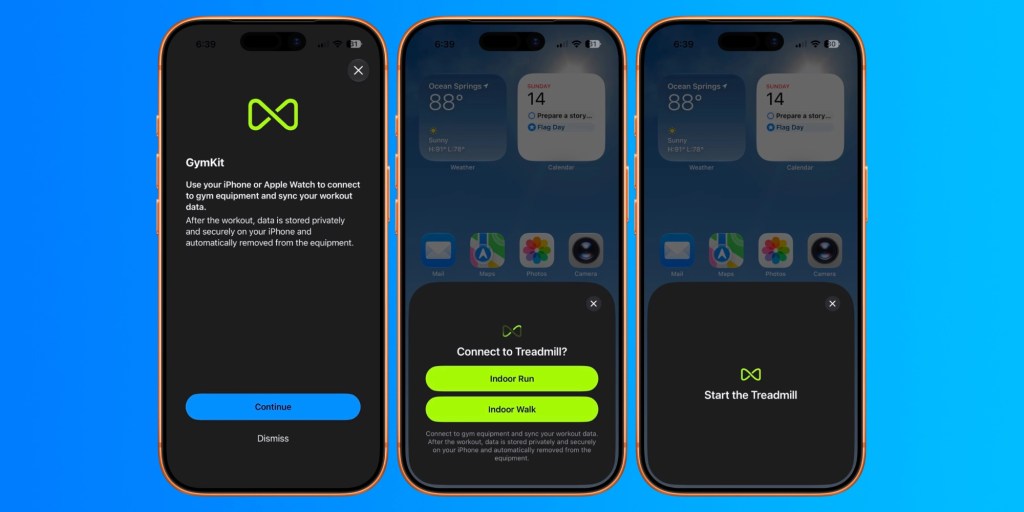
Operating GymKit without an Apple Watch follows a protocol remarkably similar to the traditional watch-based experience, minimizing friction for users transitioning between ecosystems. To initiate a session, a user approaches a GymKit-compatible treadmill or exercise machine and taps their iPhone against the equipment’s near-field communication (NFC) contact point.
Upon connection, the user selects their preferred workout mode on the machine’s console—such as Indoor Walk or Indoor Run. Once the session commences, the data flow becomes a coordinated tripartite exchange:
- The AirPods Pro 3 continuously monitor the user’s pulse via ear-canal biometric sensors, transmitting real-time heart-rate data directly to the treadmill.
- The treadmill utilizes its mechanical sensors to track precise belt distance, incline angle, speed, and exact calorie expenditure based on physical resistance, transmitting these metrics back to the iPhone.
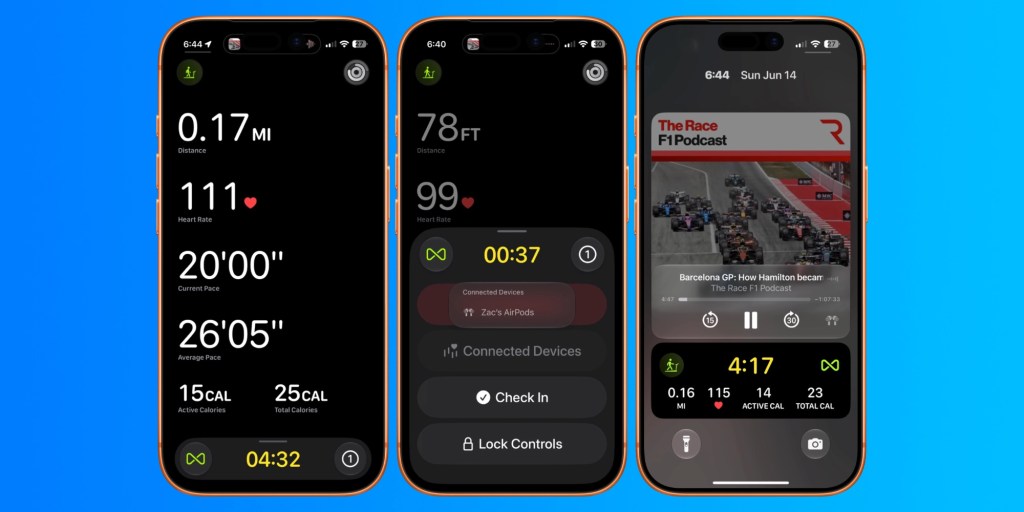
- The iPhone acts as the central computing and display unit running iOS 27, allowing the user to monitor their live workout statistics on-screen while storing the data locally and privately.
This architecture effectively eliminates two common pain points historically associated with gym workouts. Users are no longer required to awkwardly grip the metal heart-rate contact plates embedded in treadmill handlebars—a practice that often disrupts running form and yields inconsistent readings—nor are they forced to wear a separate, dedicated Bluetooth chest strap or armband monitor.
Implications for the Apple Ecosystem and Consumer Behavior
Industry analysts and fitness technology experts suggest that bringing GymKit to the iPhone and AirPods ecosystem carries profound strategic implications for Apple. While dedicated fitness enthusiasts and daily Apple Watch wearers are unlikely to abandon their wrist-based companions, the new feature serves multiple valuable functions within the broader consumer market.
First, it acts as a robust fail-safe mechanism. In scenarios where an Apple Watch is left at home, depleted of battery, or placed on a charger, users are no longer penalized with unrecorded or poorly tracked cardio sessions. The iPhone and AirPods combination bridges the gap seamlessly, ensuring continuity in personal health data logging.
Second, the update functions as a powerful onboarding tool for prospective hardware buyers. By offering a taste of the sophisticated GymKit experience to consumers who exclusively own an iPhone and AirPods, Apple creates a compelling entry point into its broader health ecosystem. This exposure may lower the psychological barrier to entry for purchasing an Apple Watch in the future, as users become accustomed to the convenience of automated gym equipment synchronization.
Technical Nuances and Beta Observations
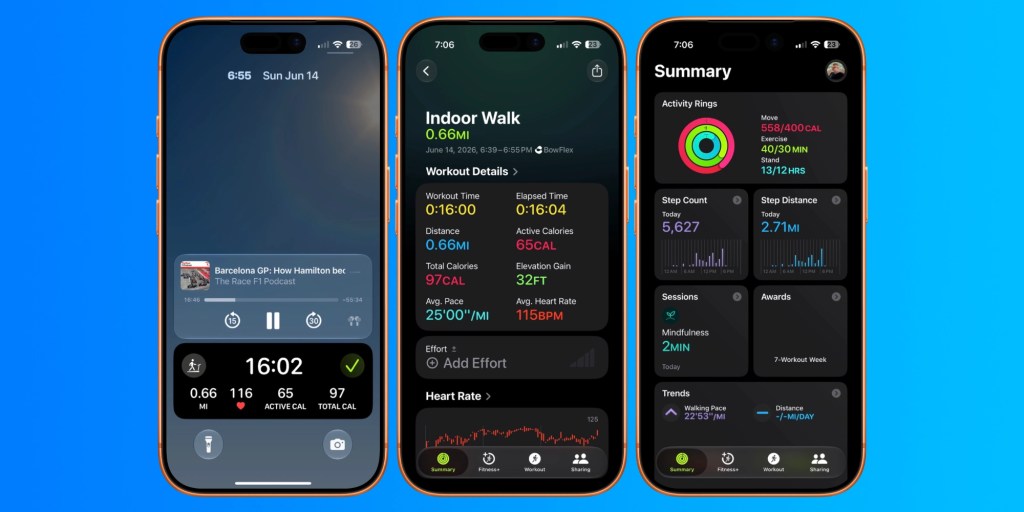
Testing of iOS 27 beta 1 has revealed specific operational boundaries and software behaviors that highlight the integration’s complexity. Notably, when executing a GymKit workout solely with an iPhone and AirPods Pro 3, the user’s active Exercise ring may not update instantaneously on the device display during the session. However, system architecture ensures data integrity: upon reconnecting or synchronizing with an Apple Watch later, or via background cloud processing, the Fitness app reconciles the metrics, ensuring that total active calories, elevation gain, and minute counts are accurately reflected in the user’s historical records.
Furthermore, system governance enforces strict hierarchy rules regarding connected hardware. Attempting to initiate a GymKit session on an iPhone without a validated heart-rate source—such as active AirPods or an active Apple Watch—results in an immediate disconnection, as the machine requires continuous biometric telemetry to function. Conversely, attempting to bypass a nearby Apple Watch to start an iPhone-only GymKit session will prompt iOS to default to the watch’s native Workout application interface, though users retain the manual option to proceed with the iPhone configuration.
Privacy permissions also play a vital role in the setup. Users must ensure that heart-rate sharing is explicitly enabled within the AirPods settings menu under iOS privacy controls. While privacy-conscious users might initially disable biometric sharing for battery preservation, the seamless utility demonstrated by the iOS 27 implementation is expected to drive higher adoption rates for AirPods-based health tracking features.
Broader Industry Impact and Future Outlook

Apple’s decision to decouple GymKit from the Apple Watch reflects a broader industry trend toward hardware interoperability and ecosystem flexibility. As commercial fitness equipment manufacturers—such as Technogym, Life Fitness, Matrix, and Bowflex—continue to expand their roster of GymKit-compatible machinery, the total addressable market for Apple’s fitness software architecture grows exponentially.
By opening the gateway to millions of iPhone and AirPods users, Apple is placing pressure on competing fitness platforms and wearable manufacturers to offer similarly fluid, cross-device integrations. Traditional fitness tracker brands that rely on proprietary, closed-loop apps may find it increasingly difficult to compete with an ecosystem where standard audio and mobile hardware can interface directly with gym infrastructure.
As iOS 27 progresses through its development cycle toward a public release, further refinements to battery optimization, UI responsiveness, and multi-device handoff protocols are anticipated. For now, the integration of GymKit into the iPhone and AirPods lineup stands out as a prime example of Apple identifying a friction point in daily user habits and engineering a software-driven solution that enhances the value of hardware consumers already own.