The Posthumous AI Recreation of John Motson in EA Sports FC 27 Sparks Ethical Outrage and Industry Debate Across the Video Game World

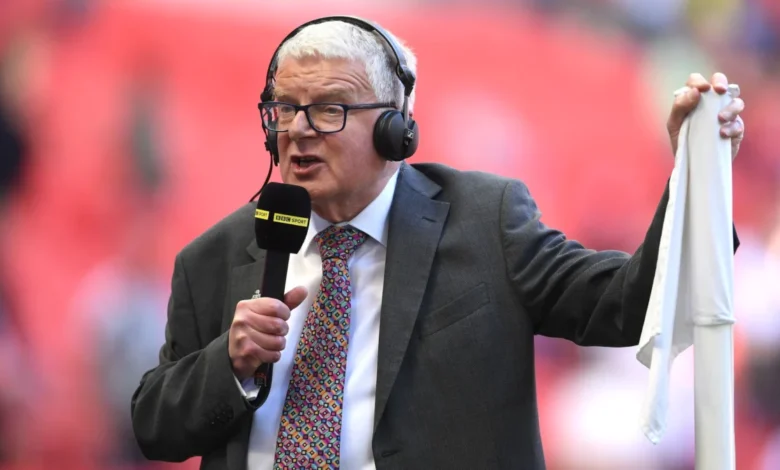
The intersection of artificial intelligence and digital preservation has reached a controversial milestone, reigniting intense global debates over posthumous consent, intellectual property, and creative ethics within the entertainment industry. EA Sports has officially announced that the late, legendary British football broadcaster John "Motty" Motson—who passed away in February 2023 at the age of 77—will make a dramatic return to virtual pitches in the upcoming video game release, EA Sports FC 27. According to the publisher, Motson’s iconic, sheepskin-coat-wearing vocal presence is being reintroduced to the long-running football simulation franchise through a sophisticated hybrid process that blends nearly a decade of original archival audio recordings with an advanced AI voice model trained specifically on his extensive broadcasting catalog.
While the initiative received formal financial backing and the blessing of the Motson family—who negotiated an undisclosed compensation package with Electronic Arts—the decision has deeply fractured the gaming community, professional trade unions, and game development studios alike. As generative artificial intelligence rapidly reshapes the boundaries of digital content creation, the resurrection of John Motson serves as a high-profile flashpoint, forcing developers, legal scholars, and consumers to confront profound questions regarding how human legacies are handled in the digital age.
A Historic Partnership: Tracing Motson’s Three-Decade Legacy with EA Sports
To understand the weight of Motson’s return, one must examine his deep-rooted historical relationship with interactive entertainment. John Motson’s journey as a digital voice of football began over three decades ago. In 1995, EA Sports enlisted the esteemed BBC commentator to lend his authoritative tone, encyclopedic knowledge, and unmistakable passion to FIFA Soccer 96. For millions of football fans worldwide who grew up in the late 1990s and early 2000s, Motson’s voice was synonymous with the virtual sport itself, serving as the auditory backdrop to countless digital matches.
Motson remained a cornerstone of the franchise for nearly a decade, culminating with his final mainline series appearance in FIFA Soccer 2005. Even after stepping away from the primary FIFA franchise, Motson continued his professional partnership with EA Sports by lending his talents to niche spin-offs, including the tactical management simulation series FIFA Manager. Over the course of his decades-long collaboration, Motson accumulated a vast library of recorded commentary lines, spanning play-by-play descriptions, tactical observations, and celebratory exclamations.
When Motson passed away peacefully in February 2023, tributes poured in from across the globe. Prime ministers, legendary athletes, and millions of television viewers mourned the loss of a broadcasting titan who had called over 2,500 games for the BBC, covering 10 World Cups, 10 European Championships, and nearly 30 FA Cup finals. For EA Sports, incorporating his voice into EA Sports FC 27 was framed as an homage—a technological marvel designed to honor a broadcasting icon and introduce his legendary cadence to a new generation of players who never heard him live on television or in early editions of the game.
The Technology and the Family’s Perspective
According to official statements released by EA Sports and reported details regarding the development of EA Sports FC 27, the production team utilized approximately 10 years of archived in-game audio sessions alongside modern generative AI tools. This proprietary voice-cloning technology allowed audio engineers to synthesize entirely new commentary lines, enabling Motson to react to modern teams, players, and match scenarios that did not exist during his lifetime.
The project received wholehearted support from the commentator’s immediate family. John Motson’s son, Fred Motson, spoke publicly about the collaboration, expressing deep gratitude to EA Sports for keeping his father’s memory alive in a medium he genuinely loved.
"My father adored being the voice of the game, and we are so grateful to the team at EA Sports FC for this touching tribute and preserving his memory in-game," Fred Motson stated in official promotional materials. In a subsequent interview with the BBC, Fred elaborated on his father’s likely perspective, noting that while John Motson may not have fully comprehended the underlying complexities of generative artificial intelligence, he was inherently forward-thinking and always enthusiastic about participating in innovative projects.
"I don’t think he would have quite understood what the AI was doing technologically—but I think, on the other hand, he was always really keen to get involved in these kinds of projects," Fred Motson remarked. Furthermore, the family acknowledged that EA Sports compensated them with an undisclosed financial settlement for the rights to utilize John Motson’s vocal likeness, ensuring that his estate directly benefited from the commercial use of his synthesized audio.
Consumer Backlash: From Nostalgia to Digital Dystopia
Despite the family’s explicit consent and financial compensation, the public reaction within the gaming community was starkly divided. While a segment of the fanbase expressed initial excitement at hearing the familiar "Oh! And it’s live!" cadence return to virtual stadiums, a vocal and substantial portion of the community condemned the move as deeply unsettling.
Discussions across gaming forums, social media platforms, and community subreddits such as r/EASportsFC quickly turned hostile toward the technology. Commentators utilized severe terminology to describe the feature, labeling it "shameful," "disrespectful," "gross," and "bloody dark." The ethical unease centered primarily on the permanence of digital identity and the commodification of a person after their death.
"What a bleak fucking world we live in," wrote one prominent community member on Reddit. "You can’t even escape in death." Another user echoed the sentiment, writing, "Honestly, it’s kind of gross for me." The existential dread associated with AI voice cloning manifested in darker expressions of humor and anxiety, with another user remarking, "If anyone from my family uses AI to resurrect me in some perverse way like this, I’ll fucking haunt them."
Critics argued that even with familial permission, the practice crosses an ethical Rubicon. The ability to artificially generate speech for a deceased individual strips away their agency over future contexts, placing words into a synthetic mouth that the original person never uttered, in scenarios they never agreed to evaluate.
Industry Divergence: The Battle Over Posthumous AI Voice Cloning
The controversy surrounding John Motson’s digital resurrection highlights a growing philosophical rift within the broader entertainment and software development industries regarding the ethical application of generative artificial intelligence. While major multinational corporations like Electronic Arts embrace synthetic preservation, other independent studios and labor organizations are actively establishing strict ethical boundaries against the practice.
A prominent counter-example emerged earlier this year from indie developer Red Hook Studios, creators of the critically acclaimed dark fantasy role-playing game Darkest Dungeon. Following the death of beloved narrator Wayne June in 2025, Red Hook publicly announced a definitive refusal to utilize AI voice-generation tools to recreate his iconic performance. Notably, the studio held explicit, written permission from June prior to his passing to utilize machine learning to continue his narration.
Despite having this legal and personal green light, Red Hook co-founder Chris Bourassa firmly rejected the technology. "I would never, ever erode his incredible and timeless performances by teaching a machine to sound like him," Bourassa stated, prioritizing the sanctity of authentic human artistry over technological convenience.
Parallel to these studio-level decisions, organized labor is pushing for systemic legislative and contractual protections. The Japan Actors Union recently initiated a major advocacy campaign demanding heavy restrictions on the unauthorized or posthumous replication of voice actors’ performances via artificial intelligence. Their proposed framework includes a total ban on utilizing AI to clone a deceased actor’s voice unless explicit, legally binding consent was formally established prior to the individual’s death, while also arguing that family consent alone should not serve as an automatic legal loophole.
Legal analysts point out that the regulatory landscape surrounding posthumous digital rights remains a legal "Wild West." Peter Caulfield, speaking on behalf of the advocacy campaign Save Our Voices Now, argued that the debate transcends mere contractual agreements between publishers and grieving relatives.
"I wouldn’t care if Motson had signed a deal with EA allowing it to use his likeness after his death," Caulfield told the BBC. "But in life or death, unless you have specifically agreed to it, AI cloning of any kind should not be allowed." Caulfield further challenged the legal precedent of relying solely on next-of-kin permissions, asserting that family members should not automatically possess the moral or legal authority to authorize the AI recreation of a departed artist’s persona.
Broader Implications for the Future of Interactive Entertainment
As EA Sports FC 27 prepares for its worldwide launch, the inclusion of an AI-generated John Motson serves as a watershed moment for the video game industry. It forces a reckoning with how digital immortality will be managed in the decades to come.
On one hand, publishers view AI preservation as an ultimate tribute—a way to immortalize legends, comfort grieving families through financial support, and maintain historical continuity within long-running sports franchises. On the other hand, artists, trade unions, and consumers fear a slippery slope toward digital exploitation, where the deceased lose control over their professional reputations, and human voice actors are systematically undervalued in favor of endlessly malleable, synthetic replicas.
The debate is far from settled. As artificial intelligence tools become cheaper, faster, and indistinguishable from reality, the entertainment industry faces an urgent imperative to establish universal ethical standards, robust legal frameworks, and transparent consent protocols. Whether future generations will embrace AI-resurrected icons or reject them as hollow digital ghosts remains one of the defining cultural questions of the modern digital era.