The modern consumer landscape is increasingly defined by a pervasive need for connectivity, transforming portable power banks from niche accessories into essential utilities. As smartphones, tablets, and high-performance laptops become integral to both professional and personal workflows, the threat of a depleted battery has evolved into a significant productivity barrier. This guide explores the current market for portable power solutions, analyzing top-tier devices, safety protocols, and the technical criteria necessary for informed purchasing decisions.
Navigating the Current Power Bank Market
The portable charger market is currently undergoing a rapid evolution, driven by the emergence of new technologies such as Qi2 wireless charging, faster power delivery (PD) standards, and the integration of solid-state battery technology. While the sheer volume of options can be overwhelming, the market generally categorizes devices into three primary tiers: small, pocket-sized units (approximately 5,000 mAh); medium-capacity banks (10,000 to 20,000 mAh); and high-capacity portable power stations designed for power-intensive hardware like laptops.
For those requiring extreme portability, devices like the Peak Design Kickstand Travel Battery have gained traction. Featuring a 15-watt wireless charging capacity and a robust aluminum kickstand, this unit highlights a trend toward multifunctional accessories that prioritize ergonomics alongside energy storage. Similarly, the Clutch Pro offers a credit-card-sized form factor, proving that manufacturers are successfully shrinking hardware footprints without sacrificing the utility of integrated USB-C connectivity.
Advancements in Charging Efficiency and Safety
The transition toward the Qi2 wireless charging standard marks a critical turning point for mobile power. By utilizing a magnetic alignment system—similar to Apple’s MagSafe—Qi2 ensures optimal coil placement, which reduces energy loss through heat dissipation and enhances charging efficiency. Products such as the BMX SolidSafe Air Power Bank exemplify this shift. By leveraging advanced magnetic adhesion, these chargers provide a more stable, efficient power transfer that mitigates the fire risks historically associated with misaligned wireless charging pads.
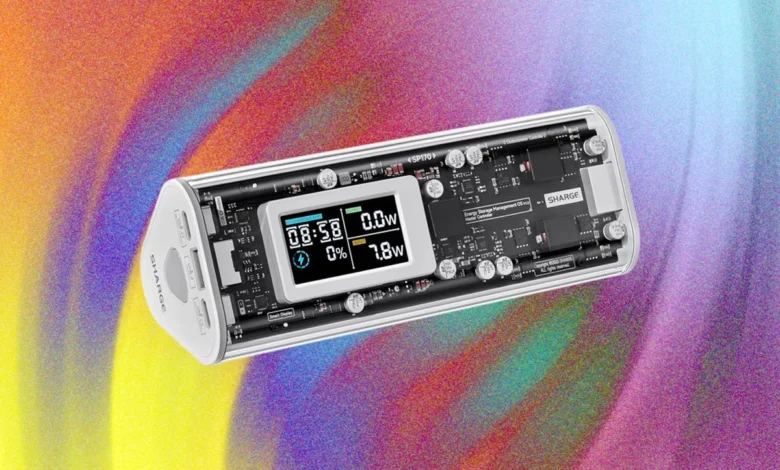
Safety remains the paramount concern for both manufacturers and regulators. The industry has seen a marked shift toward stricter certifications, such as the China Compulsory Certificate (CCC) and rigorous thermal testing. High-performance models like the Cuktech 15 Air, which offers 65-watt output and a full recharge cycle in approximately 90 minutes, demonstrate that high-speed charging no longer necessitates a compromise on safety or heat management. These units often include advanced display technology, allowing users to monitor real-time charging status, temperature, and remaining capacity with precision.

High-Capacity Solutions for Power-Hungry Devices
For power users who rely on multiple devices, the segment for high-capacity power banks (20,000 mAh and above) has become increasingly sophisticated. Modern flagships, such as the Anker Prime Power Bank, now offer up to 300 watts of total output across multiple ports. This capacity allows for the simultaneous charging of two laptops and a mobile device—a feat that was virtually impossible for portable units just a few years ago.
The inclusion of retractable cables in models like the Anker Nano Power Bank with Instacord addresses a common pain point: cable management. By integrating a 2.3-foot retractable USB-C cable, manufacturers are streamlining the user experience, reducing the number of external accessories required for travel. Furthermore, the emergence of specialized hardware like the Wolfbox 4000A Jump Starter illustrates the expansion of the power bank category into emergency preparedness. These devices, which can double as 65-watt power banks while providing enough current to start a dormant vehicle, represent a convergence of utility and safety.
Technical Criteria: What to Look for in a Power Bank
Understanding the specifications of a power bank requires navigating terminology that often obscures actual performance. The "capacity" listed on a box—usually in milliampere-hours (mAh)—represents the total energy storage of the internal cells at their nominal voltage. However, when that energy is converted to the standard 5V used for USB charging, and accounting for energy loss via heat (conversion loss), the usable capacity is significantly lower.
Typically, consumers can expect to receive between 60% and 80% of the stated capacity in real-world conditions. When selecting a device, it is more beneficial to look for the "Rated Capacity," which provides a more accurate estimate of available energy. Additionally, the charging rate, measured in watts, must be compatible with the device being charged. For instance, while an iPhone may support high-speed Power Delivery, a Samsung Galaxy device may require a specific PPS (Programmable Power Supply) protocol to achieve its maximum charging speed.
Regulatory and Aviation Standards
Flying with portable power remains a common source of confusion for travelers. International regulations, governed by organizations like the International Air Transport Association (IATA), permit the transport of lithium-ion batteries only in carry-on luggage. These batteries must not exceed 100 watt-hours (Wh) without prior airline approval.
To determine the watt-hour rating of a power bank, users can perform a simple calculation: divide the mAh capacity by 1,000 and multiply by the voltage (typically 3.7V for lithium-ion cells). For most standard 20,000 mAh power banks, the rating is approximately 74Wh, placing them well within the safe-to-fly limit. However, users should remain vigilant, as airlines frequently update their policies regarding the usage of these devices during flight, often mandating that they remain in hand luggage under the seat in front of the passenger.

The Risks of Low-Cost Alternatives
The proliferation of "white-label" or excessively cheap power banks on major retail platforms poses a tangible safety risk. The primary danger of low-cost chargers is not necessarily their failure to charge a device, but their lack of adequate power management circuitry. Insulation failure, poor thermal management, and the use of inferior battery cells can lead to thermal runaway, a condition where the battery’s internal temperature rises uncontrollably.
To avoid such risks, it is imperative to adhere to three fundamental rules:
- Purchase from reputable brands: Established manufacturers invest heavily in R&D and safety testing that low-cost generic brands often bypass.
- Monitor for heat: A device that becomes uncomfortably hot to the touch during charging is a primary indicator of a compromised power management system.
- Inspect for physical damage: Any swelling, bulging, or casing deformation of a lithium-ion battery indicates that the internal chemistry is no longer stable, and the device should be decommissioned and disposed of according to local hazardous waste regulations.
Future Outlook and Editorial Methodology
The future of portable power lies in the integration of intelligent, data-driven management systems. We are already seeing the adoption of application-controlled power banks that allow users to manage output distribution, track battery health, and even update firmware. These features are no longer limited to high-end power stations but are trickling down to consumer-grade hardware.
Our review process for such devices involves rigorous, long-term testing. Each product undergoes a minimum of two weeks of active use, including multiple discharge-recharge cycles using a variety of devices, such as the latest iPhones, Android flagships, and ultralight laptops. We prioritize real-world utility, assessing factors like port accessibility, weight, and the reliability of built-in displays. Our editorial independence remains absolute; while we may earn affiliate revenue from purchase links, this factor never influences our product rankings or recommendations. We continue to advocate for transparency in the market and encourage readers to share feedback on brands they wish to see evaluated in future updates.
By focusing on reputable manufacturers and prioritizing devices that adhere to international safety standards, consumers can ensure that their mobile devices remain powered throughout the day, effectively bridging the gap between high-performance computing and the realities of modern, on-the-go life.