The Dynamics of Rising Used Electric Vehicle Prices and the Impact on the New EV Market

The automotive industry is currently witnessing a significant shift in the valuation and demand for pre-owned electric vehicles (EVs), a trend that challenges the traditional understanding of vehicle depreciation. Historically, electric vehicles were characterized by steep depreciation curves, often losing value at a rate significantly higher than their internal combustion engine (ICE) counterparts. However, recent market data suggests a reversal of this trend, with used EV prices stabilizing and, in some cases, experiencing unexpected increases. This phenomenon is reshaping the broader automotive landscape, influencing consumer behavior, and forcing manufacturers to recalibrate their long-term production strategies.
The Evolution of the Used Vehicle Market
To understand the current state of the used EV market, one must look back at the unprecedented disruptions of the early 2020s. Beginning in 2021, the global automotive industry was paralyzed by a convergence of crises: the COVID-19 pandemic, severe supply chain bottlenecks, and a critical shortage of semiconductor chips. These factors led to a drastic reduction in new car production, which in turn drove buyers toward the used car market. For a period, it was not uncommon for lightly used vehicles to sell for prices exceeding their original Manufacturer’s Suggested Retail Price (MSRP).
While the broader automotive market eventually began to normalize as supply chains recovered, the EV sector entered a unique phase of volatility. Initially, aggressive price cuts by major manufacturers—most notably Tesla—sent shockwaves through the secondary market, causing used EV values to plummet. This created a perception that electric cars were poor long-term investments. However, as of mid-2024, the market is correcting itself in an unexpected way. Demand for used EVs is reaching record highs, and prices for popular models, such as the Chevrolet Bolt EV, have surged back toward the $20,000 threshold, even for models that are several years old.
Factors Driving the Surge in Used EV Demand
Several key factors are contributing to the rising costs and increased sales volume of used electric vehicles. Primary among these is the fluctuating cost of traditional fuels. As gasoline prices remain volatile, the lower operational costs of electric propulsion become increasingly attractive to budget-conscious consumers. For many, the transition to electric power is no longer seen as a luxury choice but as a pragmatic financial decision to hedge against energy inflation.
Furthermore, consumer education regarding EV longevity has improved. Early concerns about battery degradation have been somewhat mitigated by real-world data showing that modern EV batteries maintain a high percentage of their capacity over hundreds of thousands of miles. This has increased the confidence of secondary buyers who were previously wary of "high-mileage" electric cars.
Another critical driver is the maturation of the product offerings. The current used market features a diverse array of capable vehicles with sufficient range for most daily commutes. Models that entered the market three to four years ago—such as the Ford Mustang Mach-E, the Hyundai Ioniq 5, and the refined later-year Chevrolet Bolts—are now entering the secondary market in significant numbers, offering features and technology that remain competitive with brand-new vehicles.
The Policy Shift: Tax Credits and Financial Incentives
The landscape of federal and state incentives has also played a pivotal role in redirecting consumers toward used EVs. The transition of the federal EV tax credit under the Inflation Reduction Act (IRA) introduced stricter eligibility requirements for new vehicles, including domestic sourcing mandates for battery components and income caps for buyers. These changes made many new EV models ineligible for the full $7,500 credit, effectively increasing their net cost to the consumer.
Conversely, the introduction of a federal tax credit for used EVs—providing up to $4,000 for qualifying vehicles priced under $25,000—has acted as a powerful catalyst for the secondary market. This incentive has made pre-owned electric cars accessible to a wider demographic of buyers who may have been priced out of the new car market. By lowering the entry barrier, the government has inadvertently created a surge in demand that is now propping up used values.
The Lease Cycle and Consumer Choice
The current market is also feeling the effects of the leasing boom from 2021 and 2022. During that period, many consumers opted for short-term leases to take advantage of then-available incentives and to "test" the electric lifestyle without a long-term commitment. As these leases expire in 2024 and 2025, a large volume of high-quality, three-year-old EVs is hitting the market.

However, consumers returning these leased vehicles are finding a vastly different new-car environment. Rising interest rates and the expiration of manufacturer-subsidized lease deals have led to significantly higher monthly payments for new models. Faced with the choice of leasing a new EV for $500–$700 a month or purchasing a used one for a lower total cost of ownership, many are choosing the latter. This internal competition between a manufacturer’s new and used inventory is creating a "cannibalization" effect that is stalling growth in new vehicle registrations.
Impact on Manufacturers and the Canceled Future
The strength of the used EV market is proving to be a double-edged sword for the automotive industry. While high resale values are generally healthy for a brand’s reputation, the current trend is coinciding with a cooling of demand for new EVs. This "market stall" has led several major automakers to delay or cancel upcoming electric models as they struggle to justify the massive capital expenditures required for new production lines.
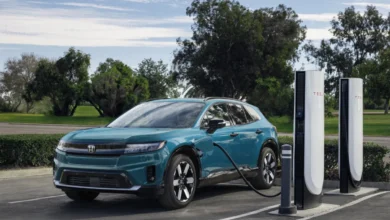
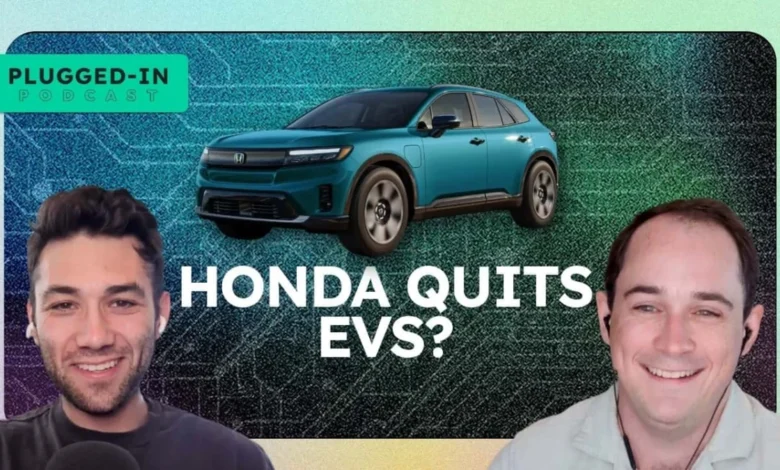
A prominent example of this trend is the recent discontinuation of the Honda Prologue. Despite respectable sales figures, the model faced stiff competition not only from established rivals but also from the growing inventory of used high-end EVs. Manufacturers are finding that as the secondary market matures, they can no longer rely on early adopters to pay a premium for new technology. To compete with their own used products, new EVs must offer significant technological leaps or drastically lower price points—both of which are difficult to achieve in the short term.
Comparative Market Analysis: US vs. International Trends
The phenomenon of rising used EV prices is particularly pronounced in the United States, though it mirrors trends seen in parts of Europe. In markets like Norway and the Netherlands, where EV adoption is much higher, the used market has already achieved a level of stability that the U.S. is just now beginning to approach.
However, in the U.S., the lack of a robust nationwide charging infrastructure remains a primary deterrent for new car buyers, whereas used car buyers—often purchasing a second vehicle for a household—are less concerned about long-distance travel capabilities. This creates a unique "tiering" of the market where used EVs are perfectly suited for urban commuting, while the new car market struggles to convince "one-car households" to make the switch without better infrastructure.
Technical and Environmental Implications
The robust secondary market for EVs has positive implications for environmental sustainability. A longer vehicle lifecycle ensures that the carbon-intensive process of battery manufacturing is amortized over a greater number of miles and years. When an EV stays on the road for a second or third owner, it continues to displace gasoline miles, maximizing the environmental return on the initial manufacturing investment.
From a technical perspective, the rise in used values is also encouraging the development of a specialized aftermarket. Companies specializing in battery diagnostics, refurbishment, and modular repairs are emerging to support the growing fleet of older EVs. This ecosystem further stabilizes used values by reducing the perceived risk of out-of-warranty battery failures.
Future Outlook and Strategic Considerations
As the automotive industry navigates the remainder of the decade, the interplay between new and used EV markets will remain a critical metric for success. Industry analysts predict that used EV prices will eventually find a new equilibrium as the supply of off-lease vehicles continues to grow. However, the days of EVs losing 50% of their value in the first year appear to be ending.
For automakers, the strategy must shift toward "software-defined vehicles" that can be updated over time, ensuring that new models remain distinct from the used inventory through superior features and efficiency. For consumers, the current market dynamics suggest that the "sweet spot" for EV ownership may currently reside in the three-to-five-year-old segment, where the combination of tax credits and stabilized depreciation offers the most value.
In conclusion, the rising cost of used electric vehicles is a sign of a maturing market. While it presents immediate challenges for the sales of new models, it validates the long-term viability of electric propulsion technology. As the industry charts its course through this transitional period, the strength of the secondary market will likely serve as the foundation upon which the next phase of mass-market EV adoption is built. The "wild time" of car buying may have evolved since 2021, but for the EV world, the dynamics are only becoming more complex.