Google Announces Gemini 3.8 Live and Gemini 3.8 Live Extended Thinking to Revolutionize Real-Time Voice AI

Google has officially announced the launch of its most advanced conversational and reasoning models to date, Gemini 3.8 Live and Gemini 3.8 Live Extended Thinking. Developed by the Gemini Audio Team, these new additions represent a monumental shift in how humans interact with artificial intelligence through voice, bridging the gap between near real-time audio interaction and complex, multi-step backend computation. The announcement, spearheaded by Principal Engineer Tom Ouyang and Technical Staff member Malini Jaganathan, introduces powerful new capabilities for enterprise developers, application builders, and everyday consumers using Google Workspace, Search, and the Gemini mobile application.

The rollout marks a major technological milestone in the competitive landscape of generative AI, particularly within the rapidly growing sector of voice-to-voice agents. By integrating advanced parallel reasoning directly into live dialogue architectures, Google aims to eliminate the traditional latency and rigidity that has historically plagued conversational AI systems. The newly introduced models are designed to process visual and auditory inputs seamlessly, allowing users to collaborate on intricate, long-form tasks using nothing more than natural speech.
Evolution and Background of Real-Time Voice AI
The journey toward fluid voice-to-voice AI models has accelerated significantly over the past several years. Early iterations of voice assistants relied on a pipeline approach: audio was first transcribed into text via automatic speech recognition (ASR), processed by a large language model (LLM), and finally converted back into synthesized speech using text-to-speech (TTS) engines. While functional, this multi-step pipeline introduced noticeable delays, stripped away nuances of human emotion and cadence, and made interruption or back-and-forth dialogue feel mechanical and unnatural.
The introduction of native multimodal models fundamentally changed this paradigm. By training models to process audio waveforms directly alongside text and visual data, technology companies unlocked the potential for instantaneous responses. Google’s latest 3.8 Live architecture builds upon this foundational shift, refining the speed, accuracy, and depth of reasoning to meet the demanding requirements of enterprise-grade production environments. The integration of "Extended Thinking" further addresses a historical weakness of real-time audio models: the inability to pause, deliberate, and execute complex logic without completely stalling the conversation.
Benchmarking and Performance Metrics
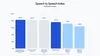
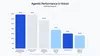
Independent benchmarks underscore the technical superiority of Gemini 3.8 Live Extended Thinking across multiple evaluation categories. According to data from Artificial Analysis, Gemini 3.8 Live Extended Thinking captured the number one overall position on the Speech to Speech Quality Index, earning an impressive score of 82.6. Furthermore, the model established clear leadership in agentic task completion, scoring 68.6% on the Iota-Voice benchmark and 35.1% on Sierra’s Iota-Voice-banking benchmark.
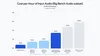
In addition to task-specific execution, the model demonstrated exceptional general reasoning capabilities, achieving a 97.7% score on Big Bench Audio. Meanwhile, its sibling model, Gemini 3.8 Live, secured a strong second-place standing in the highly competitive Speech Agent Arena, maintaining a reputation for exceptional user preference while offering high cost-effectiveness for developers deploying applications at scale.
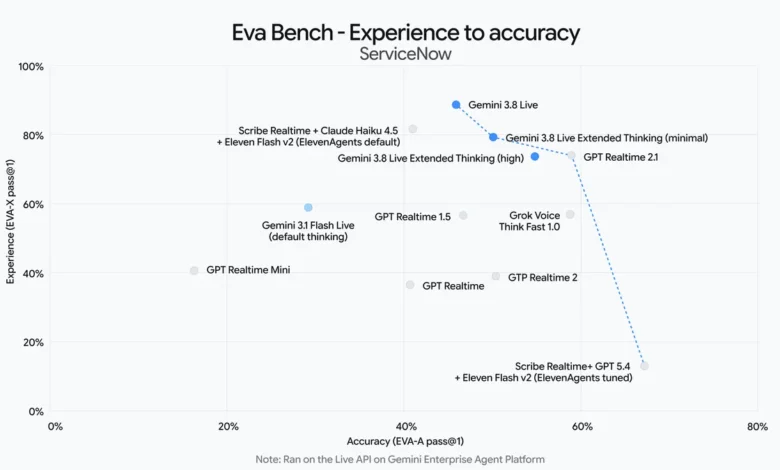
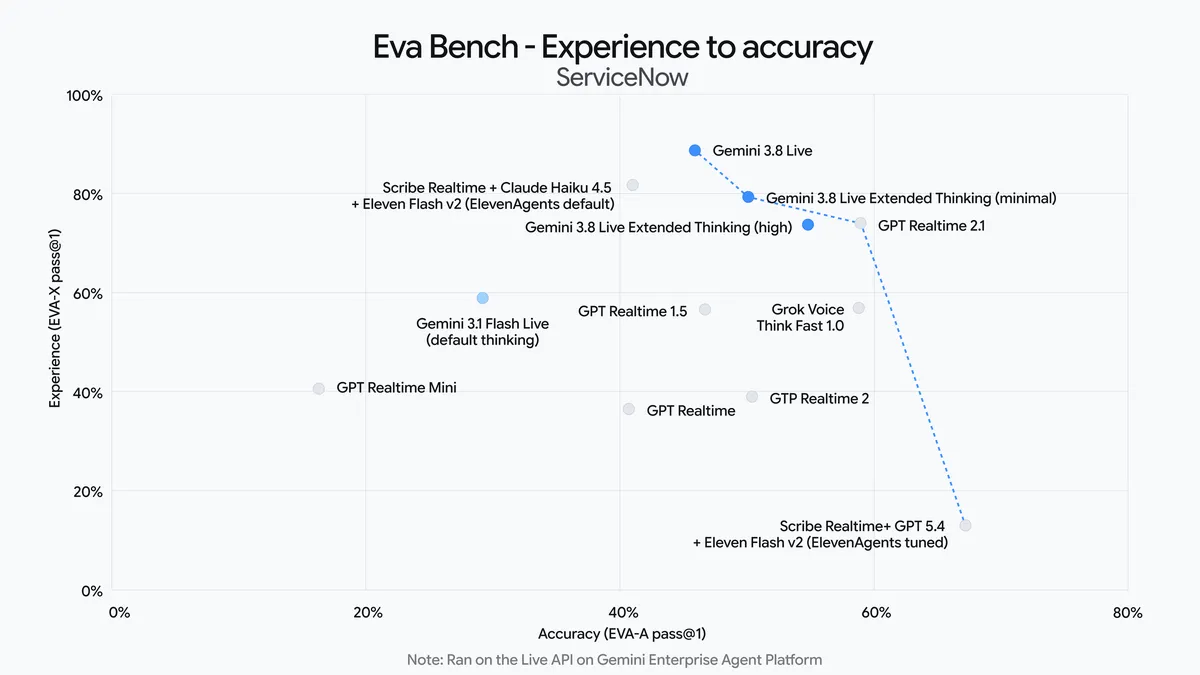
Performance evaluations on ServiceNow’s EVA-Bench—a rigorous standard designed to assess voice agents in complex enterprise workflows—further demonstrated that Google’s new models successfully push the Pareto Frontier. They achieve an optimal balance between high task accuracy and natural conversational flow, proving capable of handling multi-faceted business operations without sacrificing user experience.
Architectural Capabilities and Core Features
Gemini 3.8 Live and Gemini 3.8 Live Extended Thinking introduce several groundbreaking technical features that set them apart from previous generations of conversational AI. Among the most notable is near real-time visual processing. Users can present visual context—such as live camera feeds, technical diagrams, or physical environments—allowing the AI to reason about visual data simultaneously while maintaining a live verbal conversation. For instance, the system can guide employees through onboarding protocols or analyze a live chess match, reacting to board state changes instantaneously.
Language versatility has also been significantly enhanced. The models feature automatic language detection, capable of identifying and transitioning smoothly between 97 supported languages mid-conversation without requiring manual setting adjustments.

Perhaps the most impactful operational upgrade for enterprise applications is asynchronous tool execution. Gemini 3.8 Live can execute background API calls and software tools while keeping the conversational channel open. Rather than forcing the user into silence while a database query or external booking processes, the model acknowledges the request immediately and continues the dialogue while executing the task in the background.
For workflows demanding deeper cognitive processing, Gemini 3.8 Live Extended Thinking utilizes an innovative parallel reasoning framework. The model reasons and speaks simultaneously, employing early verbal cues—such as “Let me check that…”—to naturally acknowledge complex prompts. It then provides live progress narration, guiding the user through multi-step background operations as they unfold.
Integration Across the Google Ecosystem
Consumers will encounter these advancements natively embedded across Google’s core product ecosystem, including Google Workspace, Google Search, and the standalone Gemini application.
Within Google Workspace, the new models empower features such as Docs Live, Gmail Live, and Keep Live, transforming static documentation and email management into dynamic, conversational experiences. Users can dictate complex strategy documents, manage overflowing inboxes to achieve "inbox zero," or orchestrate daily schedules using natural voice commands.
In Google Search Live, the models offer step-by-step, real-time troubleshooting assistance, acting as an interactive expert advisor for complex problem-solving. Within the Gemini app, users can request customized Daily Briefs, delegate administrative tasks, and manage multi-step personal workflows seamlessly through spoken collaboration.
Empowering Developers and Enterprise Ecosystems
Google is making these advanced capabilities widely accessible to the developer and enterprise community via the Gemini Live API. To streamline adoption, Google has established strategic integrations with major real-time media and developer platforms, including Agora, Fishjam, LangChain, LiveKit, Pipecat, Vercel, and Vision Agents. These platforms manage the complex media streaming infrastructure required for real-time voice applications, allowing developers to focus entirely on application logic and user interface design.

Enterprise leaders across diverse industries have voiced strong support for the new models, highlighting their low latency, high fluidity, and advanced tool-calling accuracy. Major organizations such as Salesforce, Genspark, Lumeris, Lenskart, and ServiceNow have reported significant improvements in automated customer service, workflow automation, and internal operational efficiency.
Salesforce representatives noted that the combination of rapid response times and deep contextual reasoning opens new horizons for customer relationship management workflows. Similarly, healthcare and insurance platform Lumeris emphasized the value of reliable, production-ready voice agents capable of navigating sensitive, multi-step compliance and administrative tasks accurately.

Commitment to Safety, Transparency, and Security
As generative AI models become increasingly sophisticated, the potential risks associated with synthetic voice generation and misinformation have drawn intense scrutiny from regulators and the public. To address these concerns, Google has integrated its proprietary SynthID watermarking technology into all audio outputs generated by Gemini 3.8 Live and 3.8 Live Extended Thinking.
SynthID embeds an imperceptible, highly secure watermark directly into the audio waveform. This watermark remains detectable even after compression, recording, or acoustic playback, enabling automated verification systems to distinguish between human speech and AI-generated content. Google outlines its comprehensive approach to safety, bias mitigation, and responsible AI deployment in the official model card released alongside the announcement.

Availability and Future Outlook
The rollout of Gemini 3.8 Live begins immediately across supported consumer applications and enterprise developer channels. Gemini 3.8 Live Extended Thinking is also rolling out concurrently, providing businesses and high-tier developers with immediate access to its advanced reasoning engine.
Industry analysts view the release of Gemini 3.8 Live as a critical turning point in the commercialization of voice-first computing. As enterprises increasingly transition away from traditional interactive voice response (IVR) phone trees and text-based chatbots toward fully autonomous, reasoning-capable voice agents, Google’s latest models establish a new benchmark for performance, reliability, and human-computer collaboration.