Volkswagen Unveils Mission Efficiency Prototype Challenging Global Electric Vehicle Standards

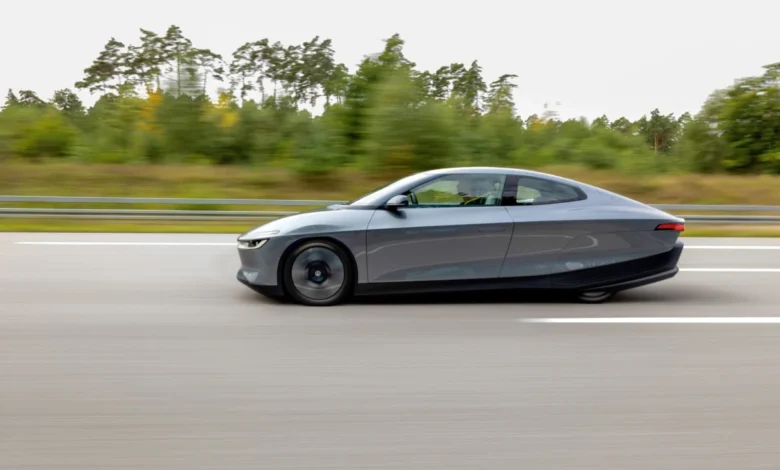
Volkswagen has officially pulled the curtain back on its most ambitious engineering project to date, the Mission Efficiency, a prototype electric vehicle that redefines the parameters of automotive energy consumption. By achieving the equivalent of 323 miles per gallon under ideal testing conditions, the vehicle establishes a new benchmark for efficiency, potentially signaling a paradigm shift in how global manufacturers approach battery-powered transit. Unlike many "pie-in-the-sky" concepts that remain confined to computer-aided design files, Volkswagen opted for a real-world demonstration of the vehicle’s capabilities, underscoring its commitment to practical, high-efficiency engineering.
The prototype, which incorporates powertrain components from the ID. Polo, completed an arduous 794-mile (1,278-kilometer) journey from the company’s headquarters in Wolfsburg, Germany, to Vienna. During this trans-European trek, the team executed only a single charging stop, arriving at their destination with 104 miles (168 kilometers) of range remaining. The data logged during this journey—a consumption rate of just 7.51 kilowatt-hours per 100 miles—places the Mission Efficiency in a category of its own, boasting nearly double the efficiency of the current production leader, the Lucid Air Pure.
Chronology and Engineering Evolution
The development of the Mission Efficiency follows a long lineage of Volkswagen “halo” cars designed to push the boundaries of physics. Over a decade ago, the company introduced the XL1, a limited-production masterpiece that utilized lightweight materials and extreme aerodynamic shaping to achieve unprecedented fuel economy. While the XL1 saw only 250 units produced with a prohibitive starting price of €110,000, it established the design language and engineering philosophy that has now culminated in the Mission Efficiency.

The current project represents a maturation of those early experiments. By utilizing the modular components of the ID. Polo platform, Volkswagen is attempting to bridge the gap between experimental laboratory science and mass-market scalability. The transition from the hyper-niche XL1 to a "near-production" vehicle like the Mission Efficiency suggests that the company is no longer viewing efficiency as a marketing exercise, but as a core requirement for future automotive platforms in an era of tightening carbon regulations.
Aerodynamic Constraints and Design Philosophy
The exterior silhouette of the Mission Efficiency is defined by its teardrop shape, a form dictated entirely by the physics of air resistance. The vehicle employs a "Kammback" design, where the roofline tapers sharply after the driver’s position to prevent airflow separation. This specific geometry allows the car to achieve a drag coefficient of 0.158, a figure that would be impossible in a traditional sedan or SUV body style.
To complement this shape, Volkswagen focused heavily on the frontal area, minimizing it to 2.08 square meters. However, these gains in aerodynamic efficiency come with significant trade-offs in passenger comfort and vehicle utility. The cabin is configured as a 2+2, with rear seating space restricted to occupants shorter than 5-foot 3 inches (1.6 meters). While Volkswagen representatives have stated that the car was designed with the potential for use by a young family of four, the realities of the interior space suggest that the vehicle is better suited for solo commuters or couples who prioritize long-range efficiency over interior volume.
The design team also made controversial choices regarding the suspension and wheel wells. To reduce turbulence, the gap between the tires and the wheel arches has been narrowed to a minimum. While this is an effective strategy for smoothing airflow, it significantly limits wheel travel, which could lead to a jarring ride quality on uneven pavement. Furthermore, the decision to retain traditional side-view mirrors instead of aerodynamic cameras was a deliberate choice. Engineers noted that while cameras would have theoretically improved drag, they failed to replicate the depth perception and reliability provided by traditional glass mirrors, proving that even in a pursuit of maximum efficiency, human-centric usability remains a priority.

Technical Specifications and Battery Performance
The heart of the Mission Efficiency is a 54.9-kilowatt-hour battery pack. Through advanced power management and weight reduction, the vehicle is capable of achieving an estimated 400 miles of range. While official EPA ratings have not yet been established, the math presents a compelling comparison to industry leaders. For instance, the Lucid Air Pure, widely considered the standard-bearer for efficiency, achieves 420 miles of range from a larger 84-kilowatt-hour battery.
The Mission Efficiency’s superior efficiency is further bolstered by unconventional features, such as integrated solar cells on the roof and trunk lid. While these cells are often criticized as gimmicks, they provide a tangible, if modest, benefit in this application, adding up to 18 miles (30 kilometers) of range when the vehicle is driven at a constant 42.25 mph (68 kph) under optimal solar exposure.
The interior continues the theme of minimalism. Borrowing inspiration from the emerging trend of "bare-bones" electric vehicles—a philosophy championed by startups like Slate Auto—the Mission Efficiency abandons the traditional infotainment center and integrated speaker system. Instead, the cabin is stripped of non-essential electronics to save weight and complexity, encouraging users to rely on their own mobile devices for navigation and entertainment. This "bring-your-own-device" approach is a departure from the industry trend of increasingly massive, power-hungry touchscreens.
Broader Implications for the Automotive Sector
The unveiling of the Mission Efficiency arrives at a critical juncture for the automotive industry. As manufacturers struggle to balance the high weight of large battery packs with the need for extended range, Volkswagen’s prototype offers a potential roadmap for the next decade. By proving that high-efficiency vehicles can be built using existing motor and battery architectures, the company is signaling that the path to decarbonization may not require larger batteries, but rather a more radical rethinking of vehicle architecture.

Market analysts suggest that the Mission Efficiency could influence future design cycles for Volkswagen’s mainstream ID lineup. While the company has not yet committed to a full-scale production run for this specific model, the "near-production" designation is a strong indicator that the technology tested here will be integrated into future consumer models.
The implications for the supply chain are also significant. A vehicle that can travel 800 miles on a single charge with a relatively small 54.9-kWh battery requires fewer rare-earth materials—such as lithium, cobalt, and nickel—than current long-range SUVs. As the cost of battery raw materials remains volatile, the "efficiency-first" design philosophy demonstrated by the Mission Efficiency may become a primary competitive advantage for automakers in the coming years.
Official Stance and Future Outlook
Volkswagen’s messaging regarding the prototype remains cautious yet optimistic. During the press launch, the company emphasized that the Mission Efficiency serves as a "technology demonstrator" meant to challenge industry perceptions of what is possible with current-generation electric vehicle components.
"The Mission Efficiency is not just a concept; it is a proof of concept," a spokesperson stated. "It demonstrates that by optimizing every aspect of the vehicle—from drag to weight and power delivery—we can achieve a level of performance that was once thought to be limited to experimental solar vehicles."

While the public waits to see if a production variant will reach showrooms, the industry is already taking note. The successful 794-mile journey to Vienna serves as a stark reminder that in the transition to electric mobility, the most effective solution is not always to build a bigger battery, but to build a better car. Whether this prototype serves as the foundation for a new mass-market vehicle or remains a limited-production halo car, its existence confirms that the era of extreme efficiency in electric transit has officially begun. As Volkswagen continues to iterate on the Mission Efficiency, the competition to minimize energy consumption will undoubtedly heat up, forcing every major automaker to revisit their own aerodynamic and weight-reduction strategies in the coming years.