The Core of the Legal Challenge
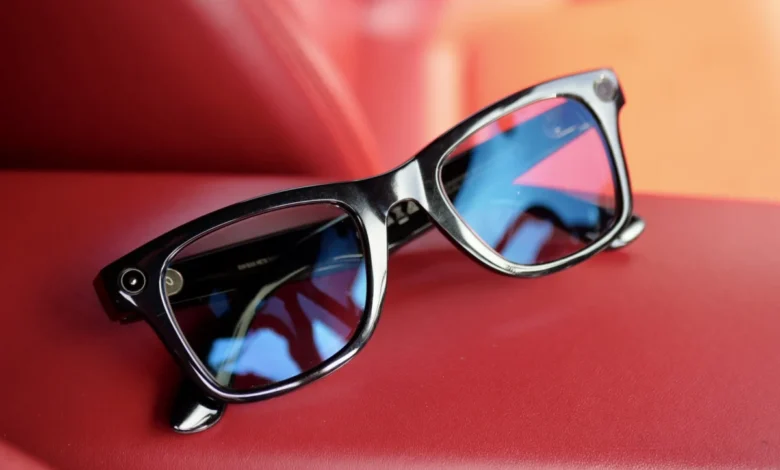
At the heart of the litigation is the argument that the discreet form factor of the Ray-Ban Meta smart glasses creates an environment where privacy is inherently compromised. Plaintiffs contend that the glasses effectively enable users to capture audio, video, and photographic data in sensitive environments—such as changing rooms, medical facilities, schools, and private residential spaces—without the explicit knowledge or consent of those being recorded.
The legal teams representing the plaintiffs are requesting that the court impose severe financial penalties to deter continued distribution. Specifically, they are seeking a daily fine of €100,000 for each defendant, with a total potential liability capped at €100 million. Beyond the immediate sales ban, the lawsuit demands that Meta cease the practice of using captured footage for the training of its proprietary AI models, arguing that such data harvesting violates the stringent protections afforded by the European Union’s General Data Protection Regulation (GDPR).

A Chronology of Mounting Privacy Concerns
The path to this litigation was not sudden; it represents the culmination of a multi-year period of public and regulatory skepticism toward wearable camera technology. Since the introduction of the first generation of Meta’s smart glasses, privacy advocates have questioned the adequacy of visual indicators.
- Initial Launch (2021): Meta releases its first-generation smart glasses. Privacy advocates express immediate concern over the difficulty of identifying when the device is active.
- Regulatory Warnings (2024-2025): Throughout this period, various European data protection authorities issue guidance warning consumers that smart glasses may not comply with local privacy laws if they do not sufficiently alert bystanders.
- The AI Pivot (2025-2026): As Meta integrates more advanced AI features, the utility of the glasses grows, but so does the concern regarding the processing of visual data for machine learning purposes.
- Escalation (November 2026): Consumentenbond and Offlimits file the formal lawsuit in the Netherlands, citing the risk of covert, invasive recording in public and private spaces.
- Anticipated Ruling (December 2026): The Dutch court is scheduled to provide a preliminary decision on the requested injunction.
Meta and EssilorLuxottica Respond
In response to the legal filing, Meta has mounted a defense centered on the design and technological safeguards of the hardware. A primary pillar of their argument is the inclusion of a visible LED indicator light, which illuminates whenever the camera is recording. Meta maintains that this feature serves as a functional equivalent to traditional consent protocols, alerting nearby individuals that they are in the presence of an active recording device.
Furthermore, Meta has addressed the allegations regarding its AI training data. The company denies that it processes raw, identifiable imagery captured by consumers in the European Union for the purpose of training its global AI models, asserting that its internal policies are fully aligned with current European mandates.

EssilorLuxottica, the manufacturing partner and owner of the Ray-Ban brand, has also entered the fray, arguing that the request for a total sales ban is a disproportionate response. The company maintains that it does not have access to the data captured by the devices and that it cannot be held legally responsible for the actions of individual users who may intentionally misuse the product.
The Regulatory and Societal Landscape
The Dutch lawsuit is emblematic of a broader, continent-wide backlash against camera-equipped wearables. Across the European Union, cinema chains, educational institutions, and private venues have begun implementing their own ad-hoc bans on smart glasses, often treating them with the same suspicion as early, more intrusive surveillance tools.
Germany’s consumer federation has similarly initiated legal inquiries into the sale of these devices, suggesting that the Dutch case may serve as a bellwether for future regional litigation. Privacy regulators in the Netherlands have long cautioned consumers that the burden of ensuring compliance with local laws often falls on the wearer, yet the manufacturers themselves face increasing pressure to bake "privacy-by-design" into their product roadmaps.

Economic and Technical Implications
The potential for a court-ordered halt on sales presents a complex dilemma for the technology industry. If the court rules in favor of the plaintiffs, it would set a precedent that could force a redesign of wearable technology, potentially requiring hardware-level changes such as more prominent status lights, haptic feedback for bystanders, or stricter data-processing limitations.
This development arrives at a critical juncture for the AR/VR and smart wearable sector. As companies like Samsung, Meta, and various startups compete to make augmented reality (AR) glasses more practical—slimming down form factors and improving outdoor visibility—the tension between "looking normal" and "being transparent" is widening. The industry is currently investing billions into making these devices indistinguishable from standard eyewear to improve adoption rates. However, the legal challenges demonstrate that the more "natural" these devices look, the more they trigger public suspicion.
Analysis of the Privacy-Utility Paradox
The core issue remains the "privacy-utility paradox." For users, the value of smart glasses lies in their unobtrusiveness—the ability to record memories or access AI assistance without the friction of pulling out a smartphone. For the public, that same unobtrusiveness is precisely the threat.

Data protection experts argue that existing notification mechanisms, such as the LED light on the Ray-Ban Meta glasses, are insufficient in crowded urban environments. In a busy city, a bystander is unlikely to notice a small, blinking light on a passerby’s frames. Furthermore, the reliance on user behavior to uphold the privacy of others is considered a failure in product architecture by privacy advocates.
If the court finds that the current safeguards are insufficient, the ruling could compel companies to adopt more rigorous, perhaps even intrusive, notification systems. This would essentially force a trade-off: manufacturers would have to choose between a device that is socially acceptable to wear and a device that is legally compliant with the expectations of privacy in public spaces.
Conclusion: A Precedent for the Future
The upcoming decision in mid-December will be closely watched by stakeholders across the technology sector. A ruling against Meta would likely trigger a domino effect of similar lawsuits across the EU, effectively forcing a re-evaluation of how wearable cameras are marketed and designed. Conversely, a victory for the tech giants would solidify the current status quo, potentially emboldening companies to continue their current trajectory of integrating cameras into everyday accessories.

Regardless of the outcome, the lawsuit confirms that the "wearable era" will be defined as much by its legal and ethical constraints as by its technical achievements. As devices become more integrated into our daily lives, the question of what it means to have a "reasonable expectation of privacy" is being rewritten in real-time, one courtroom at a time. The technology is rapidly maturing, but the social contract surrounding its use remains, at best, unfinished. For now, consumers, regulators, and tech companies remain at an impasse, waiting to see if the law will favor the convenience of the wearer or the privacy of the bystander.