Denny’s Issues Public Statement of Support for Jensen Huang Following His Dramatic 11-Day Exit and Return as Nvidia CEO

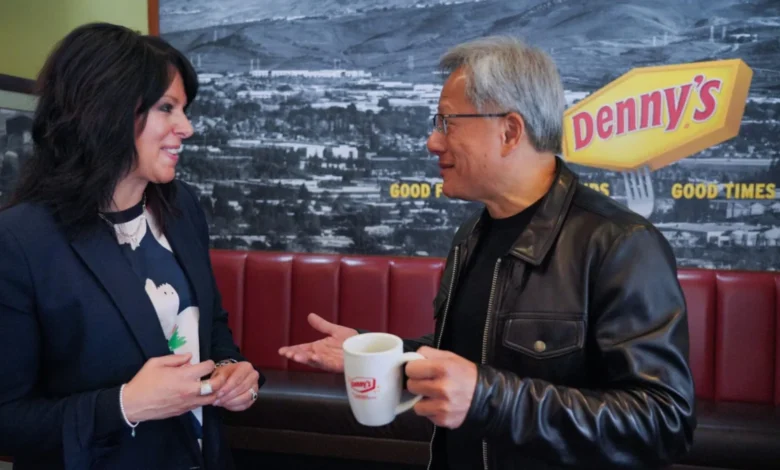
The corporate landscape was recently shaken by an unexpected leadership crisis at Nvidia, one of the world’s most valuable technology corporations. Jensen Huang, the iconic co-founder and long-serving Chief Executive Officer, abruptly resigned from his post, triggering an 11-day corporate whirlwind that culminated in his dramatic reinstatement. As markets reacted violently to the sudden instability, wiping billions off the company’s valuation, an unlikely observer stepped into the public discourse to offer solidarity. Denny’s, the ubiquitous American diner chain where Huang famously worked in his youth and conceptualized the foundational ideas that would eventually become Nvidia, released a glowing, 200-word statement on the social media platform X. The message sought to reinforce the enduring historical bond between the restaurant chain and the billionaire tech executive, utilizing clever culinary metaphors to reassure stakeholders that "some things you just don’t take off the menu."
The unexpected sequence of events has drawn intense scrutiny from financial analysts, technology historians, and corporate governance experts alike. While Nvidia has successfully restored stability to its C-suite following a unanimous board vote, the episode highlights the profound centralization of authority and personality surrounding Huang, whose leadership has become synonymous with the explosive rise of the modern artificial intelligence economy.
Chronology of a Crisis: The 11-Day Nvidia Leadership Upheaval
The turbulence began when Nvidia officially confirmed that Jensen Huang had tendered his resignation as Chief Executive Officer. The sudden departure sent immediate shockwaves through global financial markets, catching Wall Street and industry insiders entirely off guard. In the immediate wake of the announcement, the company’s executive leadership moved swiftly to ensure operational continuity. Colette Kress, who serves as Nvidia’s Executive Vice President and Chief Financial Officer, was promptly appointed as interim CEO, tasked with steadying the ship during an unprecedented moment of corporate uncertainty.
The cause behind Huang’s abrupt exit was soon revealed to stem from an explosive personal affair scandal that threatened to compromise executive leadership standards. As details of the controversy emerged, investor panic set in. Over the course of the 11-day period in which Huang was separated from the company, Nvidia’s stock prices plummeted precipitously, shedding approximately 24 percent of their total market value. The sharp sell-off underscored the immense weight that Huang’s personal brand carries within the tech sector, where he has long been revered as the visionary force propelling the transition from traditional graphical processing units to the backbone of global artificial intelligence infrastructure.
Recognizing the existential threat posed by prolonged instability and sliding valuations, Nvidia’s board of directors acted decisively. Following a rigorous internal review and a subsequent unanimous vote by the company board, Huang was officially reinstated as CEO, ending his brief 11-day exile. Markets reacted with immediate, albeit cautious, relief as the company moved to close the chapter on the briefest yet most turbulent leadership crisis in its history.
From Dishwasher to AI Pioneer: The Denny’s Connection
Amid the flurry of financial reports, legal analyses, and corporate filings, the statement from Denny’s provided a starkly human and nostalgic contrast. Long before Jensen Huang was orchestrating multi-trillion-dollar valuations, designing cutting-edge silicon, and commanding the attention of global leaders, he was a teenage dishwasher and waiter at a Denny’s restaurant in an era when he was simply a young immigrant trying to navigate his new life in America.
It was across the laminated tables of the diner chain that Huang, alongside co-founders Chris Malachowsky and Curtis Priem in 1993, famously mapped out the initial blueprint for a graphics company aimed at revolutionizing 3D gaming. Over the decades, Huang has frequently recounted his humble beginnings at Denny’s, often citing the work ethic, humility, and operational discipline he absorbed during his time clearing tables and serving customers as formative influences on his management style.
In its public statement posted to X, Denny’s leaned heavily into this shared mythology. The company declared that true foundational elements, much like its classic menu staples, are permanent fixtures that weather any storm. By publicly backing Huang during his most vulnerable public relations crisis, the diner chain successfully tethered its brand equity to the enduring narrative of American entrepreneurial grit and the unstoppable ascent of the artificial intelligence boom.
Market Reactions and Supporting Data
The rapid downward trajectory of Nvidia’s stock during Huang’s brief absence offers a fascinating case study in modern corporate dependency on visionary founders. When the resignation was announced, Nvidia’s market capitalization suffered a massive double-digit contraction within days, wiping out hundreds of billions of dollars in shareholder wealth.
Financial analysts point out that while Nvidia boasts a deep and exceptionally talented executive bench—evidenced by the seamless operational handoff managed by CFO Colette Kress—the market perceives Huang as irreplaceable. Under his stewardship, Nvidia transformed from a niche 3D graphics card manufacturer into the absolute epicenter of the generative AI revolution, supplying the high-performance accelerators powering data centers for tech giants worldwide, including Microsoft, Google, Meta, and Amazon.
The 24 percent stock price correction observed during the 11-day scandal serves as a stark reminder of the volatility inherent in tech monopolies built around singular personalities. However, the equally swift recovery following his reinstatement demonstrates that investor confidence remains inextricably tied to his ongoing tenure.
Broader Implications and Corporate Governance Lessons
The resolution of the crisis and the subsequent outpouring of support from unexpected quarters like Denny’s raise broader questions regarding modern corporate governance, executive accountability, and the cult of personality in Silicon Valley.
Corporate governance watchdogs have long debated the risks associated with companies relying heavily on visionary founders who wield near-total influence over corporate direction and board dynamics. The scandal that triggered Huang’s initial resignation—and the subsequent rapid reversal by the board—will likely be analyzed in business schools for years as a prime example of the tension between personal conduct and corporate valuation.
Nevertheless, Nvidia emerges from the 11-day ordeal functionally intact, albeit with heightened awareness of the fragility that accompanies hyper-growth. As Huang resumes his duties at the helm, the immediate priority for Nvidia will be refocusing on its aggressive product roadmap, maintaining its dominant market share in AI hardware, and reassuring institutional investors of long-term stability.
For Denny’s, the gesture of solidarity was a masterclass in opportunistic public relations, reminding the public that even the most advanced technological titans of the twenty-first century often trace their humble origins back to the most ordinary of places. As Jensen Huang steers Nvidia back onto its high-speed trajectory, the culinary world and the tech world remain uniquely intertwined, anchored by a shared history written over a cup of coffee and a booth at a local diner.