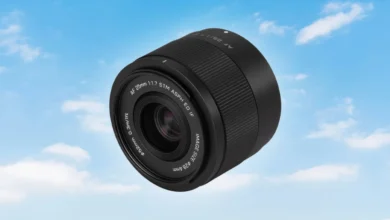
LK Samyang AF 60-180mm f/2.8 lens review: A strategic expansion of the alternative trinity zoom series.


The landscape of professional photography equipment is currently undergoing a significant shift as manufacturers move away from the traditional, heavy, and prohibitively expensive "holy trinity" of f/2.8 zoom lenses—typically comprising 14-24mm, 24-70mm, and 70-200mm focal lengths. In their place, a new market segment has emerged: the "alternative trinity." This category focuses on delivering the same constant f/2.8 aperture in a more portable, lightweight, and budget-conscious form factor. The latest addition to this trend is the LK Samyang AF 60-180mm f/2.8, a lens that completes a coherent, high-performance set designed for the modern mirrorless photographer.

The Evolution of the Alternative Trinity
LK Samyang, formerly known simply as Samyang and recognized as Rokinon in the North American market, has systematically built out this series to provide a streamlined solution for wedding, event, and portrait photographers. The company’s strategy involves collaboration with the German optical powerhouse Schneider-Kreuznach, a partnership that adds significant technical credibility to the lineup.

The trilogy began with the release of the AF 14-24mm f/2.8 and the AF 24-60mm f/2.8. The introduction of the 60-180mm telephoto zoom serves as the final piece of this puzzle. By opting for a 60-180mm range rather than the standard 70-200mm, LK Samyang has managed to shave off considerable bulk and weight without compromising the light-gathering capability that professionals require.

Design Philosophy and Engineering
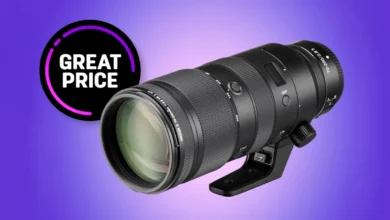
The LK Samyang AF 60-180mm f/2.8 is engineered to balance performance with portability. Weighing in at 730g (25.8oz) and measuring 87x149mm (3.4×5.9in), the lens is roughly half the weight of traditional 70-200mm f/2.8 counterparts. This reduction is achieved through an optical design consisting of 17 elements in 14 groups, utilizing two aspherical elements, seven Extra-low Dispersion (ED) elements, and one High Refractive index (HR) element.

The use of aspherical glass is central to this design, as it allows for superior aberration correction using fewer total elements, thereby reducing the overall volume of the lens. The build quality is robust, featuring a metal mounting plate and extensive weather-sealing, including a dedicated rubber gasket at the mount to prevent dust and moisture ingress. Despite its compact nature, the lens features a modern linear stepping motor for autofocus, ensuring silent and rapid transitions, which are essential for both still photography and video production.

Handling and Operational Features
While the lens is compact, it does employ an extending inner barrel mechanism, which increases the physical length by approximately one inch when zoomed from 60mm to 180mm. While some purists prefer internal zooming, the extension here is minimal, and the impact on the center of gravity is negligible. To mitigate concerns regarding "zoom creep"—a common issue in extending barrels—the lens includes a physical zoom lock switch, ensuring the focal length remains fixed during transport.

Ergonomically, the lens is designed with tactile control in mind. The focus and zoom rings feature a textured surface that provides superior grip and a premium feel. Furthermore, the inclusion of a customizable function button and a dedicated AF/MF toggle switch allows photographers to adjust settings without navigating through complex camera menus. A USB-C port is integrated into the barrel, providing a future-proof method for firmware updates, which is increasingly vital as camera body software evolves.

Performance and Optical Analysis
In practical application, the 60-180mm range provides a versatile workflow for event shooters. The 60mm starting point offers a wider field of view than the traditional 70mm, which is beneficial for environmental portraits or group shots in confined spaces. At the long end, the 180mm focal length provides sufficient reach for most telephoto applications; the slight loss compared to 200mm is rarely a practical hindrance and can be easily managed via minor post-processing cropping.

Laboratory testing using Imatest SFR analysis demonstrates that the lens maintains high levels of sharpness throughout the zoom range. While the center of the frame is exceptionally sharp, the extreme corners show a minor, expected drop in resolution. However, when stopped down by a single f-stop from the maximum f/2.8 aperture, the performance across the frame becomes remarkably consistent. Chromatic aberration, often a weakness in fast lenses, is kept to a minimum, and distortion is well-controlled, with most aberrations easily eliminated by standard in-camera profile corrections.

The Role of Stabilization
A notable absence in the LK Samyang AF 60-180mm f/2.8 is built-in optical image stabilization. In the current market, this is a strategic trade-off. Most contemporary full-frame mirrorless camera bodies from Sony, as well as those in the L-mount alliance, feature In-Body Image Stabilization (IBIS). However, for users of older Sony Alpha models or those utilizing APS-C sensor cameras that lack IBIS, the lack of optical stabilization may be a limiting factor when shooting at longer focal lengths in low-light conditions. The decision to omit it was likely driven by the need to maintain the lens’s compact footprint and lower price point.

Market Positioning and Competitive Landscape
The pricing strategy for the LK Samyang AF 60-180mm f/2.8 is aggressive. Retailing at approximately $1,099 (prices vary by region), it positions itself significantly lower than the native, professional-grade 70-200mm f/2.8 lenses from camera manufacturers like Sony or Canon, which often cost upwards of $2,000.

Direct competition comes from the Tamron 70-180mm F2.8 Di III VC VXD G2. The Tamron model offers a similar "alternative trinity" philosophy but includes the benefit of optical image stabilization, which may be a deciding factor for some users. Another alternative is the Sigma 70-200mm f/2.8 DG DN OS Sports, which provides a more traditional, albeit heavier and pricier, experience. The choice between these lenses ultimately depends on whether the user prioritizes the absolute lowest weight and cost, or requires the additional stabilization offered by the competition.

Implications for the Industry
The success of the LK Samyang trinity indicates a growing demand for "pro-sumer" gear that does not force a choice between weight and aperture. By standardizing the handling, filter sizes, and build quality across the 14-24mm, 24-60mm, and 60-180mm lenses, LK Samyang is offering a system-wide solution. This is particularly attractive to hybrid shooters who need to switch lenses quickly during an event without having to adjust their physical technique or rebalance their camera rigs.

The main challenge for the brand remains the availability of mounts. While the 60-180mm and 14-24mm are available for both Sony E-mount and L-mount, the 24-60mm is currently limited to Sony E-mount. Expanding the L-mount compatibility across the entire trilogy is likely the next logical step for the manufacturer to fully capture the interest of Panasonic and Leica users.

Conclusion
The LK Samyang AF 60-180mm f/2.8 represents a pragmatic approach to professional optics. It does not attempt to redefine the performance of a flagship 70-200mm lens, but rather succeeds by offering a high-quality, reliable, and lightweight alternative that fulfills the vast majority of professional requirements. For those who frequently travel, shoot long events, or simply wish to reduce the physical toll of their gear, the 60-180mm is a compelling addition to the market. Its combination of sharp optics, fast autofocus, and competitive pricing makes it a standout choice in the evolving landscape of mirrorless photography.