Do Electric Vehicles Really Wear Out Their Tires Faster Than Gas Cars?

The transition from internal combustion engine (ICE) vehicles to electric vehicles (EVs) has fundamentally altered the automotive maintenance landscape. Owners frequently celebrate the elimination of costly traditional upkeep items, such as oil changes, spark plug replacements, timing belts, and complex exhaust system repairs. However, a less celebrated mechanical reality has emerged from the shadows of electrification: tire wear. Across forums, fleet management reports, and industry testing laboratories, a persistent question remains among consumers and automotive engineers alike: do electric vehicles genuinely chew through rubber at a significantly faster rate than their gasoline and diesel counterparts, or is this phenomenon merely an exaggerated urban legend born from early adopter anxieties?
The intersection of automotive physics, recent empirical studies, and real-world fleet data reveals a complex narrative. While the foundational principles of physics heavily implicate electric vehicles in accelerated tire degradation, the extent to which this impacts the average driver is governed by a multitude of variables, including vehicle weight, driving dynamics, geography, and tire engineering.
The Fundamental Physics of Electric Vehicle Tire Wear
To understand why electric vehicles place a heavier burden on their contact patches, one must look closely at the fundamental physics governing automotive motion. EVs are, by design and necessity, significantly heavier than comparable internal combustion vehicles. The primary driver of this mass differential is the battery pack, a dense assembly of lithium-ion cells that adds hundreds—and in the case of large SUVs and pickup trucks, thousands—of pounds to the vehicle’s curb weight.
When a heavier vehicle accelerates, brakes, or negotiates a corner, the frictional forces exerted on the tires multiply exponentially. Inertia dictates that a greater mass requires more energy to change direction or halt, transferring immense shear stress directly onto the rubber tread.
Furthermore, electric motors possess a distinct performance characteristic that differentiates them from traditional engines: instantaneous torque delivery. While an internal combustion engine must build revolutions per minute (RPM) and rely on transmission gear ratios to deliver peak power, an electric motor unleashes maximum torque almost instantaneously upon throttle application. This brutal, immediate surge of power places tremendous strain on the tire contact patch. Even casual acceleration from a stoplight places micro-strains on the rubber that do not occur as violently in a gasoline-powered vehicle, where power delivery is inherently cushioned by engine dampening and drivetrain slack.
Insights From Automotive Authorities and Testing Bodies
Recognizing these mechanical disparities, major automotive organizations have sought to quantify the effects. Germany’s Allgemeine Deutscher Automobil-Club (ADAC), one of Europe’s largest motoring associations, has extensively studied the wear patterns of tires on electric vehicles. ADAC’s findings indicate that both vehicle weight and driving behavior are primary catalysts for accelerated wear.
Interestingly, ADAC downplays the role of instantaneous torque as a standalone culprit. The association argues that possessing the capability to accelerate rapidly does not inherently mean drivers utilize that capacity aggressively on every trip. Instead, ADAC places greater emphasis on driving style and localized traffic conditions as primary determinants of tire longevity, suggesting that human behavior remains a critical, controllable variable in how long a set of tires will last.
Empirical Evidence: Laboratory Studies and Fleet Data
While theoretical physics and motoring clubs offer qualitative assessments, empirical studies published over the last several years provide hard quantitative data regarding the disparity in tire wear between powertrains.
In 2022, a landmark study published in the peer-reviewed journal Science of the Total Environment provided direct experimental evidence. Researchers in South Korea measured the average tread wear of a battery-electric vehicle against gasoline and diesel equivalents across a controlled 550-kilometer (341-mile) route. The results were striking: the tested EV exhibited an average tread loss of 201.7 milligrams per kilometer, compared to 158.9 milligrams for the gasoline car and 167.4 milligrams for the diesel vehicle. This represented an increase in particulate shedding and material loss of approximately 27% and 20%, respectively. While this study offered a clear baseline under controlled conditions, researchers noted that the findings reflected performance specifically under those parameters rather than serving as a universal forecast for all real-world driving scenarios.
Real-world fleet management data has largely corroborated these laboratory insights. In late 2025, prominent UK-based fleet management and data provider Epyx released findings indicating that electric company cars required their first tire replacements significantly earlier than their ICE counterparts. According to Epyx’s data, electric fleet vehicles received new tires at an average mileage of approximately 23,100 kilometers (14,352 miles), whereas combustion-powered vehicles averaged 29,500 kilometers (18,333 miles)—marking a roughly 22% reduction in lifespan between tire changes.
However, industry analysts advise caution when interpreting fleet datasets. Epyx acknowledged that its early EV sample sizes skewed heavily toward larger, heavier premium vehicles and commercial crossovers. Because larger and heavier vehicles inherently wear through tires faster regardless of powertrain, isolating the variable of electrification alone in fleet data remains challenging.
Recent Research on Particulate Emissions and Lifespan Projections

As the global fleet of electric vehicles expands, environmental and mechanical research has intensified. A 2026 study published in Environmental Research sought to measure non-exhaust emissions—specifically particles shed from tires and road surfaces—by comparing electric and combustion variants of identical vehicle models. On average, the researchers found that electric versions released approximately 31% more particulate matter into the environment. However, scientists emphasized a crucial distinction: measuring particulate emissions (mass lost to the environment) is not identical to measuring total tire lifespan. While more rubber is shed per kilometer, the overall structural integrity and remaining tread depth do not necessarily degrade at a synchronized 31% faster rate.
Similarly, a 2026 study published in the academic journal Mechanika estimated that EV tires could experience a 35% to 62% reduction in total kilometer lifespan compared to traditional cars. Yet, critics of the study noted that the evaluation lacked an exact "apples-to-apples" comparison. The electric vehicles analyzed in the study undertook significantly more urban, stop-and-go driving along different municipal routes than their combustion counterparts. Navigating congested city streets with frequent braking and turning is fundamentally harsher on rubber compounds than steady-state highway cruising, making it difficult to parse out how much wear was caused by the vehicle’s powertrain versus its operational environment.
Further clarity came from a comprehensive testing initiative carried out by UTAC on behalf of European automotive industry groups ACEA and OICA. Testing pitted a single electric BMW iX1 against five combustion-powered X1 models over a grueling 15,000-kilometer (9,300-mile) evaluation route. The electric iX1 did indeed shed more rubber per kilometer than its ICE siblings. However, when researchers mathematically controlled for the vehicle’s heavier curb weight, the wear disparity largely vanished. This controlled test strongly suggested that vehicle mass—rather than an inherent flaw in electrification—was the primary catalyst for accelerated tire degradation.
The Rise of EV-Specific Tire Engineering
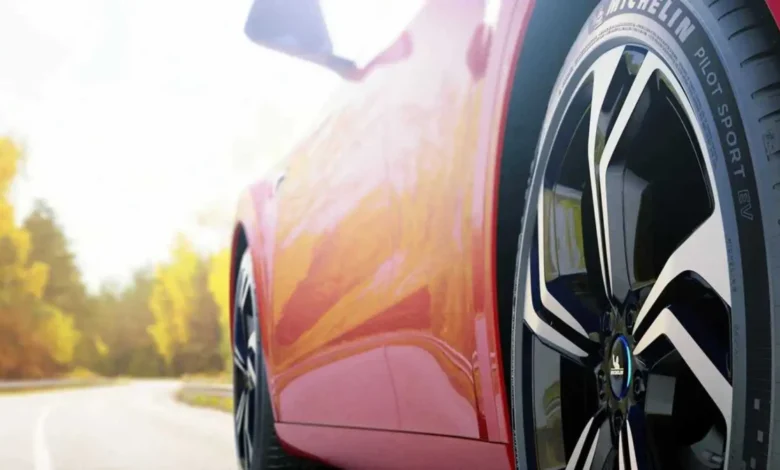
Recognizing that the unique demands of electric vehicles present both challenges and market opportunities, major tire manufacturers have invested heavily in developing specialized "EV-ready" tires. Brands such as Michelin, Hankook, Continental, and Goodyear now offer product lines explicitly engineered to counteract the unique stressors of battery-powered mobility.
These specialized tires are constructed with reinforced sidewall architectures and denser internal structures designed to bear higher static and dynamic loads without compromising structural integrity. Advanced rubber compounds utilize high-silica content and specialized polymer blends to maximize tread durability against instant torque while simultaneously reducing rolling resistance to preserve vehicle driving range.
Furthermore, acoustic engineering has become a cornerstone of EV tire design. Because electric powertrains eliminate the masking roar of internal combustion engines, road noise and tire hum become acutely noticeable inside the cabin. To combat this, manufacturers frequently incorporate layers of specialized acoustic polyurethane foam inside the tire carcass to absorb resonant frequencies.
Industry leaders point out, however, that these design traits serve distinct engineering goals. Michelin and other manufacturers emphasize that a tire optimized for low cabin noise or ultra-low rolling resistance is not automatically endowed with superior tread longevity. Balancing range, quietness, grip, and durability remains a complex balancing act for tire chemists.
Importantly, consumers are not strictly obligated to purchase specialized, EV-branded tires. According to ADAC, standard replacement tires that lack specific EV marketing designations are entirely suitable for electric vehicles, provided they strictly match the manufacturer’s required specifications regarding dimensions, speed ratings, and crucially, load index capacity.
Practical Strategies for Maximizing EV Tire Longevity
While physics and fleet data confirm that electric vehicles impose harsher demands on rubber, drivers are not entirely helpless against premature wear. Adopting proactive maintenance and mindful driving habits can substantially extend the lifespan of an EV’s tire set.
Industry experts and manufacturers recommend several foundational best practices:
- Smooth Acceleration and Braking: Minimizing aggressive, abrupt throttle inputs prevents the instantaneous torque of electric motors from violently stripping rubber from the contact patch. Utilizing moderate regenerative braking settings smoothly can also help manage deceleration forces.
- Rigorous Pressure Monitoring: Electric vehicles carry heavier loads, making correct tire inflation paramount. Under-inflated tires increase rolling resistance, generate excessive internal heat, and accelerate shoulder wear.
- Frequent Rotation and Alignment: Because EVs exert uneven forces during cornering and heavy braking, regular tire rotation—typically every 6,000 to 8,000 miles—ensures even wear distribution across all four corners. Checking wheel alignment periodically is also vital for preventing premature edge scrubbing.
- Mindful Purchasing Decisions: When the time finally arrives for replacement, consumers should carefully evaluate treadwear warranties, rolling resistance ratings, and braking performance metrics rather than relying solely on initial purchase price.
Conclusion: Fact or Fiction?
Ultimately, the notion that electric vehicles wear out their tires faster is not a myth. Between higher curb weights, instantaneous torque delivery, and real-world fleet replacement intervals pointing to a noticeable reduction in lifespan, the evidence is clear. However, the severity of this issue is heavily contextual.
How quickly an electric vehicle consumes its tires is not a predetermined inevitability dictated solely by the powertrain; rather, it is a variable outcome heavily influenced by vehicle size, geographic operating conditions, tire selection, and, most importantly, the behavior of the person behind the steering wheel. As tire technology continues to evolve alongside the broader electric vehicle market, the gap in longevity between internal combustion and electric powertrains is steadily narrowing, offering consumers a smoother, more durable path forward.
Related posts: