Dark Souls 2 and 3 Servers Temporarily Shut Down Indefinitely by FromSoftware Due to Unspecified Technical Issues

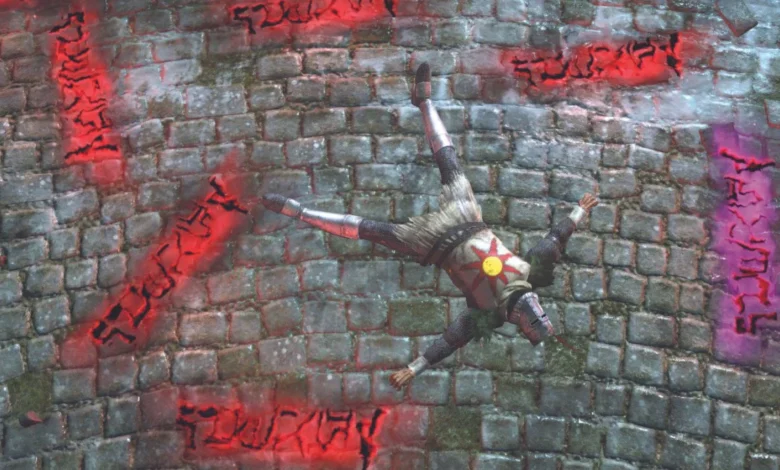
FromSoftware has announced the sudden and indefinite shutdown of online multiplayer servers for both Dark Souls 2 and Dark Souls 3 across all available platforms. The abrupt maintenance leaves players unable to engage in traditional cooperative play, player-versus-player invasions, or view asynchronous message systems that have long defined the communal experience of the iconic action-role-playing games.
The developer confirmed the disruption through an official statement, indicating that the multi-platform outage is tied to an undisclosed server-side issue. While the community navigates yet another unexpected blackout of the beloved franchise’s online infrastructure, players and industry analysts alike are weighing the potential implications for the studio’s legacy titles and the broader Soulsborne community.
Scope of the Outage and Affected Platforms
Unlike previous localized outages or platform-exclusive vulnerabilities, the current shutdown impacts a broad spectrum of hardware. Players on PC, PlayStation, and Xbox consoles are entirely cut off from the official network features of both Dark Souls 2 and Dark Souls 3.
The core features disabled during this downtime include:
- Cooperative Summoning: The ability to call upon fellow players for assistance in conquering difficult bosses and exploring treacherous areas.
- Invasions: The high-stakes mechanic allowing hostile players to infiltrate another player’s world.
- Message and Bloodstain Systems: The cryptic, helpful, or humorous player-written notes left on the ground, alongside the ghostly silhouettes showing how other players met their demise.
FromSoftware has stated that it is actively investigating the root cause of the technical difficulties. However, the studio has not yet provided a definitive timeline for when standard online connectivity will be restored, urging fans to monitor official communication channels for future updates.
Historical Context: A Troubled Online Legacy
The current outage arrives against a backdrop of historical server instability for FromSoftware’s older catalogue. The studio’s network infrastructure has faced significant scrutiny and high-profile interruptions in recent years.
Most notably, in early 2022—just weeks ahead of the highly anticipated launch of Elden Ring—a severe security vulnerability was uncovered across the entire Dark Souls franchise on PC. This critical flaw involved a remote code execution (RCE) exploit. The vulnerability theoretically allowed malicious users to gain unauthorized access to a victim’s computer via the game’s multiplayer connection, posing a serious cybersecurity risk.
To address the exploit, FromSoftware took the unprecedented step of taking all Dark Souls PC servers offline. While Dark Souls 3, Dark Souls 2, and the original Dark Souls: Prepare to Die Edition eventually saw their servers brought back online after extensive security overhauls—with the older Prepare to Die Edition permanently losing PC multiplayer support—the process took months.
However, industry observers have noted key differences between the 2022 security crisis and the current October outage. While the previous incident stemmed from a severe security vulnerability primarily impacting the PC ecosystem, the current issue affects multiple platforms simultaneously. This multi-platform footprint suggests to many community technicians that the disruption may be related to routine backend infrastructure upgrades, database synchronization errors, or hardware failures rather than a malicious exploit.
The Rise of Community-Driven Solutions
While official servers remain dark, the impact on the player base has been mitigated significantly by the ingenuity of the modding community. In recent years, third-party initiatives have transformed how players experience FromSoftware’s multiplayer offerings, insulating segments of the community from official server downtimes.
Chief among these community innovations is the "Seamless Co-op" modification series, spearheaded by prominent modder Yui. Originally popularized within the Elden Ring community, the Seamless Co-op framework bypasses official developer servers entirely, running instead on independent peer-to-peer or dedicated community-hosted connections.
The mod addresses many long-standing criticisms of FromSoftware’s traditional cooperative model by removing artificial barriers. Under the standard game rules, summoning a friend is often restricted by boss status, area boundaries, and automatic disconnections upon defeating a major adversary or dying. The Seamless Co-op framework allows groups of players to explore entire game worlds together continuously, sharing progression without interruption.
Following the successful implementation of the mod for Dark Souls 3, a dedicated version for Dark Souls 2 was released late in September. Because these modifications operate outside FromSoftware’s official server architecture, PC players utilizing the Seamless Co-op mod remain unaffected by the current developer-mandated blackout. For many fans, the timing of the mod’s release has cushioned the blow of the official server suspension, providing a stable alternative for cooperative playthroughs.
Industry Implications and Broader Impact
The indefinite closure of the Dark Souls 2 and 3 servers highlights the ongoing challenges developers face in maintaining aging online infrastructure for legacy titles. As studios shift their primary technical support, server maintenance, and security resources toward newer blockbusters—such as Elden Ring and its Shadow of the Erdtree expansion, alongside upcoming projects—older games frequently run the risk of structural neglect.
Maintaining dedicated servers for games released a decade or more ago requires continuous financial and engineering investment. For publishers, balancing the cost of maintaining active online environments for legacy games against a diminishing active player base is a complex economic equation. While FromSoftware has historically demonstrated a commitment to restoring services—evidenced by the lengthy restoration of the 2022 PC servers—each outage prompts renewed discussions regarding preservation, offline functionality, and the eventual sunsetting of online services in modern gaming.
Furthermore, the reliance on fan-made modifications to sustain multiplayer functionality underscores a growing trend in the PC gaming ecosystem. When official infrastructure fails or is retired, the community increasingly steps in to preserve multiplayer viability, effectively extending the commercial and cultural lifespan of classic titles.
Outlook for Restoration
As FromSoftware continues its diagnostic procedures, the gaming community remains in a holding pattern. The lack of a specific restoration window has naturally fueled speculation, but the broad multi-platform nature of the outage continues to point toward a backend technical hiccup rather than a catastrophic security breach.
Players seeking to experience the games during the downtime are largely restricted to offline single-player modes on consoles, while PC users have increasingly gravitated toward offline play or community-run alternative frameworks. FromSoftware has pledged to issue further updates as soon as more definitive information regarding server stability and repair timelines becomes available. Until then, the desolate landscapes of Drangleic and Lothric will remain strictly solitary experiences for millions of players worldwide.