WordPress Security Flaw Creates Critical Window of Exposure During Routine Updates

A significant security vulnerability, tracked as CVE-2026-119977, has revealed a paradoxical risk for millions of WordPress administrators: the very process of patching the system may, in specific circumstances, leave the server exposed to remote code execution (RCE) attacks. Discovered by Umut Bayram, a security researcher at Picus Security, the flaw affects a wide range of WordPress versions from 4.7 through 7.1.3. While WordPress released a fix in version 7.1.4 to mitigate this risk, the architectural nature of how the CMS handles core updates means that the installation process itself remains a target for sophisticated actors who can time their exploits with millisecond precision.
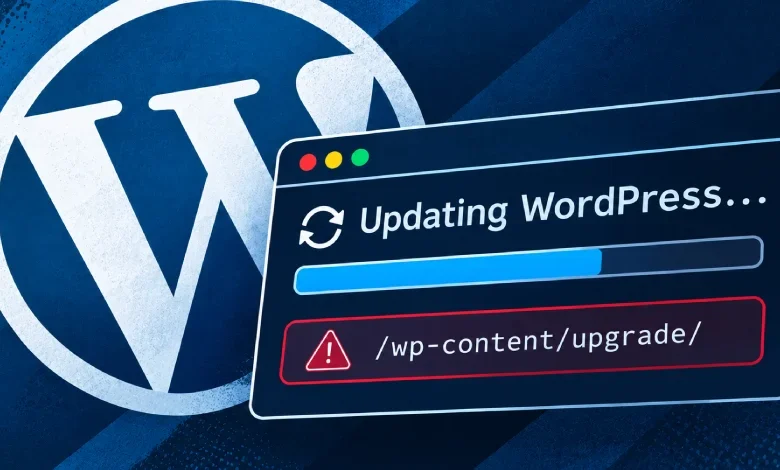
The vulnerability stems from the way the WordPress updater manages temporary files during the installation of core software updates. When a site initiates a full core update, the system downloads a package and unpacks it into a temporary directory—typically located within the wp-content/upgrade folder. Because this folder is often accessible to the public-facing web server, a remote, unauthenticated attacker who can predict or discover the name of this temporary directory can potentially interact with the installer files before the update completes and the files are purged. By accessing these files, an attacker can manipulate the site’s configuration, effectively hijacking the server’s execution context to run arbitrary PHP code.
The Anatomy of the Update Vulnerability
The core of the issue lies in the reliance on legacy code for the update process. Even when a site administrator clicks "Update Now" to move to a more secure version, the site is technically still operating on its previous, vulnerable codebase during the initial stages of the file extraction. In versions of WordPress 5.9 and later, this legacy logic names the temporary update folder based on the filename of the downloaded package—a convention that makes the directory predictable.
This predictability creates a race condition. An attacker monitoring a target server for signs of an update can attempt to access the temporary installer files the moment they are created. If the attacker succeeds in executing the installer before the system completes the migration and deletes the temporary directory, they can manipulate the installation process. This includes the ability to write a malicious wp-config.php file, which could redirect the site’s database connection or provide the attacker with administrative access, essentially granting them full control over the web server’s file system and database.

Chronology of Discovery and Exploitation
The timeline of this vulnerability reflects the rapid pace at which modern cyber-threats evolve.
- Initial Discovery: Umut Bayram identified the flaw, highlighting that the update mechanism’s dependency on existing, unpatched code for file handling created a persistent security loophole.
- Release of Version 7.1.4: WordPress officially released version 7.1.4, which includes a mechanism to assign random, non-predictable names to the temporary update folders, effectively neutralizing the predictability that attackers relied upon.
- Active Exploitation: Shortly after the disclosure and the subsequent release of the patch, evidence of active, malicious exploitation emerged. Security firm Wordfence reported that within nine minutes of releasing their firewall signatures, they began observing automated attempts to target the vulnerability.
- CISA Intervention: The U.S. Cybersecurity and Infrastructure Security Agency (CISA) recognized the severity of the threat by adding CVE-2026-119977 to its Known Exploited Vulnerabilities (KEV) catalog, signaling to federal agencies and private enterprises alike that the risk was not theoretical but a matter of immediate concern.
Data and Risk Assessment
With a CVSS score of 8.1 out of 10, the vulnerability is classified as high-severity. While the window of opportunity for an attacker is narrow—often lasting only a few seconds during the file extraction phase—the automation of these attacks makes the risk substantial for high-traffic websites.
Wordfence, which originally assigned the CVE identifier, noted that the pattern of attacks suggests a "hunting" methodology. Attackers are not necessarily targeting one specific site but are scanning vast swaths of the internet to catch the precise moment a site initiates an update. This indicates a high level of sophistication, utilizing botnets to detect the specific HTTP headers or server responses that indicate a WordPress core update is in progress.
The scope of the impact is broad. Because the vulnerability dates back to core architectural decisions present in versions as old as WordPress 2.7, millions of legacy sites remain theoretically susceptible if they are running unpatched, outdated versions of the software. For those running versions 4.6 and older, the situation is even more precarious; these versions have reached their end-of-life status and no longer receive official security support, meaning the vulnerability will remain permanently unpatched for them.
Mitigating the Risk: Expert Recommendations
Security professionals emphasize that standard updating procedures are insufficient to fully protect against this specific exploit until the patch is successfully applied. To secure a site against this RCE risk, administrators should consider the following protective measures:

- Restrict Access to the Upgrade Directory: The most effective immediate defense is to block public access to the
wp-content/upgradedirectory via server-level configurations. Because the WordPress update mechanism operates on the server’s local file system, it does not require that this folder be accessible via a web browser. By configuring Nginx or Apache to deny all incoming traffic to this specific path, administrators can close the window of opportunity for an external attacker to interact with the temporary installer. - Manual Updates via Command Line: For mission-critical websites, performing updates outside of the web-accessible root directory is the safest practice. By downloading the WordPress core files manually, unpacking them in a secure directory, and moving them into place while bypassing the standard browser-based update interface, administrators can ensure that no temporary, web-accessible installer files are ever created.
- Audit for Compromise: Sites that remained on vulnerable versions during the period following the disclosure should undergo a thorough security audit. Administrators should check for unauthorized changes to the
wp-config.phpfile, the presence of unusual administrative user accounts, or unexpected PHP files in the root directory or thewp-contentfolder.
Broader Implications for CMS Security
The vulnerability serves as a stark reminder of the "bootstrapping" problem in software security: the tools used to secure a system are themselves part of the system that needs to be secured. This incident highlights the inherent difficulty in patching foundational codebases. As WordPress continues to evolve, the challenge of maintaining backward compatibility while simultaneously hardening core update mechanisms remains a primary focus for the core security team.
Furthermore, the involvement of CISA underscores a shift in how vulnerabilities in widely used open-source content management systems are perceived. No longer viewed as peripheral web development issues, vulnerabilities that affect the administrative layer of a CMS are now treated as critical infrastructure risks. Given that WordPress powers approximately 40% of the web, the cumulative impact of such a vulnerability could lead to mass-scale defacements, the deployment of ransomware, or the integration of hijacked servers into botnets.
As the digital landscape becomes increasingly reliant on standardized platforms, the burden of security is shared between the developers of the CMS and the administrators who deploy it. While the WordPress 7.1.4 update effectively closes the door on the predictability of the exploit, the necessity for a "defense-in-depth" approach—where administrators actively restrict server access to sensitive directories—remains the gold standard for maintaining a secure and resilient web presence. The rapid response from both the WordPress security team and the broader cybersecurity community illustrates an efficient, albeit reactive, ecosystem designed to mitigate risks in an era of persistent and automated digital threats.