Apple CEO John Ternus Defends Company AI Strategy Amid Growing Industry Scrutiny

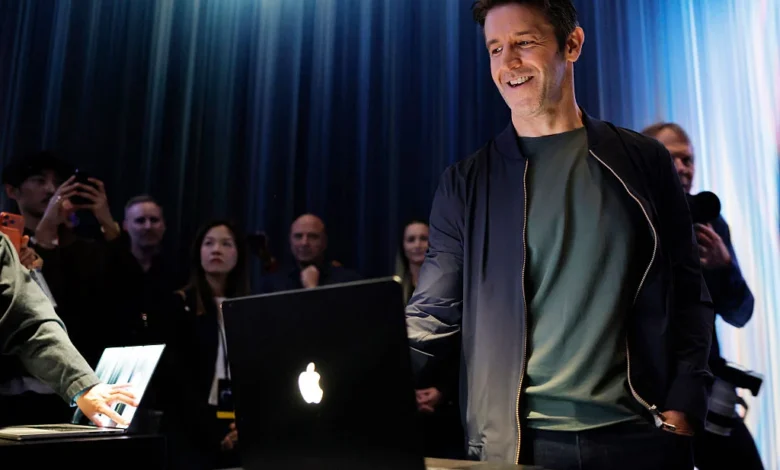
Apple Inc. finds itself at a critical juncture in its storied history of consumer technology innovation, navigating a rapidly shifting landscape where artificial intelligence threatens to upend traditional computing paradigms. In a wide-ranging, candid interview with Wired journalist Steven Levy, newly appointed Chief Executive Officer John Ternus offered a robust defense of the tech giant’s deliberate, measured approach to artificial intelligence development. As Silicon Valley races to deploy generative AI capabilities across every conceivable hardware and software interface, Apple has frequently faced criticism from market analysts and consumer advocates who argue the Cupertino-based firm has fallen behind industry pioneers like OpenAI, Google, and Microsoft.
The conversation with Levy sheds light on the internal philosophy guiding Apple under Ternus, who formally assumed the role of CEO at the beginning of September 2026, succeeding longtime leader Tim Cook. The leadership transition coincides with a pivotal era for the company, marked by both intense external pressure regarding its artificial intelligence roadmap and the recent, long-awaited rollout of enhanced Siri capabilities this past summer. By addressing the criticisms head-on, Ternus provided a rare glimpse into how Apple intends to balance its legacy of hardware and software integration with the disruptive potential of autonomous artificial intelligence systems.
The Evolution of Apple’s AI Roadmap: A Timeline of Anticipation and Delay
To understand Apple’s current positioning in the artificial intelligence sector, it is necessary to examine the chronology of events that have shaped public perception over the past several years. While competitors flooded the market with standalone generative chatbots, browser-based assistants, and cloud-heavy machine learning tools starting in late 2022, Apple maintained a characteristically quiet posture.
Throughout 2024 and 2025, industry observers frequently pointed to delays in Apple’s internal development pipelines as evidence of a strategic lag. The most prominent casualty of these perceived delays was the next-generation, deeply integrated version of Siri. Originally rumored for earlier release cycles, the overhaul faced technical hurdles tied to Apple’s stringent privacy standards, which mandate on-device processing and rigorous data encryption rather than relying exclusively on massive, centralized cloud servers.
The tension culminated in the summer of 2026, when Apple finally released its overhauled, context-aware iteration of Siri. While the update was welcomed by consumers looking for a smarter, more intuitive digital assistant, initial industry reviews were mixed. Some commentators labeled the rollout anticlimactic, noting that the features arrived long after competing platforms had established dominance in the generative AI space. Yet, internal metrics and subsequent adoption rates suggested that mainstream users appreciated the seamless integration into the broader iOS ecosystem, even if the feature lacked the sensationalist marketing hype associated with other tech firms.
Balancing Innovation with Intent: John Ternus Takes the Reins
John Ternus stepped into the chief executive position following a distinguished career leading Apple’s hardware engineering division. Known for overseeing major product transitions—including the successful rollout of Apple Silicon across Mac computers—Ternus brings an engineering-first mentality to the company’s highest office.
Addressing the persistent narrative that Apple is playing catch-up in the AI arena, Ternus acknowledged the noise surrounding the company’s strategy. "Everyone has an opinion," Ternus remarked during his conversation with Levy. However, he firmly rejected the premise of the criticism, stating unequivocally, "I really like where we’re at."
Ternus elaborated on Apple’s core philosophy regarding artificial intelligence, emphasizing that technological novelty is never an end in itself for the company. "We are absolutely going to leverage AI in our new products," Ternus explained. "We don’t want to ship AI for AI’s sake. When we’re doing it right, people won’t have to think about whether it was AI that made this happen or more traditional software. What matters is, did we build something that they really love?"

This user-centric, frictionless integration has long been a hallmark of Apple’s product design methodology. By abstracting complex underlying technologies—whether touchscreens, multi-core processors, or machine learning algorithms—behind intuitive interfaces, Apple aims to make advanced capabilities accessible to everyday consumers without requiring them to master specialized prompts or technical workarounds.
The Threat of Autonomous Agents and the Future of Apps
One of the most profound questions facing the software industry is the potential emergence of autonomous AI agents. As large language models evolve from reactive chatbots into proactive agents capable of executing complex multi-step tasks across the internet, industry analysts have begun questioning the long-term viability of the traditional application ecosystem. If an AI agent can book flights, purchase groceries, and manage schedules directly through web APIs, the dedicated smartphone app—the very foundation of the modern mobile economy—could theoretically become obsolete.
When Levy pressed Ternus on whether these powerful agents might fundamentally disrupt Apple’s business model and its lucrative App Store ecosystem, the CEO offered a perspective rooted in human creativity and craftsmanship. "That could make life really easy, I suppose," Ternus responded, acknowledging the theoretical efficiency of autonomous software. He quickly pivoted, however, to the philosophical core of Apple’s mission: "The creation of products is a deeply human and personal thing, something that we love to do."
This viewpoint highlights a fundamental philosophical divide in the tech sector. While companies like Microsoft and Google often frame AI as a mechanism to automate and bypass traditional user interfaces entirely, Apple views technology as an amplifier of human expression and utility. For Apple, the device, the operating system, and the application are not merely functional utilities to be optimized away by an invisible agent; they are meticulously crafted physical and digital canvases designed to enrich the user’s daily life.
Industry Implications and Market Analysis
As the global technology sector processes Ternus’s remarks, market analysts are divided on whether Apple’s patient, privacy-first strategy will secure its market dominance or leave it vulnerable to more aggressive competitors.
Proponents of Apple’s approach argue that the company’s massive active installed base—surpassing two billion active devices globally—provides an unassailable distribution network. By embedding AI capabilities directly into the hardware via advanced Neural Engines on custom silicon, Apple can deliver low-latency, highly secure features that cloud-dependent rivals struggle to match without compromising user privacy. Furthermore, Apple’s financial resources allow the company to absorb early market shifts, observe consumer reactions to competitor missteps, and enter the market with polished, reliable solutions.
Conversely, skeptics maintain that artificial intelligence represents a paradigm shift as significant as the transition from desktop computing to mobile smartphones. In a winner-take-all market for foundational intelligence models, delays in data collection and model training can compound exponentially. If competitors capture consumer loyalty through superior predictive capabilities and autonomous agent workflows, users may become less loyal to traditional operating system ecosystems, potentially eroding Apple’s hardware margins and service revenues.
Looking Ahead
As Apple prepares for its upcoming product cycles and looks beyond the initial rollout of its modernized Siri platform, the leadership of John Ternus will face continuous testing. The mandate from Wall Street and consumers alike is clear: Apple must prove that its methodical restraint is a sign of deliberate strategic wisdom rather than institutional inertia.
By maintaining its focus on deeply integrated, user-friendly experiences rather than chasing short-term industry trends, Apple is doubling down on its historic identity. Whether this philosophy will withstand the rapid, unpredictable acceleration of the artificial intelligence era remains one of the most compelling narratives in modern technology. For now, Ternus and his executive team remain confident that when it comes to artificial intelligence, getting it right matters far more than getting it first.