IFixit Teardowns Reveal Inside the Apple Watch Series 12 and Ultra 4 with Mixed Results for Repairability

The culmination of iFixit’s annual Autumn hardware teardown sequence has arrived, offering a microscopic view of Apple’s latest wearable technology. Following extensive dissections of the iPhone and iPad lineups launched in September, the repair advocacy and teardown specialists at iFixit have turned their attention to the wrist. Specifically, technicians Shahram Mokhtari and his team have cracked open the newly released Apple Watch Series 12 and the rugged Apple Watch Ultra 4. While the teardown offers a fascinating glimpse into the micro-engineering and iterative architectural shifts powering Apple’s latest generation of smartwatches, it also underscores the ongoing, systemic challenges consumers and independent repair shops face when attempting to service these devices.
The findings highlight a divergent path in Apple’s manufacturing philosophy. On one hand, the flagship Apple Watch Ultra 4 remains virtually stagnant in terms of structural repairability, retaining the exact same score as its predecessor. On the other hand, the standard Apple Watch Series 12 introduces a glimmer of progress via modernized adhesive applications, though it is hindered by increasingly unforgiving physical tolerances. As the consumer electronics industry faces mounting pressure from global Right to Repair legislation, these teardowns serve as a critical report card on how well Silicon Valley tech giants are adapting to demands for longevity and sustainability.
Inside the Apple Watch Ultra 4: Incremental Power, Structural Stalemate
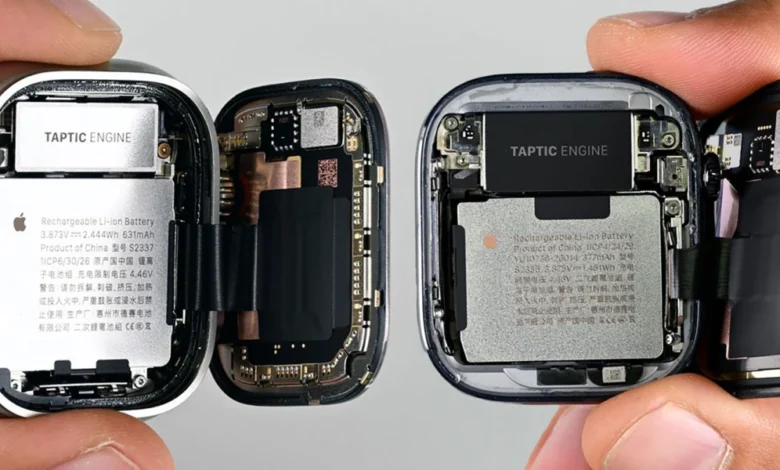
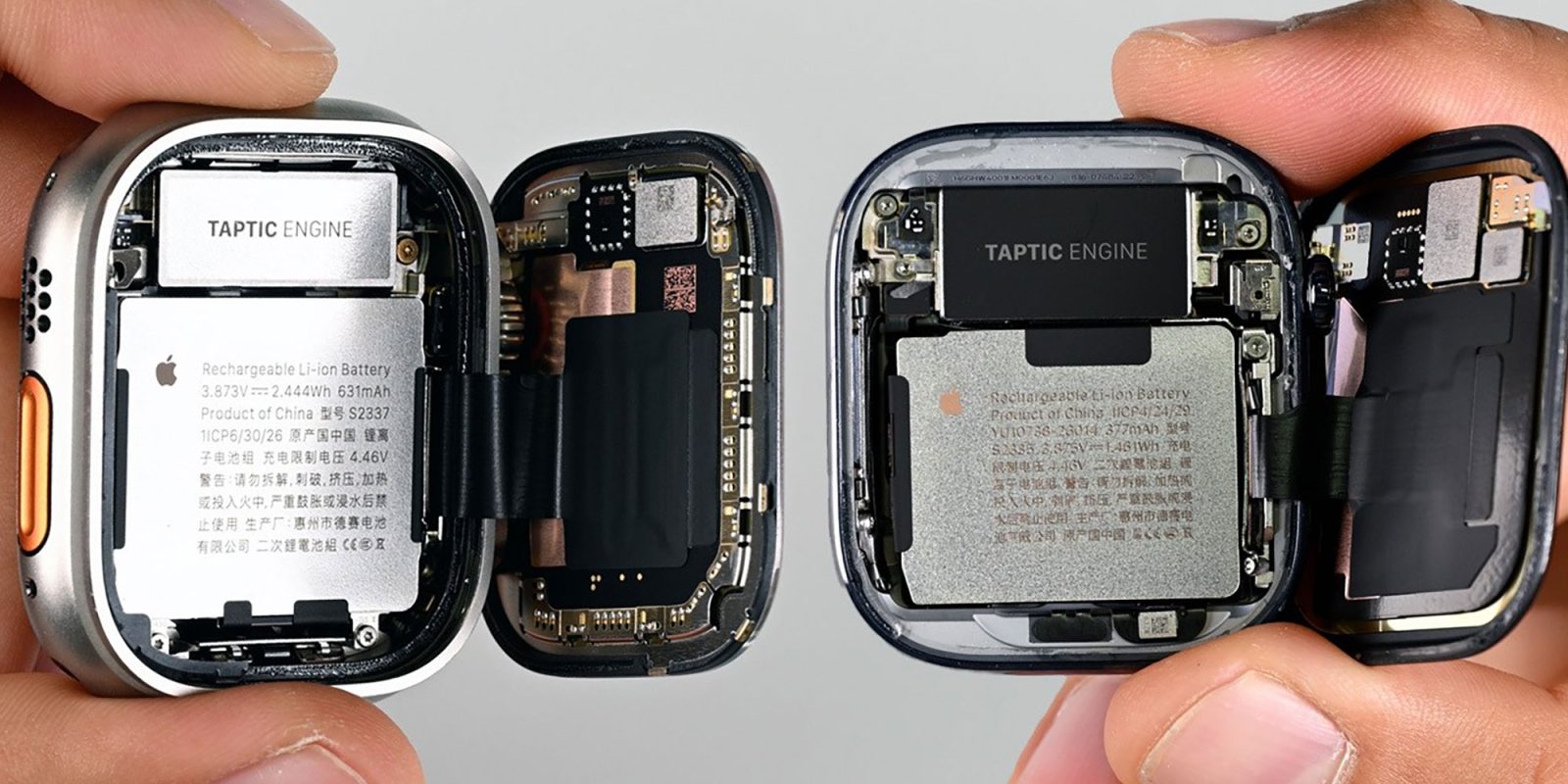
The teardown of the Apple Watch Ultra 4 began, as is customary for modern smartwatches, with the application of controlled heat to soften the industrial-grade adhesive binding the display to the titanium chassis. Utilizing a newly developed metal pick tool, Mokhtari successfully pried away the sapphire front crystal, exposing the internal architecture, including the high-capacity battery and the precision-tuned Taptic Engine.
A close examination of the energy storage components revealed a slight bump in capacity. The Apple Watch Ultra 4 houses a 2.444 Wh battery, marking a modest increase over the 2.313 Wh cell found in the preceding Apple Watch Ultra 3. However, accessing this power source remains an arduous endeavor. Replacing the battery still requires the delicate, high-risk removal of the display assembly—a design choice that iFixit has long criticized.
Interestingly, while the Ultra 4 features four exterior screws on the bottom plate of its case, these do not grant entry to the primary internal components. Instead, removing these screws merely provides access to the specialized sensor array housed on the underside of the back cover, alongside the S11 system-in-package (SiP) fixed to the main case structure. Once the glued screen is successfully detached, extracting the battery and disconnecting the display’s press connector is relatively straightforward—provided the technician navigated the initial ungluing phase without inadvertently slicing through the hyper-sensitive flex cables running underneath.
Because of these persistent barriers to entry and the absence of any meaningful redesigns favoring modularity, the Apple Watch Ultra 4 secured a disappointing 4 out of 10 on iFixit’s proprietary repairability scale, matching the exact score awarded to its predecessor.
Apple Watch Series 12 Brings Subtle Wins and Tighter Tolerances
While the Ultra tier saw little evolution in repair-friendly engineering, the mainstream Apple Watch Series 12 offered a few notable surprises. Upon opening the device, iFixit discovered that Apple has incorporated modern stretch-release adhesive and a dedicated pull tab system for the battery. This inclusion marks a stark departure from previous generations, significantly streamlining the physical extraction of the 1.461 Wh power cell (which scales up from the 1.403 Wh battery found in the larger 46mm iteration of the Series 11).
Despite this welcome addition, the Series 12 shares the primary structural hurdle of its larger sibling: gaining access to the interior still necessitates prying away a heavily glued display assembly. In fact, Mokhtari noted during the live teardown that the manufacturing tolerances engineered around the Series 12 display are noticeably tighter than those on the Ultra 4. The precision of the fit required a degree of force that raised immediate concerns among the technicians regarding the potential for cracking or permanently damaging the delicate screen panel during the extraction process.
Furthermore, Apple implemented a significant architectural change by swapping out the traditional Zero Insertion Force (ZIF) connector and securing tape used for previous generations of displays, opting instead for a simpler press connector. While this simplifies the reconnection process, it introduces a new procedural dependency: replacing the screen now intrinsically requires the simultaneous removal and replacement of the battery. As Mokhtari remarked during the video broadcast, navigating this intricate multi-step process means that once a technician has dismantled the device to this degree, replacing both components simultaneously becomes a logical necessity.
Weighing these competing factors—the introduction of stretch-release adhesive against tighter physical tolerances and interdependent component removal—iFixit ultimately awarded the Apple Watch Series 12 a 4 out of 10 repairability score. While this represents a modest one-point bump compared to the last base-model Apple Watch evaluated by the platform, it underscores just how far the industry standard has to go.
Industry Comparisons: The Contrast with Competitors

To contextualize Apple’s scores, industry analysts and repair advocates frequently look to competing hardware ecosystems. The limitations baked into the Apple Watch Series 12 and Ultra 4 stand in stark contrast to the design philosophies adopted by some of Apple’s primary market rivals.
As a point of direct comparison, iFixit previously awarded the Google Pixel Watch 5 an impressive 9 out of 10 repairability score. Analysts note that Google’s engineering approach diverges sharply from Apple’s penchant for hermetically sealed, adhesive-heavy assemblies. The Pixel Watch 5 features a display mechanism that can be decoupled using a mere two Torx screws and a removable gasket, while its internal battery can be swapped out cleanly without forcing technicians to navigate complex webs of industrial-grade glue.
The disparity highlights an ongoing philosophical divide in consumer technology. While Apple consistently prioritizes maximum structural integrity, water resistance, and sleek, unibody aesthetics—arguments historically used to justify complex repair paths—competitors are increasingly proving that high-end consumer wearables can be designed with modularity and field-serviceability in mind.
Broader Implications and the Right to Repair Landscape
The release of these teardowns arrives at a sensitive juncture for the consumer technology sector. Regulatory bodies across the European Union, the United States, and various international markets have increasingly turned their legislative focus toward the Right to Repair. Laws designed to curb electronic waste, extend product lifecycles, and force manufacturers to provide affordable access to spare parts, diagnostic tools, and repair manuals are reshaping how products are conceptualized from the drawing board onward.
Apple has made significant strides in recent years regarding its Self Service Repair program, gradually expanding official parts availability and digital diagnostic software for iPhones, MacBooks, and select iPad models. However, the wearable segment—specifically the Apple Watch lineup—has notoriously lagged behind. Because smartwatches require extreme miniaturization and robust water-resistance seals to withstand swimming, heavy perspiration, and deep-sea diving (in the case of the Ultra series), manufacturers have historically treated them as effectively disposable, non-serviceable sealed units.
When a battery degrades past its optimal health threshold or a display shatters on a modern Apple Watch, consumers are typically met with out-of-warranty replacement costs that often approach the price of buying an entirely new device, or they are offered a refurbished unit through AppleCare+. While this business model secures robust ecosystem retention and service revenue for the manufacturer, it runs counter to the growing global mandate for sustainability and circular economic practices.

The inclusion of pull-tab adhesives in the Apple Watch Series 12 suggests that Apple’s engineering teams are actively exploring ways to make internal components more accessible, even if those efforts are constrained by the sheer physics of shrinking device footprints. Whether these incremental shifts will satisfy upcoming regulatory frameworks or inspire a broader architectural overhaul in future generations of the Apple Watch remains to be seen.
Conclusion and Future Outlook
For technology enthusiasts, independent repair shops, and everyday consumers, iFixit’s teardown of the Apple Watch Series 12 and Ultra 4 offers a sobering reality check. Beneath the polished titanium and aluminum exteriors, cutting-edge S11 processors, and incremental battery capacity gains lies an architecture that remains stubbornly resistant to the tools of the independent technician.
As the wearable market continues to mature, the pressure on manufacturers to reconcile structural durability with consumer-friendly repairability will only intensify. Until Apple radically reimagines how its displays and batteries are integrated into the chassis of its smartwatches, achieving a passing grade on the repairability scale will likely remain out of reach. In the meantime, users of the Apple Watch Series 12 and Ultra 4 are best advised to invest in screen protectors, handle their devices with care, and prepare for the structural realities of modern smartwatch servicing when their batteries inevitably reach the end of their lifecycle.