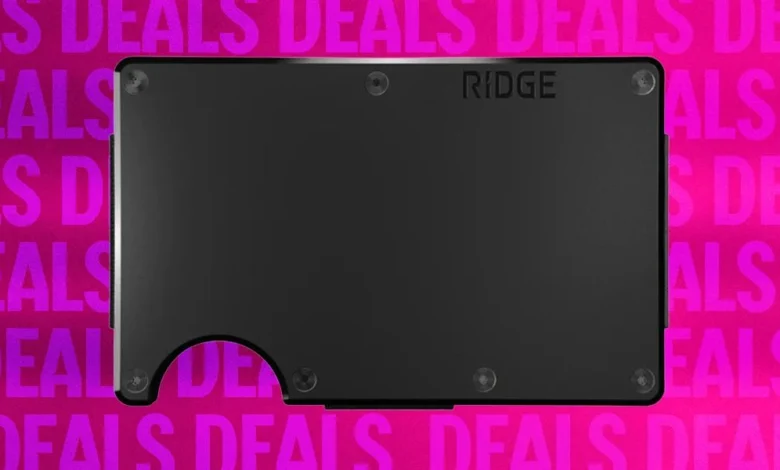
The landscape of personal accessories has undergone a significant transformation over the last decade, shifting away from the traditional, bulky leather bifold toward streamlined, high-tech alternatives. At the forefront of this movement is the Ridge Wallet, a product that has transcended its origins as a niche "everyday carry" (EDC) item to become a staple for professionals and travelers alike. As the brand launches its latest "Friends & Family" sale, offering select models at $76—a 20 percent discount from the standard $95 retail price—it is an opportune moment to examine the utility, design philosophy, and market impact of a product that has fundamentally redefined how consumers manage their physical currency and identification.
The rise of the minimalist wallet is not merely a stylistic trend but a direct response to the digitization of personal finance. With the integration of mobile payment systems such as Apple Pay and Google Wallet, the necessity of carrying a thick stack of cards and paper currency has diminished. The Ridge Wallet, characterized by its signature two-piece aluminum frame held together by tension-based elastic webbing, provides a solution that addresses both physical bulk and security concerns, specifically the rise of RFID-skimming threats.
Chronology of the Minimalist Shift
The evolution of the Ridge Wallet began in 2013, when the company launched its initial concept through a crowdfunding campaign. The objective was clear: eliminate the "George Costanza" effect—the unsightly and physically uncomfortable bulge created by overstuffed leather wallets. By utilizing aerospace-grade materials, the brand positioned itself not just as a leather-goods manufacturer, but as an engineering firm focused on the ergonomics of the pocket.
Over the ensuing years, the brand expanded its reach through aggressive social media marketing and strategic partnerships with influencers, particularly within the EDC community. This community, which emphasizes the utility, durability, and aesthetic appeal of the items people carry daily, provided the necessary momentum for the wallet to gain mainstream traction. By 2018, the product had become a fixture on platforms like Instagram and YouTube, often appearing in "what’s in my bag" segments.
The current sale, occurring in late 2026, reflects the company’s established practice of periodic discounting to maintain consumer engagement and clear inventory as they transition toward new product iterations. This strategy has proven effective in keeping the brand relevant in an increasingly crowded market filled with competitors offering similar plate-and-elastic designs.
Technical Specifications and Engineering Considerations
At its core, the Ridge Wallet functions as a modular system. It is designed to house up to 12 cards without stretching, utilizing a proprietary tension mechanism that ensures the cards remain secure while being easily accessible. For users transitioning from traditional wallets, the initial experience can be jarring. Unlike a bifold that opens like a book, the Ridge requires a specific technique: fanning the cards out via a thumb notch at the bottom of the wallet.
The hardware is equally specific. The frame is held together by T-5 Torx screws, allowing the user to adjust the tension of the elastic bands. This level of customization is rare in the accessory space and speaks to the "tinker-friendly" nature of the product. The materials—typically aluminum, carbon fiber, or titanium—are selected for their strength-to-weight ratio. From an engineering standpoint, the inclusion of an RFID-blocking layer within the metal plates serves as a functional deterrent against digital pickpocketing, a feature that has become a baseline requirement for modern card carriers.
Comparative Market Analysis
When compared to traditional leather goods, the Ridge Wallet offers a stark contrast in both longevity and maintenance. Leather wallets are organic, prone to degradation, moisture absorption, and physical stretching over time. Conversely, the Ridge is designed to withstand harsh environments.
However, the transition to such a rigid design does come with trade-offs. The loss of space for non-standard items—such as receipts, keys, or business cards—often forces the user to re-evaluate what is truly essential. In her assessment of the product, reviewer Louryn Strampe noted that while she does not classify herself as a "minimalist" by nature, the functional necessity of the wallet during travel—where space is at a premium and security is paramount—made the device an indispensable tool.

The broader market impact is evident in the proliferation of copycat designs. Following the success of the Ridge, dozens of "Amazon-brand" alternatives have emerged, often undercutting the original price point. Despite this, the Ridge has maintained its market share through consistent branding and a robust 99-day risk-free trial period, which significantly lowers the barrier to entry for skeptical consumers.
Diversification and Ecosystem Growth
The current sale is not limited to the flagship wallet. Ridge has successfully diversified its product catalog to include power banks, luggage, key organizers, and tracking hardware. This "ecosystem" approach is designed to increase customer lifetime value. By offering a 10,000-mAh MagSafe power bank that doubles as an iPhone kickstand, the brand is targeting the same demographic that values its minimalist wallet: the tech-forward commuter who prioritizes clean aesthetics and multi-functional gear.
The inclusion of the "Daily Driver Kit"—which bundles the MagSafe-compatible wallet with a matching KeyCase—indicates a shift toward curated lifestyle bundles. This strategy is common among premium accessory manufacturers looking to move beyond single-product sales and into a comprehensive personal carry system.
Financial Implications and Consumer Sentiment
For the average consumer, the shift to a $76 price point represents a significant value proposition. Historically, the brand has maintained a premium pricing structure to reflect its build quality. By lowering the entry price, the company is likely attempting to capture a larger segment of the market ahead of the holiday season, a period historically associated with high demand for personal accessories.
Data from the retail sector suggests that consumer interest in high-end, durable goods remains high, even in fluctuating economic environments. People are increasingly opting for "buy-it-for-life" (BIFL) products, favoring items that do not need to be replaced every 12 to 18 months. The Ridge Wallet, with its metallic construction and modular repairability, aligns perfectly with this shifting consumer sentiment.
Future Outlook and Sustainability
As the company looks toward the future, the primary challenge remains the saturation of the EDC market. With competition intensifying, the ability to innovate beyond the basic metal plate will be critical. Recent additions to the lineup, such as the integration of AirTag slots and D-ring attachments for chains, demonstrate a willingness to adapt to specific user feedback.
Sustainability also plays a role in the brand’s narrative. By creating a product that is effectively modular—where individual components like elastic bands can be replaced rather than discarding the entire wallet—the company is positioning itself as a more sustainable alternative to disposable fashion accessories. While the manufacturing of aluminum and titanium is energy-intensive, the product’s longevity mitigates the environmental impact over time compared to frequently replaced synthetic leather alternatives.
Conclusion
The current promotion on the Ridge Wallet serves as a reminder of how effectively the brand has integrated itself into the modern lifestyle. By addressing the specific pain points of traditional wallets—bulk, lack of security, and poor durability—the brand has secured a dominant position in the EDC space. Whether the user is a seasoned minimalist or someone looking to simplify their daily carry, the technical engineering and aesthetic refinement of the product offer a compelling case for adoption.
As the "Friends & Family" sale continues, the broader implications for the accessory market are clear: consumers are increasingly prioritizing function, longevity, and design-forward solutions. For the Ridge, the success of this model is a testament to the idea that even the most mundane objects, when re-engineered with purpose, can achieve a level of cultural and commercial significance that transcends their primary function. Whether through their standard wallets or their expanding line of tech accessories, the brand continues to define the modern standard for personal organization.