BYD Prepares to Launch Its Highly Anticipated Ocean Series MPV as Test Mules Surface Across China

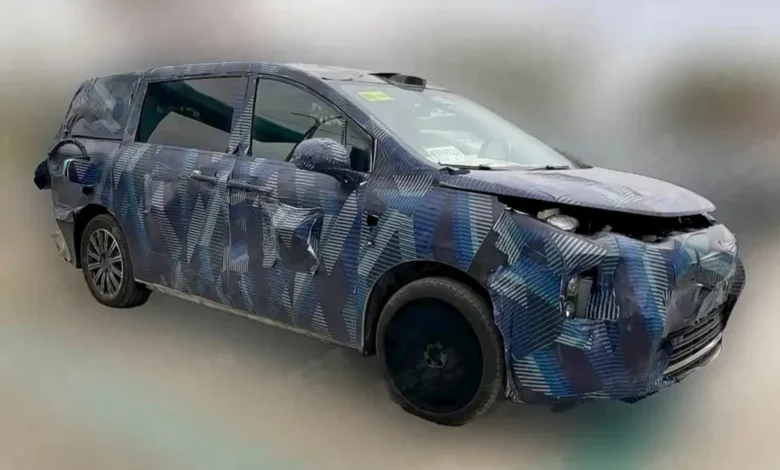
The global automotive landscape continues to experience a massive paradigm shift toward electrification, and Chinese manufacturing giant BYD remains at the very epicenter of this transformation. As the company expands its diverse portfolio into new vehicle segments, recent developments indicate that its upcoming multi-purpose vehicle (MPV) from the popular Ocean series is moving rapidly toward commercial production. Spied undergoing rigorous road testing in China—captured both atop car carriers and while utilizing BYD’s proprietary Flash Charging infrastructure—the vehicle offers a fascinating glimpse into the automaker’s strategy for capturing the family and executive transport markets.
Expected to debut officially by the end of 2026, this new multi-purpose vehicle represents a crucial stepping stone for BYD as it seeks to fill a distinct pricing and structural gap within its existing van lineup. However, early glimpses of the heavily camouflaged production prototype have sparked widespread debate among automotive enthusiasts and industry analysts alike, particularly regarding how closely the final commercial model will mirror the radical, futuristic concept vehicle first showcased to the public earlier this year.
The Evolution of the Ocean MPV: From Beijing Auto Show Concept to Reality
The genesis of BYD’s newest people-mover dates back to April 2026, when the automaker stunned attendees at the Beijing Auto Show by pulling the wraps off the Ocean-V concept. As the very first multi-purpose vehicle designed under BYD’s styling-forward Ocean series—which already includes popular battery-electric models like the Seal and Dolphin—the concept was heralded as a masterclass in futuristic mobility design.
The Ocean-V concept was defined by a sleek, aerodynamic silhouette and a cabin packed with avant-garde technology and flexible living spaces. Among its most talked-about features were a sliding center display screen and two distinct functional cabin modes tailored for modern lifestyles: Camping Mode and Movie Mode. In Camping Mode, the interior layout demonstrated remarkable versatility, allowing seats to either fold completely flat to form a comfortable bed or swivel inward to face one another, fostering a communal environment during outdoor excursions.

Conversely, Movie Mode was designed to turn the vehicle’s interior into a private, mobile entertainment suite. By deploying a massive display screen that smoothly flipped out of the dashboard, passengers could enjoy a cinematic viewing experience on the go. These imaginative features, combined with ultra-modern exterior lines, generated immense anticipation, leading many to wonder how much of the concept’s dramatic flair would survive the transition to a mass-production vehicle.
Spy Shots Reveal a Pragmatic Approach to Production Styling
As spy photographs and video footage from automotive platforms such as Autohome and social media channels like ThinkerCar began flooding the internet, the reality of the production-ready Ocean MPV came into sharper focus. While the test vehicles remain heavily wrapped in camouflage graphics to conceal precise body panel contours, the initial visual impressions have introduced a measure of sobriety among those who fell in love with the uninhibited design of the Ocean-V concept.
Unlike the smooth, monolithic surfaces of the concept car, the heavily disguised test mules reveal a noticeably boxier, more pragmatic structural profile. The front end of the prototype features a wide grille—suggesting the presence of an internal combustion engine component rather than a pure battery-electric drivetrain—alongside traditional pull-style door handles rather than flush, electronic actuators.
Furthermore, the test vehicle spotted at a BYD Flash Charging station in China was equipped with a prominent, roof-mounted LiDAR sensor. This inclusion strongly indicates that the Ocean MPV will feature advanced driver-assistance systems (ADAS), leveraging BYD’s rapidly evolving intelligent driving software suite. While the exterior styling appears to have traded some of the concept’s radical aerodynamics for traditional interior volume and structural rigidity—a common compromise in the MPV segment where maximizing headroom and cargo space is paramount—the vehicle still cuts an imposing figure on the highway.
Dimensions, Seating Layout, and Expected Powertrain Configurations

Detailed local reports emerging from Chinese automotive media have shed light on the physical dimensions and structural architecture of the upcoming Ocean MPV. According to these industry leaks, the vehicle is expected to measure approximately 5,145 millimeters in length, 1,970 millimeters in width, and 1,805 millimeters in height, supported by a generous wheelbase of 3,045 millimeters. These proportions place it firmly in the mid-to-large MPV category, ensuring ample legroom and shoulder room across all rows.
Inside, the Ocean MPV is widely anticipated to adopt a traditional 2+2+3 seating configuration, providing comfortable accommodation for up to seven passengers. This layout makes it exceptionally well-suited for both large families and corporate shuttle services, a booming market sector throughout East Asia.
Regarding propulsion, BYD has maintained an official silence on specific battery capacities and powertrain outputs. However, industry experts have pieced together likely mechanical specifications based on the vehicle’s physical design cues. The presence of a substantial front grille strongly implies that the Ocean minivan will utilize BYD’s proprietary DM-i (Dual Mode intelligent) plug-in hybrid system. This technology pairs an efficient internal combustion engine with high-capacity electric motors and BYD’s signature safety-focused Blade Battery packs, offering drivers the flexibility of long-range electric commuting combined with the refueling convenience of a traditional hybrid for extended road trips.
Strategic Market Placement Within BYD’s Expanding Ecosystem
To fully understand the significance of the upcoming Ocean MPV, one must examine BYD’s existing multi-purpose vehicle hierarchy. Currently, the Shenzhen-headquartered automaker commands a formidable presence in the Chinese MPV market through its specialized brand architecture. At the apex sits the Denza D9, a luxury flagship MPV commandingly priced above 300,000 yuan (approximately $45,000 USD), which has consistently dominated sales charts against legacy foreign competitors. Below the Denza flagship sits the BYD Xia, strategically positioned in the 200,000 to 300,000 yuan ($30,000 to $45,000 USD) price bracket.
The impending introduction of the Ocean MPV is designed to cleanly fill the remaining gaps within BYD’s comprehensive product matrix, targeting a slightly different demographic of consumers who desire the modern aesthetic associated with the Ocean series rather than the executive-focused styling of the Dynasty series (to which the Xia belongs).

Zhang Zhou, general manager of BYD’s Ocean series, has publicly confirmed that the company remains on an aggressive timeline to officially launch its very first Ocean-branded MPV by the end of 2026. As development test mules continue racking up thousands of kilometers on Chinese public roads, the final phase of fine-tuning is officially underway.
Broader Industry Implications and Future Outlook
The launch of BYD’s Ocean MPV carries significant implications for the broader automotive market, particularly as Chinese automakers continue to aggressively challenge legacy manufacturers in high-value vehicle categories. MPVs have traditionally been viewed as utilitarian family haulers or conservative corporate shuttles, but the rapid infusion of intelligent cockpit technologies, advanced autonomous driving sensors like roof-mounted LiDAR, and highly efficient plug-in hybrid powertrains are fundamentally redefining consumer expectations.
By leveraging economies of scale and vertically integrated supply chains—ranging from semiconductor manufacturing to proprietary battery chemistry—BYD is uniquely positioned to deliver high-tech features at competitive price points that traditional global automakers struggle to match. If the production version of the Ocean MPV successfully translates the spirit of its conceptual origins into a practical, reliable, and competitively priced package, it could further accelerate the decline of internal combustion-engine dominance in the multi-purpose vehicle sector.
As the official late-2026 debut approaches, automotive observers will be watching closely for final confirmation on pricing, battery range figures, and whether any of the innovative interior modes showcased on the Ocean-V concept—such as the swiveling seats and deployable entertainment screens—make it into the final showroom-ready models. For now, the heavy camouflage is slowly coming off, and BYD’s latest bet in the fiercely contested family transport market is steadily coming into clear view.
Related posts: