Strava expands AI integration to Google Gemini providing personalized workout insights to subscribers

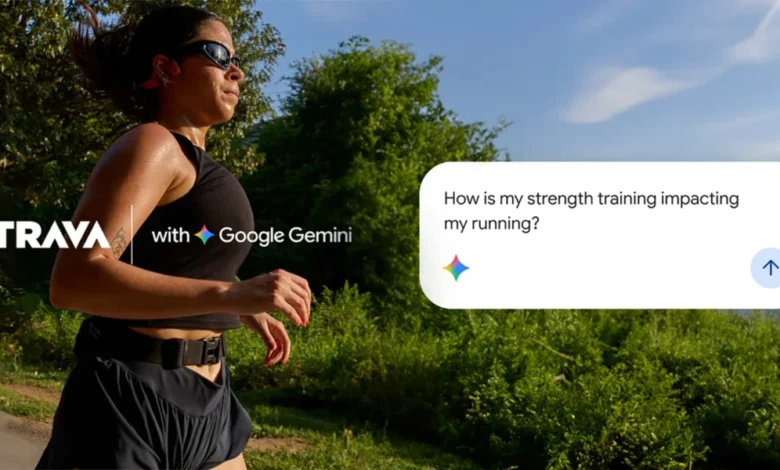
The landscape of personal fitness technology underwent a significant shift this week as Strava, the world’s leading social platform for athletes, announced the expansion of its artificial intelligence ecosystem. By integrating its massive repository of user activity data with Google’s Gemini AI, Strava is moving beyond simple metrics—such as pace, heart rate, and distance—toward a model of predictive, conversational fitness coaching. This development builds upon the company’s recent embrace of the Model Context Protocol (MCP), a move that signals a broader industry trend toward interoperable, agentic AI systems that can bridge the gap between siloed user data and intelligent digital assistants.
A Chronology of Integration and Evolution
To understand the significance of the Gemini integration, one must look at the recent timeline of Strava’s digital strategy. For years, Strava served primarily as a ledger for athletic performance, providing a platform where runners, cyclists, and swimmers could log their efforts and engage in social competition. However, the rise of large language models (LLMs) created a demand for more sophisticated analysis.
In late 2024, Strava began its foray into generative AI by launching an integration with Anthropic’s Claude. This was achieved through the Model Context Protocol (MCP), an open standard designed to solve the "context problem" in AI. By adopting MCP, Strava allowed users to securely grant AI agents access to their workout history. This initial pilot proved successful, demonstrating that users were hungry for qualitative feedback—asking questions like, "How has my endurance changed over the last three months?" or "Am I overtraining based on my recent recovery patterns?"
Following the success of the Claude integration, Strava signaled that it intended to become "model agnostic." The integration with Google Gemini, announced this week, marks the second major pillar of this strategy. While the Claude integration served as a proof of concept, the partnership with Google brings the data-processing power of Gemini to a broader ecosystem of Android and web users, further embedding Strava into the daily workflows of its global user base.
Understanding the Model Context Protocol (MCP)
The technical backbone of this update is the Model Context Protocol. Previously, AI models were largely isolated from private, personal data due to privacy concerns and the technical difficulty of building custom connectors for every service. MCP, initially developed by Anthropic and later donated to the Linux Foundation’s Agentic AI Foundation, provides a standardized "language" for AI models to communicate with third-party applications.

In practice, this means that when a user interacts with Gemini, the AI does not simply guess at their fitness levels based on generic data. Instead, through a secure, read-only handshake, Gemini can query the user’s specific Strava history. Because the connection is explicitly permissioned by the user, the AI gains the context required to provide bespoke training advice. The integration is designed to be privacy-conscious, ensuring that Strava retains control over the data while allowing the user to leverage the analytical reasoning of the AI.
Supporting Data and User Trends
The necessity for such integrations is underscored by the sheer volume of data produced by modern athletes. According to recent industry reports, the average Strava user logs more than just a single sport; the platform hosts over 100 million active users who upload billions of activities annually. Manually analyzing these trends to identify plateaus or potential injury risks is a daunting task for the average recreational athlete.
Market research from the digital health sector suggests that the "coaching gap"—the space between generic fitness tracking and high-cost personal training—is a massive growth area. While wearable devices have become ubiquitous, they often provide raw data without actionable synthesis. Strava’s move to use Gemini to fill this gap is a strategic attempt to increase subscriber retention. By providing a "virtual coach" that understands the nuances of a user’s training load, Strava provides value that justifies the cost of its subscription tier, which is a requirement for accessing these advanced AI features.
Implications for the Fitness Tech Ecosystem
The integration has profound implications for the future of wearable technology and digital health. By allowing Gemini to interface with Strava, Google is effectively positioning itself as a central hub for personal intelligence. For the user, this creates a seamless experience where their phone, watch, and fitness dashboard work in concert.
However, this also raises questions about data dependency. As users become accustomed to receiving training advice from AI, the reliance on these models will likely grow. The accuracy of this advice depends heavily on the quality of the input data. Strava’s advantage here is the "social" nature of its data; because users record activities across different devices—Garmin, Wahoo, Apple Watch, and smartphone GPS—the data is aggregated into a single, comprehensive source of truth. By applying Gemini’s analytical capabilities to this aggregated data, the insights generated are significantly more robust than those produced by a single device manufacturer’s ecosystem.
Official Responses and Future Outlook
While specific quotes from the engineering teams remain focused on the technical utility of the launch, a spokesperson for Strava emphasized that the integration is strictly "read-only." This is a critical distinction, as it addresses the primary concern of the fitness community: data security. Users have complete control over what information is shared with Gemini, and they can revoke access at any time.

The rollout is currently restricted to the United States. This is a common practice in the tech industry, allowing companies to monitor system load and gather user feedback in a controlled environment before a global launch. While no specific date has been set for an international rollout, the architecture of the MCP makes such expansions technically straightforward, suggesting that a wider release is likely in the coming quarters.
A New Era of Predictive Coaching
The integration of Google Gemini into the Strava platform represents the maturation of the "quantified self" movement. We are moving away from the era of "passive tracking"—where we merely record what we have done—and entering the era of "active coaching," where technology helps us determine what we should do next.
By leveraging Gemini’s ability to summarize, compare, and analyze, Strava users can now query their performance against long-term goals. For instance, a user preparing for a marathon can ask the AI to synthesize their training intensity over the last six weeks and compare it against their performance in previous years. The AI can then identify trends, such as a drop in average cadence during long runs or an increase in heart rate for the same pace, offering insights that might otherwise go unnoticed.
Ultimately, the success of this integration will depend on user trust and the continued evolution of the AI’s capability to provide safe, accurate, and encouraging feedback. As Strava continues to expand its AI integrations, it is effectively setting a new standard for the industry. Other platforms will likely follow suit, either by developing their own proprietary agents or by adopting the same open-source protocols that have made the Strava-Gemini partnership possible. As these tools become more intelligent and better integrated into our digital lives, the boundary between a fitness app and a personal trainer will continue to blur, ushering in a future where high-quality athletic insights are accessible to anyone with a smartphone and a pair of running shoes.