Tesla Cybercab production revolutionizes automotive manufacturing by eliminating the traditional paint shop

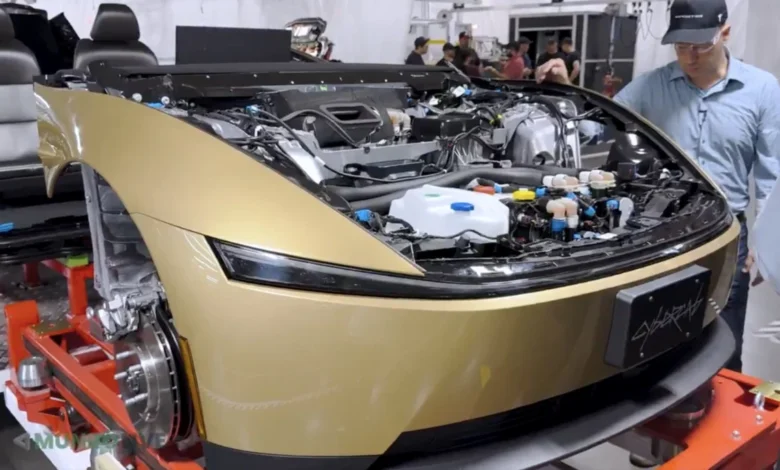
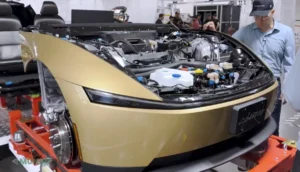
In a bold departure from over a century of automotive manufacturing standards, Tesla has successfully implemented a production process for its Cybercab robotaxi that entirely removes the need for a conventional paint shop. By leveraging advanced material science and reaction injection molding (RIM), Tesla has managed to slash factory floor space requirements by approximately 50 percent while simultaneously reducing capital expenditure and environmental impact. This engineering pivot, highlighted during a recent facility walkthrough at Giga Texas, underscores Tesla’s commitment to "first-principles" manufacturing, where every traditional step in vehicle assembly is questioned for its necessity.
The conventional automotive paint shop is historically one of the most expensive and resource-intensive segments of a vehicle assembly plant. Building a modern, high-capacity paint facility typically requires investments of hundreds of millions of dollars and roughly one million man-hours of labor to construct and commission. Beyond the massive capital requirement, these facilities are notorious for their large physical footprint, high energy consumption, and the complex management of volatile organic compounds (VOCs). By opting to forgo this infrastructure for the Cybercab, Tesla has effectively reconfigured the economics of vehicle production.
Material Science as a Substitute for Paint
The foundation of this strategy lies in the specific material choices made for the Cybercab’s chassis and body panels. According to Lars Moravy, Tesla’s Vice President of Vehicle Engineering, the company’s decision was driven by the realization that modern structural alloys could perform the functions traditionally handled by heavy, multi-layer coating systems.
The Cybercab’s front and rear structural modules utilize specialized aluminum alloys that are inherently resistant to oxidation and structural degradation. Because these components do not lose integrity or strength over time when exposed to the elements, the traditional anti-corrosion dipping and painting process was deemed redundant. Consequently, only the side modules—which incorporate hot-stamped boron-steel door rings—receive an anti-corrosion e-coat. This selective approach allows the remainder of the vehicle to bypass the coating stage entirely.
For exterior aesthetics, Tesla has transitioned from traditional spray-painting to an in-mold coloring process. Body panels are created using reaction injection molding (RIM), where color is integrated directly into the polyurethane resin at the injection head. The result is a component that emerges from the mold with a finished, high-quality surface. This process eliminates common defects associated with spray painting, such as orange peel texture or paint bleed. Furthermore, because the color is integral to the material rather than a superficial layer, the vehicle is more resistant to the visual impact of shallow scratches, which would otherwise reveal a contrasting primer or metal base.

The Unboxed Manufacturing Strategy
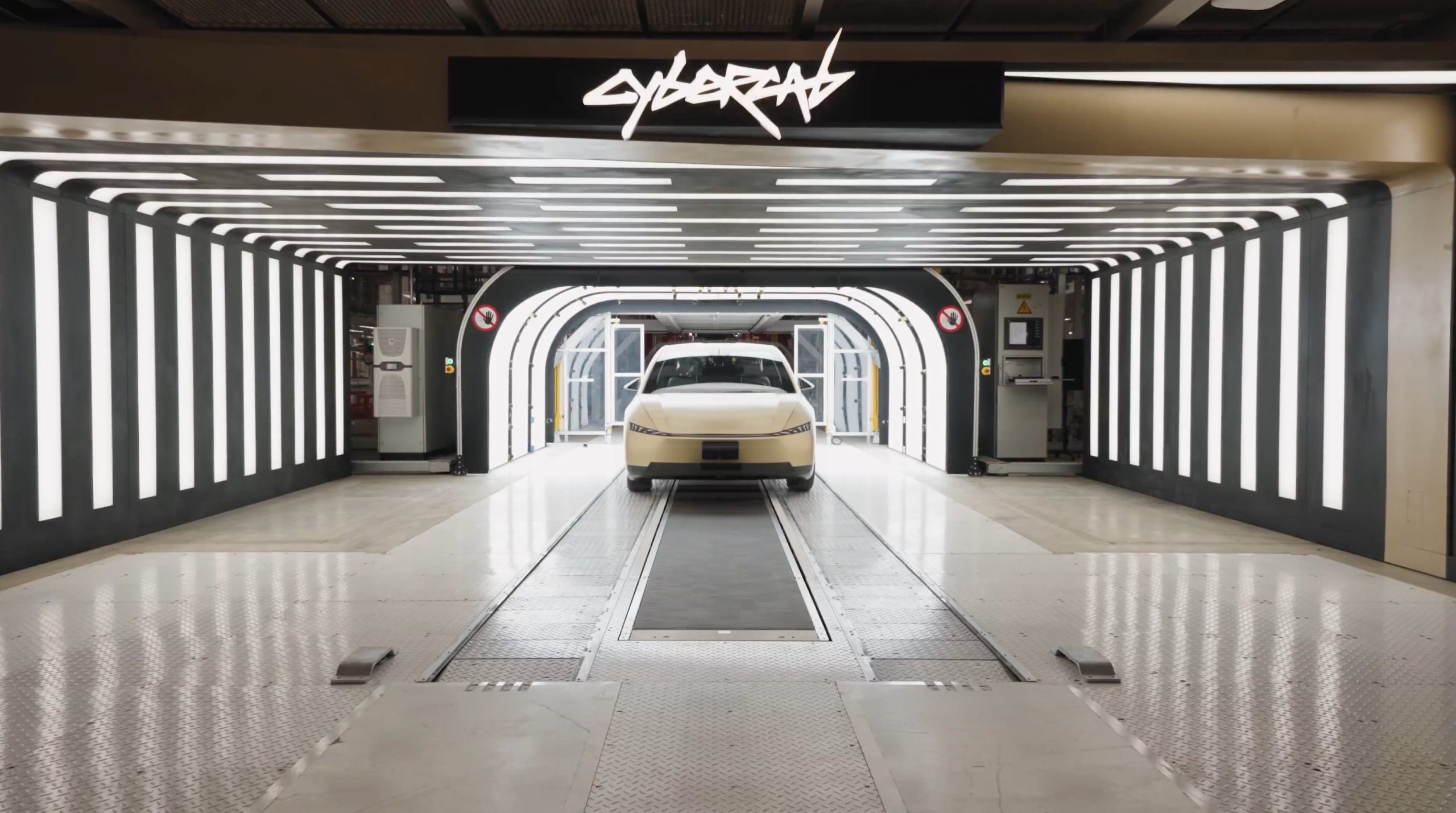
The elimination of the paint shop is not an isolated efficiency gain; it is a critical component of Tesla’s broader "unboxed" manufacturing strategy. This methodology involves building, testing, and coloring vehicle modules—front, rear, side, and center—in parallel rather than sequentially. These modules are then joined on a short, high-efficiency final assembly line.
The final assembly process for the Cybercab relies on approximately 25 automated stations, a figure that is significantly lower than the infrastructure required for the Model Y. Current data indicates that the assembly line for the Cybercab achieves roughly 78 percent automation, with the framing line operating at 100 percent efficiency. The goal for the production cycle is to achieve a 10-second throughput time, effectively yielding one finished vehicle every 10 seconds.
This dramatic compression of the production timeline and footprint has created a new operational challenge for the company: the manufacturing line is currently outperforming deployment capabilities. As of late October 2026, the Cybercab line at Giga Texas is operating at a pace that exceeds the current rate of regional fleet expansion. Tesla has indicated that while the factory is capable of exceeding its stated annual capacity of 125,000 units, the bottleneck has shifted from manufacturing to the logistics of regulatory compliance, charging infrastructure installation, and fleet management.

Historical Context and Strategic Implications
Tesla’s move to remove the paint shop is the latest iteration of its long-standing efforts to disrupt traditional automotive manufacturing. Historically, the company has pushed for massive die-castings—the "Gigacasting" technique—which replaced hundreds of individual stamped parts with a few large castings. The Cybercab represents a logical evolution of this trend, moving from structural simplification to process simplification.
The implications for the broader automotive industry are significant. For decades, legacy manufacturers have been tethered to the massive overhead costs of paint shops. If Tesla’s RIM-based, color-integrated approach proves durable and scalable across different vehicle classes, it could force a reevaluation of manufacturing standards globally. The reduction in energy use and the elimination of hazardous VOC emissions also align with growing global regulatory pressures to decarbonize the manufacturing sector.
Operational Data and Performance Metrics
The engineering deep dive into the Cybercab reveals several other efficiency-focused innovations:
- Battery Architecture: The vehicle utilizes an 88S6P pack of 4680 cells housed in a steel enclosure. Unlike previous packs, the modules are potted individually, allowing for modular repair rather than total pack replacement. Wireless battery management boards have replaced traditional wiring harnesses, and high-speed contactors have eliminated the need for pyro fuses.
- Drive Unit: The powertrain features an 11:1 gear ratio, optimized for the lower top-speed requirements of urban ride-hailing compared to the 9:1 ratio standard in consumer Tesla models.
- Deployment Status: As of October 2026, Texas records indicate 463 Cybercabs are registered. The fleet saw its first major public demonstration during the Formula 1 weekend in Austin, and Tesla has publicly committed to a formal service launch in Dallas.
Looking Ahead: The Challenges of Scaling
While the manufacturing success is evident, the company faces a complex deployment phase. The shift from "factory-ready" to "customer-ready" involves navigating local autonomous vehicle regulations, refining the FSD (Full Self-Driving) stack for ride-hailing scenarios, and ensuring high uptime for a fleet that is intended to operate for 500,000 miles or more.
Tesla’s decision to prioritize modular production over traditional, monolithic factory layouts suggests a long-term strategy of decentralization. By making the production process smaller, faster, and less reliant on massive, site-specific infrastructure like a paint shop, Tesla may be positioning itself to deploy smaller, regional "micro-factories" closer to the markets they serve.
In summary, the removal of the paint shop is a physical manifestation of Tesla’s core operational philosophy: if a process adds cost and time without providing essential value, it should be deleted. By replacing spray-paint with material science, Tesla has not only made the Cybercab easier to build but has also provided a blueprint for a new generation of automotive assembly that is leaner, faster, and more environmentally sustainable. As the company continues to ramp up production, the success of this unorthodox approach will likely be measured by the reliability of the fleet and the speed at which they can be deployed across the United States.