Aurora Innovation Unveils Ambitious Roadmap to Deploy 30,000 Autonomous Trucks by 2030

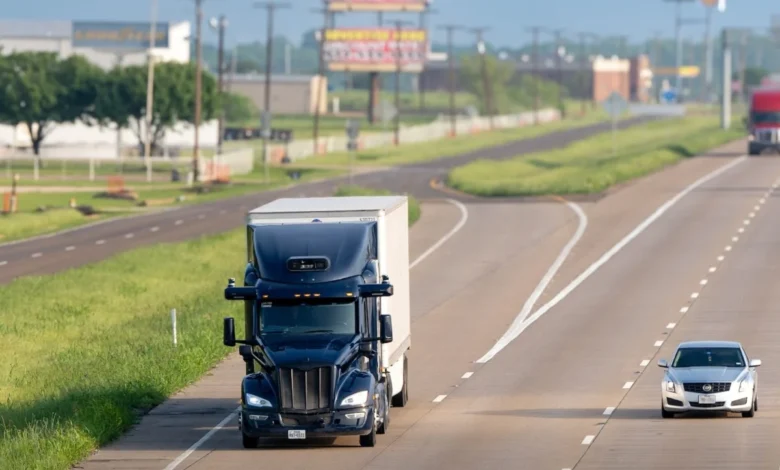
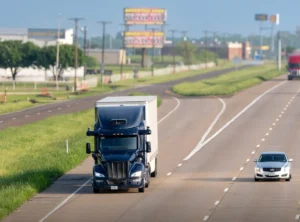
The autonomous vehicle industry stands at a critical juncture, and Aurora Innovation is positioning itself to be at the forefront of a logistical revolution. During the company’s annual analyst and investor day held on September 23, leadership outlined a strategic vision that projects the deployment of over 30,000 self-driving trucks by the end of 2030. This aggressive scaling plan, which targets an annual revenue of $5 billion, marks a significant departure from the company’s current operational footprint. As of the close of 2026, Aurora expects to operate approximately 200 driverless trucks, generating a revenue run rate of roughly $80 million.
The gap between these two figures—a jump from 200 units to 30,000 in just four years—has prompted skepticism among market analysts and investors. Following the presentation, Aurora’s stock faced immediate downward pressure, closing down 12.42% to $5.29 on the subsequent Monday. Despite this volatility, the company’s executive team maintains that the roadmap is grounded in pragmatic market analysis rather than speculative optimism.
Contextualizing the Scaling Strategy
Aurora’s CFO, David Maday, addressed the magnitude of the 2030 target during a recent interview, framing the projection against the broader landscape of the North American trucking industry. According to industry data, the four major original equipment manufacturers (OEMs) in the trucking sector—Paccar, Volvo, Daimler, and Navistar—collectively produce between 250,000 and 300,000 new Class 8 trucks annually.
"While 30,000 kind of feels like a lot, and it does in the autonomy space for sure, in terms of trucks relative to the overall market, it’s quite small," Maday noted. By viewing the deployment as a capture of roughly 10% of the total annual production capacity of these major manufacturers, the company argues that its goal is not an outlier in terms of market share, but rather a reflection of the inevitable transition toward automation in long-haul logistics.
The Shift to "Driver-as-a-Service"
To achieve this scale, Aurora is fundamentally altering its business model. Currently, the company utilizes a "Transportation-as-a-Service" (TaaS) framework, which functions primarily as a proof-of-concept. Under this arrangement, Aurora owns and maintains the trucks, assuming the full capital expenditure burden while charging customers—such as Werner, McLane, Hirschbach, and Detmar Logistics—approximately $2 per mile, inclusive of fuel surcharges.
However, the company intends to pivot toward a "Driver-as-a-Service" (DaaS) model beginning in 2027. This shift is essential for capital efficiency. In the DaaS model, the customer purchases the autonomous-ready truck directly from the manufacturer and maintains ownership of the vehicle. Aurora, in turn, provides the "Aurora Driver"—the proprietary software, sensor suite, and computer hardware—for a subscription fee estimated at $0.85 per mile.
By removing the cost of the physical truck chassis from its balance sheet, Aurora aims to achieve breakeven gross margins on a run-rate basis by the first half of 2027, with an initial fleet of approximately 500 trucks. This transition is widely viewed by industry observers as a necessary evolution for any autonomy company looking to reach profitability, as the capital intensity of owning and operating a massive fleet of physical hardware acts as a significant drag on earnings.
Chronology of Expansion
The roadmap provided by Aurora highlights a distinct acceleration phase that begins in 2027. The progression is as follows:
- Year-End 2026: Projected operational fleet of 200 driverless trucks, establishing the base for the commercial rollout.
- Year-End 2027: Anticipated scale-up to 1,000 driverless trucks. This period coincides with the introduction of the company’s third-generation hardware suite.
- 2028–2029: Projected refinement of cost structures and expansion of operational domains across the continental United States.
- Year-End 2030: Target threshold of 30,000 trucks and $5 billion in annual revenue.
Technological Partnerships and Hardware Evolution
A pivotal component of the 2030 strategy is the partnership with Aumovio, the automotive supplier formerly known as Continental. Aumovio is tasked with the mass production of Aurora’s third-generation hardware, which includes the specialized sensors, lidar, and high-performance computing units required for Level 4 autonomy.
Crucially, the partnership extends beyond simple manufacturing. Aumovio is providing financing for the hardware kits, which significantly mitigates the upfront financial pressure on Aurora. Furthermore, Aumovio is slated to handle the servicing and repair of these kits, effectively outsourcing the maintenance logistics that would otherwise require Aurora to build a massive, nationwide service infrastructure. This strategic outsourcing allows Aurora to focus its internal resources on software development and fleet safety validation.
Market Implications and Future Outlook
The broader implications of Aurora’s success or failure are significant for the logistics sector. The trucking industry currently faces a persistent shortage of long-haul drivers, with the American Trucking Associations frequently citing the need for hundreds of thousands of new drivers to keep pace with demand. Autonomous trucks offer a potential solution to this labor constraint, theoretically allowing for 24/7 operation without the rest-break limitations mandated by federal Hours of Service (HOS) regulations for human drivers.
However, the path to 2030 is fraught with regulatory and public perception challenges. Safety remains the paramount concern for regulators at the Department of Transportation and the National Highway Traffic Safety Administration (NHTSA). Any incident involving an autonomous truck could result in heightened regulatory scrutiny, which might delay the deployment timelines Aurora has set forth.
Furthermore, while the DaaS model offers a clearer path to profitability, it assumes that fleet operators will be willing to invest in autonomous-ready hardware at a premium over standard trucks. The industry must reach a consensus on the Return on Investment (ROI) for these technologies, factoring in the subscription costs against the potential savings in fuel efficiency, driver retention, and increased asset utilization.
Looking beyond the trucking sector, Maday confirmed that the company has not abandoned its original ambitions for the passenger robotaxi market. "Once you get to that point, I think going into ride-hailing is fine," he said, suggesting that the software platform developed for the rigors of heavy-duty, long-haul trucking can eventually be adapted for urban mobility services.
Analyst Perspective
Investment analysts remain divided. Some view the recent sell-off in Aurora stock as a reaction to the sheer distance between the current state and the 2030 target. Others point to the company’s transparent communication of its unit economics as a positive indicator of management’s maturity. The key for investors will be observing whether the company meets its interim milestones in 2027. If Aurora can successfully demonstrate the transition to the DaaS model while maintaining a clean safety record, the 2030 projections may begin to look less like an aspiration and more like a verifiable trajectory.
Ultimately, Aurora’s roadmap represents a high-stakes bet on the maturation of autonomous software and the willingness of the freight industry to embrace a subscription-based model for vehicle operation. Whether the company can navigate the complexities of hardware production, capital management, and federal safety requirements will determine its role in the future of the global supply chain. For now, the industry remains in a "show me" phase, waiting for the transition from the current pilot programs to the large-scale, revenue-generating reality that the company envisions.