Apple Claims Crown for Most Accurate Heart Rate Sensing with Apple Watch Series 12 and Ultra 4 Following Rigorous Multi-Device Study

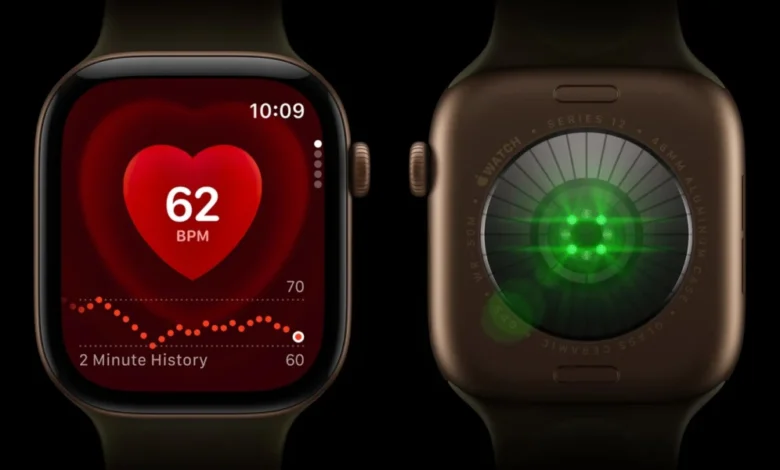
Apple has made a bold claim regarding its latest wearable generation, asserting that the newly introduced Apple Watch Series 12 and Apple Watch Ultra 4 deliver the most accurate heart rate monitoring ever achieved in a commercial consumer wearable device. To substantiate this assertion, the technology giant has published a comprehensive validation study contrasting its new proprietary sensor architecture against a wide cross-section of dominant market competitors, spanning smartwatches, specialized fitness bands, and smart rings.
This announcement coincides with the annual autumn product cycle, introducing substantial engineering revisions centered squarely on biometric data acquisition. As consumer interest in preventive health care, physiological tracking, and athletic optimization continues to scale globally, the accuracy of wrist-worn sensors has become a primary battleground for consumer electronics manufacturers. Apple’s latest empirical defense aims to solidify its market dominance against rising competition from dedicated sports watch brands and emerging biometric ring manufacturers.
The Heart Sensing System: A Core Architectural Overhaul
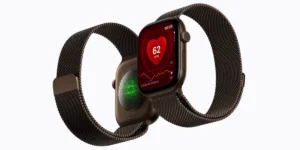
At the heart of the Apple Watch Series 12 and Apple Watch Ultra 4 lies a newly engineered architecture designated as the Health Sensing System. This hardware and software integration represents a significant departure from previous generations, addressing historical limitations inherent in consumer-grade optical and electrical biometrics.
According to technical documentation released by the company, the system incorporates updated electrical sensors alongside advanced optical photoplethysmography (PPG) sensors. These hardware components are governed by entirely rewritten signal-processing algorithms designed to filter out motion artifacts, ambient light interference, and physiological noise.
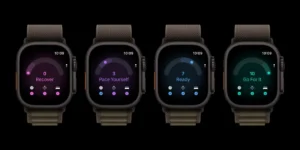
This upgraded sensing apparatus directly powers several newly introduced software suites and application features on watchOS, most notably Recovery Heart Rate Variability (HRV) metrics and the newly designed Readiness application. These tools are engineered to synthesize continuous physiological streams into actionable insights regarding recovery, physical stress thresholds, and overall daily preparedness. Industry analysts note that by moving beyond simple continuous heart rate tracking into complex recovery diagnostics, Apple is positioning its hardware as a clinical-grade preventative tool rather than a mere lifestyle accessory.

Methodology and Scope of the Validation Study
To support its claims of market-leading precision, Apple conducted an extensive clinical validation study across multiple international sites during the summer months. The study, documented in a formal nine-page white paper published by the company, details testing executed across five distinct facilities located in the United States and Malaysia between July and August.
The trial enrolled a diverse cohort of 1,460 healthy adult participants. Of these, 1,254 individuals successfully completed testing protocols that yielded usable, paired physiological measurements for final statistical evaluation. The methodology required participants to wear an Apple Watch Series 12 on one wrist simultaneously with a competing wrist-based wearable on the opposite wrist.
To establish an absolute baseline of accuracy, researchers utilized a Polar H10 electrocardiogram (ECG) chest strap as the gold-standard reference device. The Polar H10 is widely recognized within sports science and medical research for its high fidelity in capturing electrical cardiac activity during strenuous physical exertion.
The competitive landscape included in Apple’s comparative analysis featured prominent contemporary devices from major global manufacturers. Wrist-bound competitors tested included the Garmin Forerunner 970, the Google Pixel Watch 4, the Huawei Watch 5, and the Samsung Galaxy Watch 8, alongside the WHOOP 5 fitness band. Additionally, participants wore an Oura Ring 5 on the index finger, strictly adhering to the manufacturer’s recommended sizing and positioning guidelines to ensure optimal optical data capture.
Testing Regimens Designed to Stress-Test Biometrics
Apple’s evaluation framework was intentionally designed to stress-test the limitations of optical and electrical sensors under challenging physiological and environmental conditions. The testing matrix encompassed a diverse array of structured athletic workouts alongside continuous, uncontrolled daily living scenarios.

The workout protocols included high-intensity outdoor running, rigorous treadmill interval training, steady-state and interval cycling sessions, high-intensity interval training (HIIT) classes, and structured strength training routines. Furthermore, investigators captured background heart rate data during standard everyday activities, such as resting periods, sedentary desk work, meal preparation, and casual walking.
These varied scenarios were deliberately chosen to evaluate how effectively each device handles common tracking anomalies. Chief among these is "cadence lock," a well-documented phenomenon where an optical sensor misinterprets the rhythmic bouncing of a runner’s stride as their pulse, leading to severe tracking inaccuracies. Other evaluated challenges included rapid physiological transitions, sudden accelerations in heart rate, and loose strap placements caused by sweat accumulation or vigorous movement during heavy lifting.
Empirical Findings and Comparative Results
Upon concluding the trial, Apple compiled 159 individual activity and measurement comparisons across the diverse testing scenarios. The empirical findings demonstrated that the Apple Watch Series 12 outperformed every competing device included in the study in terms of overall statistical accuracy.
Specifically, across the 159 evaluated benchmarks, the Apple Watch Series 12 achieved statistically superior accuracy in 139 instances when compared against the aggregate performance of the rival smartwatches, fitness bands, and smart rings. The complete dataset, along with methodological breakdowns and statistical significance margins, has been made publicly available via Apple’s official health documentation portal for independent peer review by sports scientists, medical professionals, and industry analysts.
Industry Implications and Competitive Response
The publication of this study underscores a broader trend within the wearable technology sector: manufacturers are increasingly utilizing rigorous, transparent clinical validation to differentiate their products in a saturated market. While early consumer wearables prioritized step counts and rough caloric estimates, modern devices are evaluated on their capacity to deliver medical-grade data capable of influencing personal health outcomes.

Competitors such as Garmin, Samsung, and Google have steadily improved their own proprietary biometric algorithms, often marketing their devices toward specialized endurance athletes or holistic wellness seekers. Apple’s assertion of superior accuracy across both high-intensity athletics and sedentary daily living challenges the narrative that dedicated sports watches hold an unassailable advantage in athletic performance tracking, while also pushing back against the growing popularity of minimalist smart rings.
Market Availability and Launch Timeline
Consumers seeking to evaluate the new hardware firsthand will not have to wait long. Pre-orders for the Apple Watch Series 12 opened immediately following the product announcement, with base configurations starting at $399. Concurrently, pre-orders for the rugged, adventure-focused Apple Watch Ultra 4 commenced at a starting price of $799.
Both flagship wearable models are scheduled to officially launch and arrive in retail stores globally, alongside direct-to-consumer shipments, exactly one week following the announcement. As these devices enter the hands of everyday users, independent reviewers, and independent medical researchers, the real-world performance of the new Health Sensing System will undergo extensive verification outside of controlled clinical environments, ultimately determining whether the hardware lives up to Apple’s bold claims.