Global ChatGPT Outage Disrupts OpenAI Services Affecting Millions of Users and API Integrations Worldwide


The digital landscape faced a significant disruption early this morning as OpenAI’s flagship artificial intelligence platform, ChatGPT, experienced a massive and widespread outage. Beginning at approximately 5:00 AM Eastern Time, the service disruption left millions of users worldwide unable to access their chat histories, initiate new conversations, or utilize the platform’s advanced reasoning capabilities. The outage, which appears to have originated in the underlying infrastructure supporting OpenAI’s large language models, affected both the free tier and the premium Plus subscribers, as well as enterprise-level clients who rely on the service for daily operations.
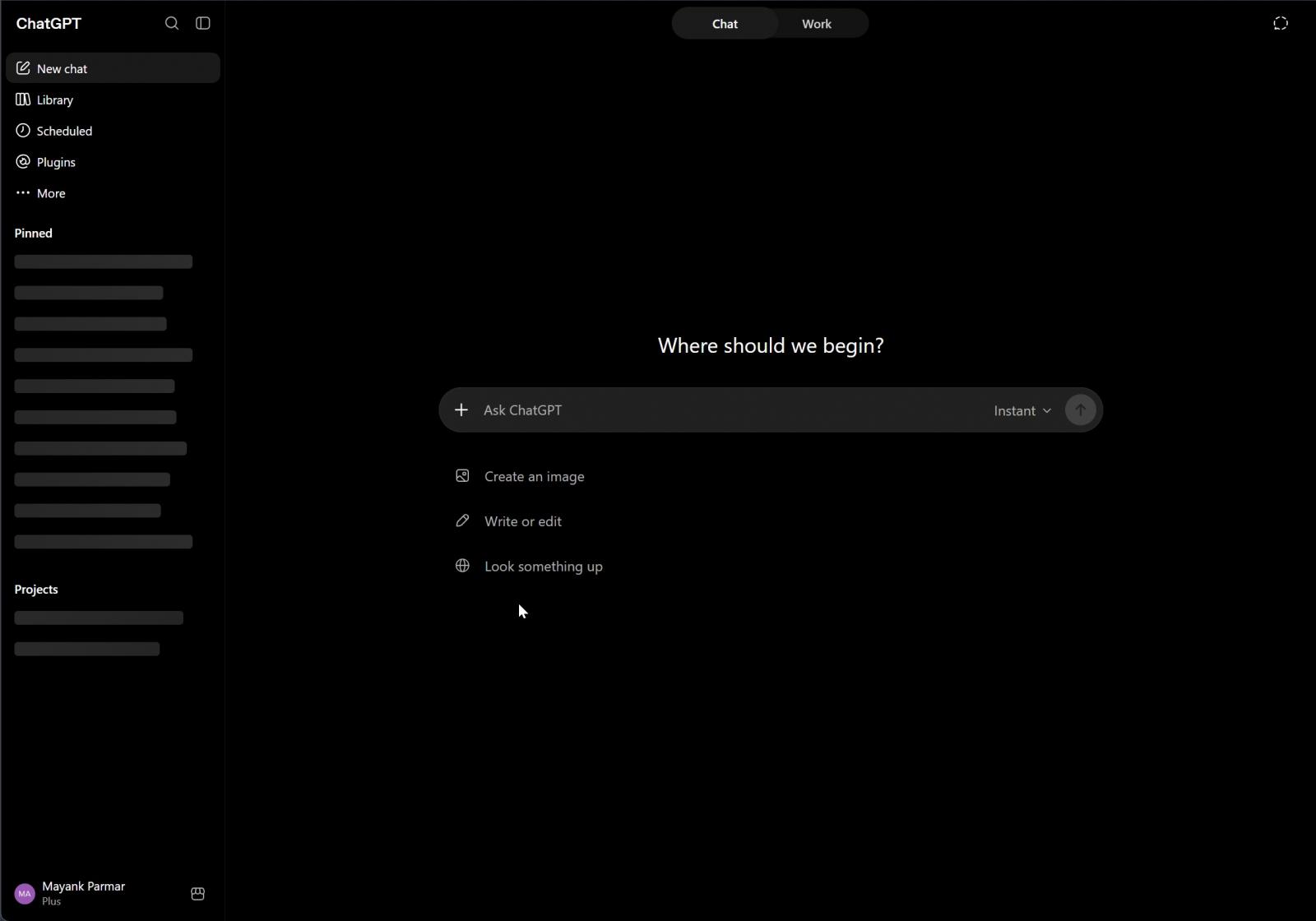
As the incident unfolded, users reported a total failure of the user interface, with the sidebar—typically used to navigate past interactions—failing to load and displaying empty placeholders or infinite loading animations. For many, attempts to send new prompts were met with technical error messages, most notably the "too many concurrent requests" warning, suggesting a bottleneck in the server’s ability to process the global influx of data. This specific error often points to a failure in the load-balancing layers of a cloud network or a significant degradation in the backend compute clusters that power the generative AI responses.
Detailed Chronology of the Disruption
The timeline of the event illustrates a rapid escalation of service failure followed by a protracted period of investigation and mitigation by OpenAI’s engineering teams. According to data tracked by internal monitoring systems and corroborated by third-party outage trackers like Downdetector, the first signs of instability emerged shortly after 4:45 AM ET. At this stage, users in the European market—where the workday was already in full swing—began reporting latency issues and intermittent "Internal Server Error" (500-level) messages.
By 5:00 AM ET, the situation transitioned from localized latency to a full-scale global outage. Social media platforms were quickly flooded with reports from the United States, Asia, and South America, confirming that the issue was not restricted by geography. At 5:30 AM ET, OpenAI officially acknowledged the crisis, updating its status page with a brief statement: "We are investigating the issue for the listed services." This initial acknowledgment covered not only the ChatGPT interface but also several critical components of the OpenAI ecosystem.

The engineering team identified a potential cause within the hour and began applying a series of patches to the production environment. By 6:15 AM ET, OpenAI indicated that a fix had been implemented and that they were monitoring the results. However, the recovery process proved to be non-linear. Many users continued to experience "zombie" sessions where the interface appeared to be functional but failed to generate text or retrieve historical data. It was not until several hours later that the service began to show signs of consistent stabilization across all global regions.
Impact on Developer Ecosystem and Codex
The ramifications of the outage extended far beyond the consumer-facing ChatGPT website. OpenAI’s Codex, the model that powers several prominent coding assistants and automated programming tools, was also severely impacted. For software developers who have integrated AI into their integrated development environments (IDEs), the outage resulted in an immediate loss of productivity. Coding assistants that provide real-time suggestions, bug fixes, and documentation generation were rendered useless, forcing many developers to revert to manual workflows.
Furthermore, the OpenAI API (Application Programming Interface) suffered a significant blow. The API is the backbone for thousands of third-party applications, ranging from customer service chatbots to automated content creation tools used by marketing agencies. On the official OpenAI status page, as many as 12 distinct API endpoints were flagged as experiencing "degraded performance" or "major outage."
The failure of these endpoints meant that businesses utilizing "gpt-3.5-turbo" or "gpt-4" models via API calls saw their own services fail. For enterprise customers, this translated into broken customer-facing interfaces and stalled internal automated processes. The "too many concurrent requests" error seen on the web interface was mirrored in the API logs, where developers reported high rates of 429 error codes, indicating that the system was unable to handle the volume of requests even at previously approved rate limits.
Technical Analysis of "Concurrent Request" Failures
In the context of high-scale cloud services, the "too many concurrent requests" error is usually a defensive mechanism employed by a system when it reaches its maximum capacity. However, during an outage, this error often occurs not because there is an actual surge in user demand, but because the backend processing units are failing to clear the existing queue.

When a user sends a prompt to ChatGPT, it travels through a series of load balancers to a GPU cluster where the model inference occurs. If the connection between the web front-end and the inference engine is severed or if the inference engine itself crashes, the requests begin to pile up. Once the buffer is full, the system automatically rejects all incoming traffic to prevent a total "cascading failure" that could potentially damage hardware or corrupt databases.
The fact that user chat histories were also unavailable suggests a deeper issue with the database layer. ChatGPT relies on a complex retrieval system to pull past conversations from storage and present them to the user. A failure in the authentication service or the database connectivity layer would explain why the sidebar remained blank while the main chat window was unresponsive.
The Broader Context of AI Reliability
This incident is not the first time OpenAI has faced significant downtime, and it highlights a growing concern regarding the "SaaS-ification" of essential tools. As AI becomes more integrated into the global economy, the reliability of these platforms becomes a matter of critical infrastructure. In March 2023, a significant bug in an open-source library used by OpenAI forced a similar shutdown and even led to a temporary data leak where users could see the titles of other users’ conversations.
The current outage underscores the fragility of the modern tech stack, where a single point of failure in a centralized AI provider can have a ripple effect across the entire internet. Unlike traditional software that runs locally on a machine, LLMs require massive, centralized compute power that users cannot replicate. When the central provider goes down, there is no "offline mode" for AI-driven productivity.
Industry analysts suggest that outages of this nature may prompt more enterprises to look into "multi-model" strategies. By diversifying their AI dependencies across different providers—such as integrating both OpenAI and competitors like Anthropic’s Claude or Google’s Gemini—businesses can build in a layer of redundancy. If one provider suffers an outage, the system can automatically failover to another, ensuring continuity of service.

Reactions from the Tech Community and Users
The reaction to the outage was a mix of frustration and a realization of how dependent the professional world has become on AI. On platforms like X (formerly Twitter) and Reddit, the hashtag #ChatGPTDown trended within minutes of the initial failure. Many users shared screenshots of their blank screens, jokingly—and sometimes seriously—questioning how they would complete their work assignments without the assistance of the AI.
"I didn’t realize how much I rely on ChatGPT for drafting emails and debugging code until it was gone this morning," one software engineer posted. "It’s a wake-up call regarding our reliance on a single service."
From a business perspective, the reaction was more measured but focused on the financial implications. Companies that pay for high-tier API access often have Service Level Agreements (SLAs) that guarantee a certain percentage of uptime. Frequent or prolonged outages could lead to demands for credits or a shift in the market toward providers that can demonstrate greater stability.
Official Response and Mitigation Efforts
OpenAI’s response followed their standard transparency protocol for technical failures. By maintaining a live status page and providing periodic updates, they managed to keep the developer community informed, even if the news was not ideal. The company has historically been proactive in post-mortem reporting, often releasing detailed explanations of what went wrong days or weeks after a major incident.
In the wake of this specific outage, OpenAI stated that they "applied a fix" and were "monitoring the situation." While the immediate crisis was averted by mid-morning, the company faces the ongoing challenge of scaling its infrastructure to meet the exponential growth in user base. As more features, such as voice mode and image generation, are added to the platform, the strain on the underlying servers continues to increase.
Implications for the Future of Generative AI
The global outage of ChatGPT serves as a case study in the growing pains of the AI revolution. We are currently in an era where the demand for AI compute is outstripping the speed at which infrastructure can be stabilized. For OpenAI, maintaining a 99.9% uptime is a monumental task given the complexity of the neural networks involved and the massive scale of their user base.
For the end-user, this event is a reminder of the importance of maintaining traditional skill sets. While AI is a powerful force multiplier, the total reliance on it creates a vulnerability. As OpenAI continues to investigate the root cause of this morning’s failure, the tech industry at large will likely use this moment to reflect on the need for more robust, decentralized, and redundant AI systems.
As of the latest reports, services are gradually returning to normal, though some users may still experience residual slowness as the system clears the backlog of requests. OpenAI has not yet released a full technical post-mortem, but the event will undoubtedly be cited in future discussions regarding the reliability and governance of artificial intelligence. For now, the digital world resumes its work, albeit with a renewed awareness of the invisible threads that connect modern productivity to the servers in OpenAI’s data centers.