The Great EV Retreat Why Honda Tesla and Global Automakers are Scaling Back in the United States

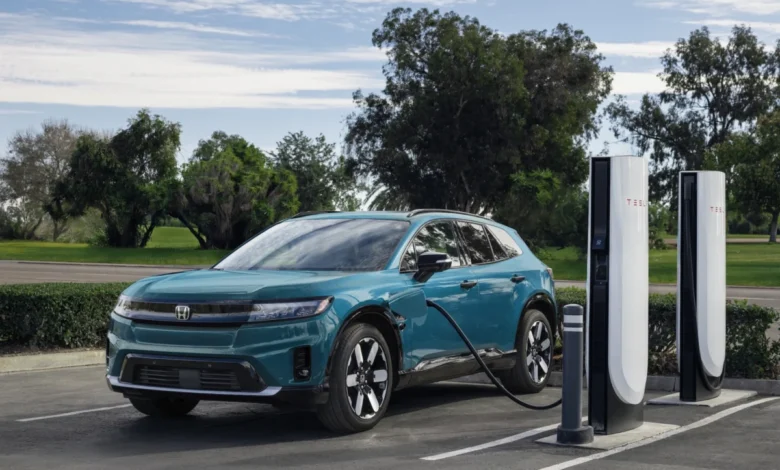
The Honda Prologue is officially dead, a decision confirmed by the company this week that removes the last all-electric vehicle from the automaker’s U.S. portfolio and signals a dramatic shift in the American automotive landscape. The departure of the Prologue is not merely an isolated business decision by a single Japanese firm; rather, it serves as a high-profile illustration of a broader electric vehicle (EV) industry retreat from the U.S. market. While the global EV market continues to expand in regions like China and the European Union, the United States is experiencing a "K-shaped" divergence, where adoption has stalled and manufacturers are increasingly pulling the plug on flagship electric projects.
The demise of the Prologue, which was developed in a high-stakes partnership with General Motors, underscores the volatility of the current transition to sustainable transport. As of mid-2026, the list of discontinued or paused EV models in the U.S. has grown to include stalwarts of the industry, from early pioneers like Tesla’s luxury sedans to promising newcomers like the Sony-Honda joint venture, Afeela. This contraction is driven by a complex web of expiring federal incentives, aggressive new tariffs, and a consumer base that is increasingly pivoting toward hybrid alternatives.

The Economic Cliff: Tax Credits and Market Share
The primary catalyst for this winnowing of choices was the expiration of the $7,500 federal tax credit in the fall of 2025. For years, these incentives served as the lifeblood of EV sales, offsetting the higher manufacturing costs associated with lithium-ion battery production. When the credits ended, the price gap between electric and internal combustion engine (ICE) vehicles widened once again, leading to a "free fall" in sales for mid-tier models.
According to data published in July 2026 by Kelley Blue Book and Cox Automotive, the U.S. market saw 247,226 EVs sold in the second quarter, representing just 5.8% of the total automotive market. While this figure showed a slight improvement over the first quarter of 2026, it remains significantly lower than the figures recorded during the peak of the incentive era. Specifically, EV sales in Q2 2026 were 20.5% lower than the same period in 2025.
Industry analysts point to a "triple punch" affecting automakers: rising interest rates making car loans more expensive, the end of federal subsidies, and a charging infrastructure that has failed to keep pace with initial government projections. While some companies like Rivian are attempting to bridge the gap with new releases like the R2, the overall trend is one of consolidation and retreat.

The Honda and Acura Overhaul: From Ambition to Abandonment
Honda’s exit from the U.S. EV space has been particularly swift. Only two years ago, the company announced its "0 Series" (Zero Series), a futuristic line of electric vehicles intended to redefine the brand’s identity. This included a mid-sized SUV prototype and the "Saloon" and "Space-Hub" concepts, which were centerpieces of the 2024 and 2025 Consumer Electronics Shows (CES).
However, in March 2026, Honda executed a massive strategic pivot. The company halted the development of the Acura RDX EV, as well as the 0 Series sedan and SUV. Executives cited a combination of high U.S. tariffs on components and the overwhelming pressure of Chinese competition as the primary reasons for the cancellation. The Honda Prologue, which was built at GM’s Ramos Assembly Plant in Mexico and shared the Ultium battery platform with the Chevrolet Blazer EV, followed shortly after. Despite respectable sales of 39,000 units in 2025, the Prologue could not sustain its momentum once the tax credit evaporated.
The Afeela Saga: A Vision That Never Reached the Road
Perhaps the most high-profile casualty of the 2026 retreat is Afeela, the joint venture between Sony and Honda. The project began in 2020 as the "Vision S" prototype, a tech-heavy vehicle that promised to turn the car into a mobile entertainment hub. By the time it was rebranded as Afeela in 2023, it had become a symbol of the "software-defined vehicle."

Despite a relentless marketing blitz and multiple appearances at TechCrunch Disrupt and CES, Afeela never reached the production line. In March 2026, Sony Honda Mobility officially abandoned the project. The dissolution of the Afeela dream highlights the difficulty of merging consumer electronics lifecycles with the capital-intensive and slow-moving world of automotive manufacturing, especially in a market where the regulatory environment for "connected" vehicles has become increasingly hostile.
Geopolitical Barriers: Polestar, Volvo, and the Chinese Connection
Geopolitics has played a decisive role in narrowing EV choices for American consumers. The U.S. Department of Commerce’s ban on Chinese-connected vehicle technology effectively forced Polestar, the Swedish EV maker owned by China’s Geely, to exit the U.S. market in 2026. Polestar required specific federal authorization to continue importing vehicles, a hurdle it ultimately could not clear.
While Polestar will continue to service existing owners of the Polestar 3 and 4, it can no longer sell new units in the United States. In contrast, its sibling company, Volvo, received the necessary authorizations to continue its operations, though not without its own setbacks. In March 2026, Volvo pulled its subcompact EX30 and EX30 Cross Country models from the U.S. market, despite high initial interest. Volvo has now refocused its U.S. strategy on larger, higher-margin electric SUVs like the EX60 and EX90, which are perceived as safer bets in a volatile economy.

Tesla’s Pivot: The End of the Model S and Model X
Even Tesla, the long-standing leader of the American EV movement, has not been immune to the shifting tides. In early 2026, Tesla announced the end of production for its flagship Model S sedan and Model X SUV. These vehicles, which were instrumental in proving that EVs could be luxury status symbols, saw their sales eclipsed by the high-volume Model 3 and Model Y.
Tesla’s decision, however, is not a retreat from technology but a pivot toward artificial intelligence and robotics. The assembly lines at Tesla’s Fremont factory that once produced the S and X have been dismantled to make room for the production of "Optimus," Tesla’s humanoid robot. CEO Elon Musk has signaled that the company’s future lies in the "Cybercab" and autonomous systems rather than traditional passenger vehicles, leaving a void in the premium electric sedan and SUV segments.
Volkswagen and the Return to Internal Combustion
Volkswagen has also adjusted its trajectory, pausing production of the ID.4 electric SUV at its Chattanooga, Tennessee, facility. In a move that reflects a broader industry trend, VW is pivoting back toward high-volume, gas-powered vehicles, such as the upcoming Atlas SUV. The company indicated that ID.4 inventory would remain available through 2027, but no new 2026 models would be produced in the U.S.

The ID. Buzz, the electric revival of the iconic microbus, is also on hiatus for the 2026 model year, though VW insists it will return in 2027. Interestingly, VW is continuing to use the ID. Buzz platform for autonomous vehicle testing in Los Angeles through its MOIA subsidiary and a partnership with Uber, suggesting that the company sees more immediate value in robotaxi fleets than in retail consumer sales.
Implications and the Path Forward
The retreat of these major models suggests a fundamental recalibration of the "all-electric" timeline in the United States. Several key implications emerge from this 2026 contraction:
- The Hybrid Resurgence: As pure EVs disappear from showroom floors, automakers are doubling down on hybrid and plug-in hybrid (PHEV) models. These vehicles offer a middle ground for consumers wary of range anxiety and the lack of public charging infrastructure.
- Infrastructure Skepticism: The withdrawal of models like the Nissan Ariya and the Hyundai Ioniq 6 (standard version) suggests that manufacturers no longer believe the U.S. charging network is robust enough to support a mass-market transition in the short term.
- Market Stratification: The U.S. EV market is becoming increasingly stratified. While affordable models are being cancelled due to low margins and the loss of tax credits, luxury models and specialized trucks (like the Rivian R1T and Ford F-150 Lightning) continue to find a niche, albeit at lower volumes than originally hoped.
- Regulatory Uncertainty: With shifting trade policies and the potential for further tariffs on battery components, automakers are choosing to wait for a more stable regulatory environment before committing to new U.S.-based EV production lines.
While the 2026 model year may be remembered as the "year of the retreat," the industry is not entirely abandoning electrification. The focus has simply shifted from rapid, subsidized expansion to a more cautious, profit-driven approach. For the American consumer, however, the immediate result is a significantly reduced menu of electric options and a return to the familiar territory of internal combustion and hybrid power.