The Evolution of Modern Home Cinema: Simplifying the High-End Experience Through Strategic Hardware Integration

A true home cinema setup, meticulously calibrated with matched components, remains one of the most immersive experiences in modern home entertainment. For enthusiasts, this pursuit has historically necessitated significant structural alterations to living spaces, ranging from the installation of large floorstanding loudspeakers and wall-mounted acoustic treatments to the tedious, often unsightly management of miles of cabling snaking across floorboards and through ceilings. However, a significant shift in consumer demand has emerged as non-cinephile audiences express a clear preference for large-scale, high-fidelity Dolby Atmos experiences that bypass the complexity of traditional installation. This trend has prompted a move toward simplified, high-performance systems that leverage technological convergence rather than manual configuration.
The Shift Toward Minimalist Cinema Systems
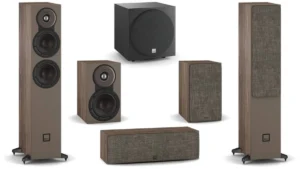
The traditional home theater archetype—an Audio-Video Receiver (AVR) paired with a discrete 5.1 or 7.1 speaker array—is increasingly perceived as a barrier to entry for the average consumer. Market research into consumer electronics suggests that while the desire for cinematic immersion is high, the "hassle factor" associated with DIY installation, drilling, and cable routing acts as a primary deterrent for nearly 60% of potential buyers.
This shift has catalyzed the development of "plug-and-play" cinematic solutions. By utilizing high-end projector technology combined with wireless surround sound systems, manufacturers are now able to deliver a professional-grade experience with minimal setup time. This approach, which relies on wireless connectivity and compact form factors, represents a significant departure from the cumbersome, hardware-heavy installations that defined the early 2000s.
The Role of Portable Projection Technology
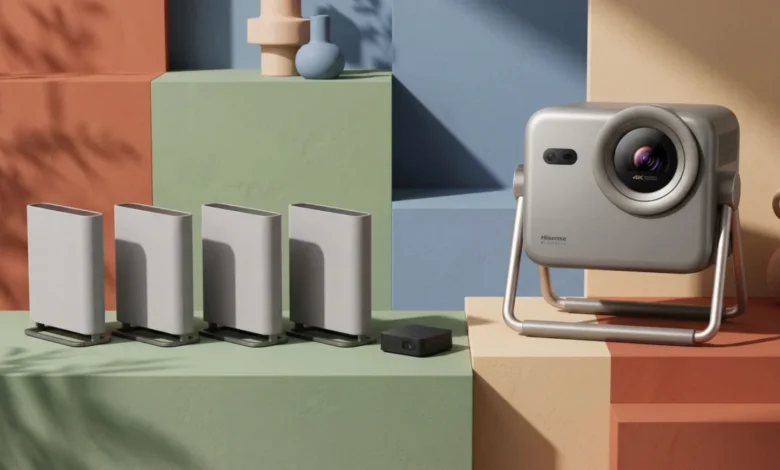
At the heart of this minimalist revolution is the evolution of the portable projector. Devices such as the Hisense M2 Pro have redefined the segment by integrating high-lumen output and sophisticated image processing into a device no larger than a standard coffee table centerpiece.
Technically, the M2 Pro utilizes advanced light-processing engines that allow for projection sizes of up to 200 inches without requiring the dedicated light-controlled rooms of the past. By incorporating internal operating systems and app support, these devices eliminate the need for external media players or complex HDMI switching hubs. This consolidation of hardware is essential for users seeking to maintain the aesthetic integrity of their living rooms. Furthermore, these units feature high-dynamic-range (HDR) processing, which, while not matching the absolute black levels of high-end, light-controlled laser theaters, provides a sufficient contrast ratio for standard living environments.
Wireless Integration and the Sony Bravia Theatre Quad
The most critical component in removing the "faff" from home cinema is the shift toward wireless audio distribution. Traditional surround sound setups require individual speaker cables running back to a central amplifier, a process that is often the most time-consuming part of an installation.
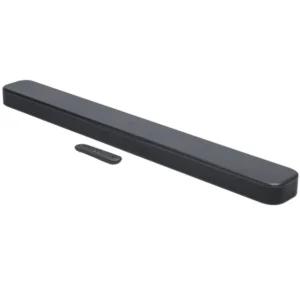
The Sony Bravia Theatre Quad system serves as a prime example of this industry pivot. By utilizing four wireless satellite speakers that communicate with a central command box, the system removes the necessity for physical wiring across the room. The system leverages HDMI eARC (Enhanced Audio Return Channel) to interface with the projector, allowing for seamless transmission of high-bitrate audio formats like Dolby Atmos. While the system carries a premium price tag—which has been a point of contention in professional reviews regarding value-for-money—its capacity to deliver spatial audio without the requirement of permanent wall mounting or ceiling drilling offers a compelling value proposition for those prioritizing convenience.
The Impact of Seasonal Retail Trends
The availability of these high-end components during major retail windows, such as the annual Black Friday sales period, has accelerated the adoption of simplified home cinema setups. The retail sector has observed that high-ticket items like premium projectors and wireless sound systems see a sharp increase in sales volume when manufacturers apply significant discounts during the final quarter of the year.
This pricing strategy serves to lower the entry barrier for high-performance home entertainment. As retailers compete for market share, the aggregation of these discounted items into "curated bundles" allows consumers to build a cohesive, high-performance system for a fraction of the cost of a custom-installed theater. This phenomenon also highlights a shift in consumer behavior: buyers are no longer looking for individual components to assemble over years; they are looking for holistic solutions that provide immediate performance improvements.
Technical Limitations and Trade-offs
It is essential to acknowledge the technical compromises inherent in this shift toward simplicity. While the combination of a portable projector and a wireless surround sound system is highly effective, it does not achieve the same acoustic precision as a full-fat, dedicated home cinema setup.
- Acoustic Ceiling Effects: Wireless satellite systems often use "bouncing" technology to simulate height channels. While effective, this is physically distinct from ceiling-mounted speakers, which provide a more precise and localized soundstage.
- Dynamic Range: The physical size of the drivers in compact wireless speakers often limits the low-frequency impact (the "sub-bass" feel) that can be achieved with a dedicated, high-excursion subwoofer in a traditional wired setup.
- Connectivity: Many portable projectors, due to their compact form factors, offer limited physical inputs. Relying on a single HDMI port means that users are effectively forced to use the projector’s internal smart OS, which may not always receive the same long-term software support as dedicated streaming devices like an Apple TV or NVIDIA Shield.
The Future of Home Entertainment
Looking ahead, the trajectory of the industry points toward further integration and automation. We are entering an era where "room correction" software, which uses microphones to calibrate speaker output based on the specific geometry of a living room, is becoming standard. This technology essentially allows a system to "fix" the audio regardless of where the speakers are placed, effectively eliminating the need for acoustic treatment of walls and ceilings.
Industry experts anticipate that the next five years will see a tightening of the gap between "enthusiast" systems and "consumer" systems. As processing power increases and wireless protocols become more robust, the latency and compression issues that once plagued wireless audio will likely disappear.
Conclusion: A Pragmatic Approach
The decision to move away from traditional, labor-intensive home cinema configurations is a rational one for the modern consumer. The combination of a high-performance, compact projector and a wireless, Atmos-capable sound system provides an experience that is 80% to 90% as effective as a dedicated, fully wired theater, but with 10% of the installation headache.
For those who are not prepared to sacrifice the feng shui of their home or commit to the structural modifications required for a traditional setup, the market now offers a path to cinematic quality that was previously unattainable. By focusing on products that emphasize integration and simplicity, consumers can achieve the "magic" of a cinema experience without the accompanying clutter. While these systems may not replace the dedicated enthusiast setup in terms of absolute technical perfection, they represent a significant advancement in the accessibility of high-fidelity home entertainment.
As we move further into the decade, the continued refinement of these technologies will likely solidify this "minimalist cinema" category as the standard for domestic entertainment, proving that in the modern home, performance and convenience are no longer mutually exclusive.
Related posts: