Tesla removes the mandatory intervention menu in FSD v15 to streamline user experience and optimize data collection.

The release of Tesla’s Full Self-Driving (FSD) v15 software update last weekend marks a significant shift in how the company manages driver feedback and vehicle performance data. As part of the latest iteration of its autonomous driving suite, Tesla has officially removed the "Interventions Menu"—a feature that had become a source of contention for many Early Access Program (EAP) participants since its introduction in version 14. This change signals a broader evolution in Tesla’s approach to monitoring human interaction with its AI-driven systems.
The Evolution of Intervention Reporting
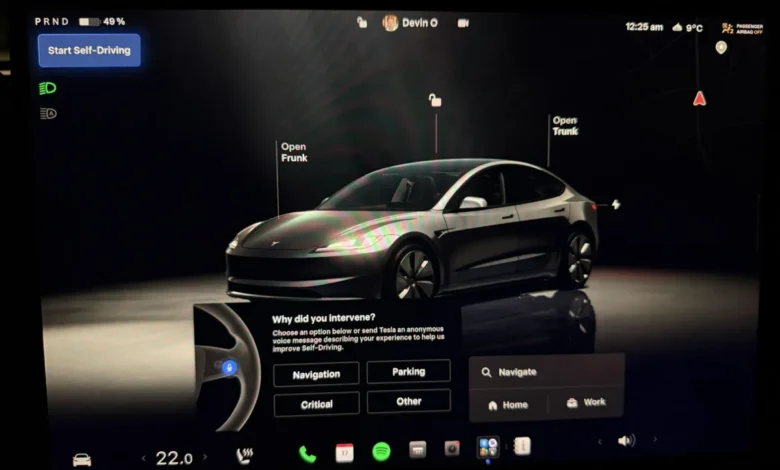
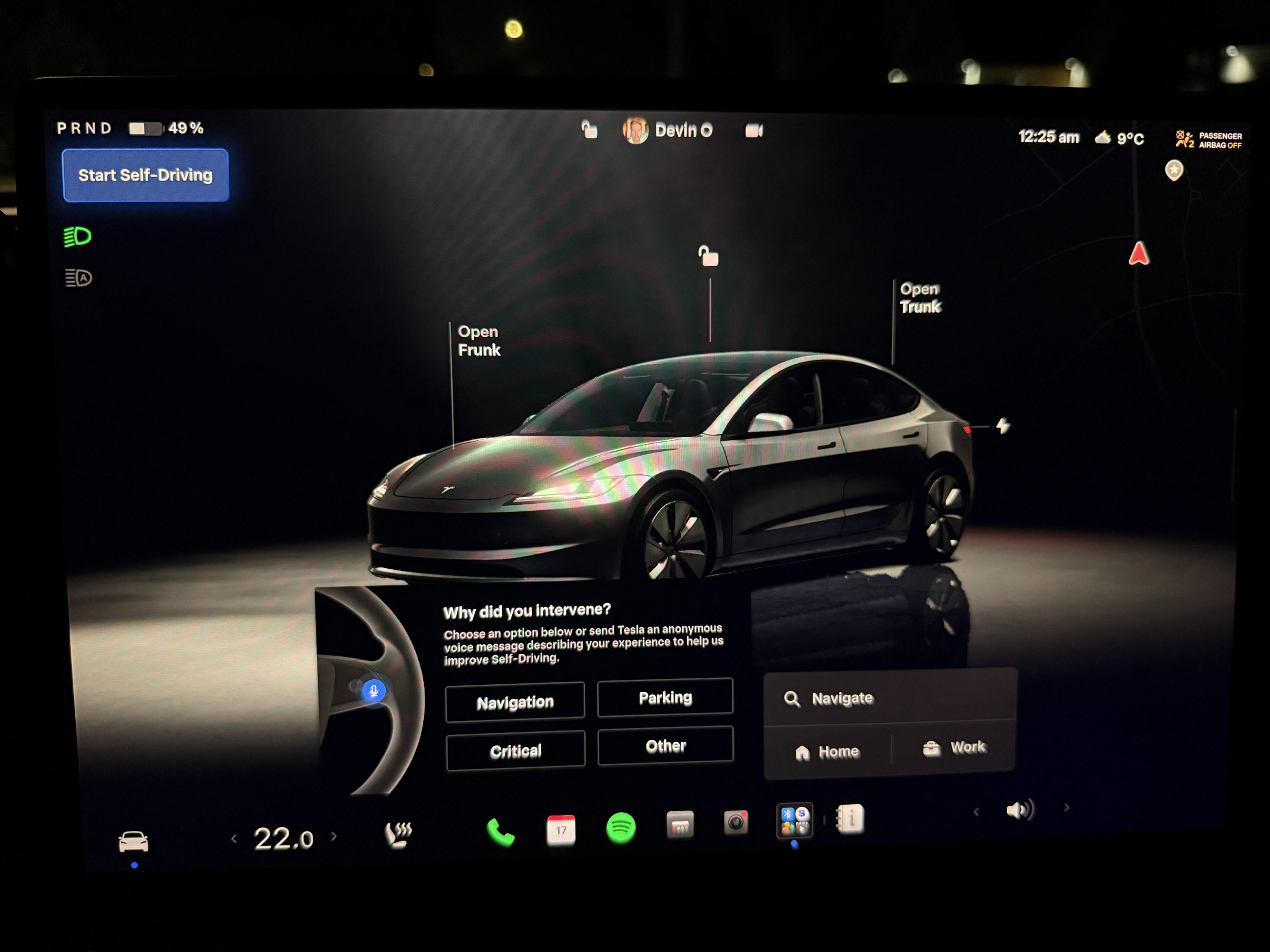
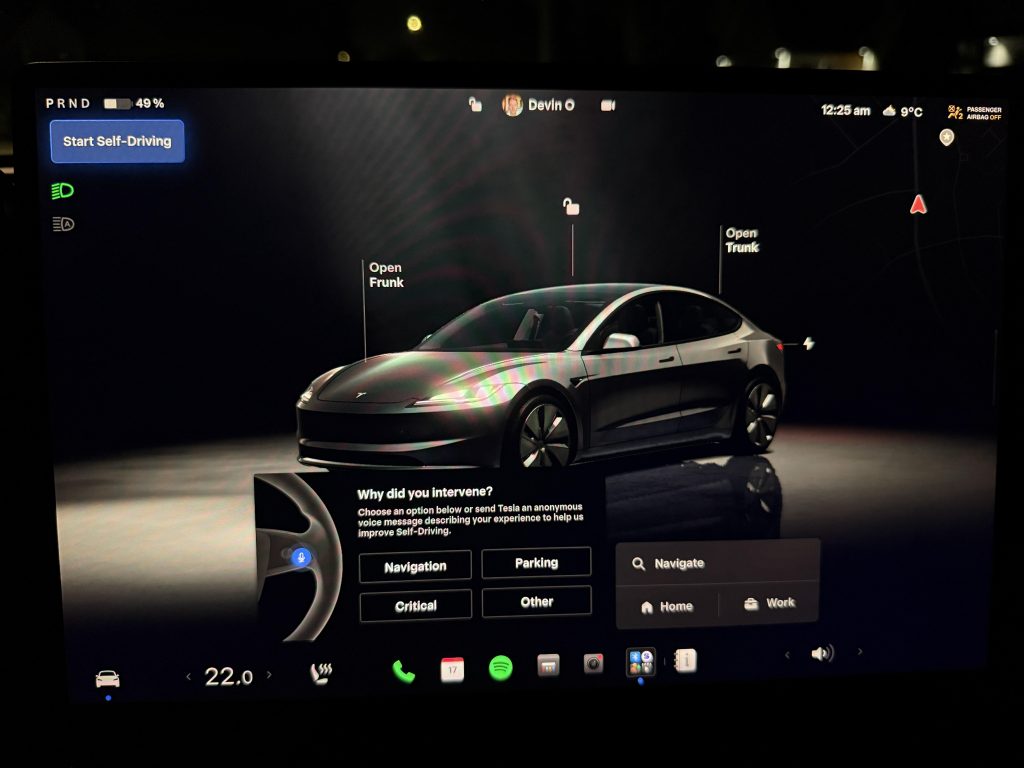
The Interventions Menu was introduced during the rollout of FSD v14 as a tool to categorize the reasons behind human takeovers. When a driver touched the steering wheel or pedals to disengage the autonomous system, a modal window would appear on the touchscreen, prompting the user to select from four categories: "Parking," "Navigation," "Critical," or "Other."
The design of this system required an explicit selection before the menu would disappear from the screen, effectively forcing the driver to engage with the interface immediately after a high-stakes or potentially stressful situation. For many users, this created a secondary distraction. Reports from the user community indicated that, in frustration, many drivers would default to selecting "Critical" regardless of the actual cause of the intervention. This behavior likely compromised the integrity of the data Tesla sought to collect, as the feedback became an unreliable metric for developers trying to identify specific edge cases or software bugs.
By removing this mandatory input requirement in v15, Tesla is shifting toward an automated diagnostic model. The company’s sophisticated internal telematics and "shadow mode" data, combined with the new Reality View visualization, will likely allow the FSD stack to self-diagnose the circumstances of an intervention without requiring manual user labeling.
Technological Context: FSD v15 and Reality View
The v15 update is widely considered one of the most robust versions of Tesla’s autonomous stack to date. Its headline feature, "Reality View," provides a high-fidelity, real-time visualization of the vehicle’s environment, processed by the onboard AI computer. This feature is powered by a 1-billion-parameter diffusion model that operates in parallel with the main driving stack.

The system functions by taking the previous frame, applying noise, and then denoising it to create a coherent representation of the world as the car perceives it. While users have praised the detail and responsiveness of this visualization, early testers noted a slight latency—an input lag between the car’s movement and the corresponding update on the screen. CEO Elon Musk has already addressed this, confirming that the company is working on an optimization strategy to interleave new Universal Vision Encoder (UVE) features across the diffusion transformer layers. This process is expected to reduce current latency by approximately 35%, further refining the user experience without requiring a hardware overhaul.
Strategic Shifts in Hardware and Compute
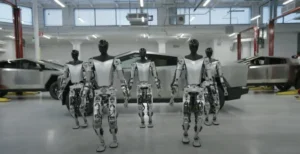
The removal of the intervention menu comes at a time when Tesla is aggressively segmenting its AI development. Recent communications from Tesla leadership have clarified the roles of different hardware generations within the company’s ecosystem. Tesla has confirmed that the upcoming AI5 chip will be reserved primarily for the Optimus humanoid robot and internal AI training infrastructure, rather than being retrofitted into existing consumer vehicles.

For the automotive fleet, the AI4 (or HW4) computer remains the standard for achieving what the company describes as "superhuman driving." This strategic decision reflects the company’s confidence that the current hardware is sufficient for the computational requirements of unsupervised autonomy. By focusing AI5 on the more complex, generalized motor-control and perception needs of robotics, Tesla is effectively creating a bifurcated hardware roadmap. For owners of older Hardware 3 vehicles, this provides much-needed clarity regarding the future of their systems and the limitations of their current compute modules.
Broader Implications for Autonomy
The transition away from manual intervention feedback is a clear indicator of Tesla’s growing reliance on its internal "System Intelligence" (SI) to refine its neural networks. When the system was in its infancy, human labels were critical for training the model to recognize stop signs, lane lines, and emergency vehicles. Now that the network has been trained on billions of miles of real-world data, the utility of manual feedback has diminished.

If the system can identify, via video data and sensor telemetry, that a driver took over because of a phantom braking event or a navigational error, it no longer needs the user to click a button. This shift is expected to improve the safety of the FSD experience by keeping the driver’s eyes and attention on the road rather than on the center display.
Furthermore, this change aligns with the industry’s broader move toward "unsupervised" autonomy. As the frequency of interventions drops—a goal Tesla has stated it aims to improve by 25-fold with v15—the need for a permanent, intrusive interface for reporting those interventions becomes obsolete.

Chronology of Recent Developments
- Early 2026: Tesla begins optimizing its neural networks for the AI4 platform, signaling a move toward higher-resolution vision processing.
- Mid-2026: FSD v14 is released, introducing the mandatory, and often criticized, Interventions Menu.
- November 2026: FSD v15 begins its rollout to the Early Access Program. The update introduces "Reality View" and officially deprecates the mandatory intervention reporting tool.
- Late November 2026: Elon Musk confirms that AI5 chip production is prioritized for the Optimus robot, solidifying the role of AI4 as the primary compute platform for the vehicle fleet.
- Ongoing: Tesla continues to address feedback regarding latency in the Reality View feature through software-based optimizations of the diffusion transformer layers.
Industry Impact and Future Outlook
The removal of the intervention menu is not merely a quality-of-life update; it represents a maturation of the FSD program. In the early stages of autonomous vehicle development, developers relied heavily on human-in-the-loop validation to "teach" the AI. As the model reaches a level of performance where human intervention becomes the exception rather than the rule, the feedback loop must inevitably shift from manual reporting to automated, high-level system monitoring.
While some critics might argue that losing direct user feedback could lead to a gap in identifying specific edge cases, the current capabilities of Tesla’s data-gathering infrastructure suggest otherwise. Every time an FSD user takes control, the vehicle’s "black box" is recording terabytes of data that are already being uploaded to Tesla’s training clusters. These clusters can automatically flag "disengagements" and replay the scenario in simulation, allowing the AI to learn from the mistake without the driver ever needing to provide a written or selected reason.
As Tesla continues to refine its v15 stack, the focus will likely remain on reducing the "noise" in the user interface, allowing the software to function with greater invisibility. The move to remove the intervention menu is a hallmark of a technology that is moving out of its experimental phase and into a more refined, consumer-ready state. Whether the software can truly achieve the long-promised goal of "unsupervised" driving remains the primary metric for investors and regulators, but for the end-user, the removal of the menu is a significant step toward a more seamless, less intrusive driving experience.
Related posts: