The Strategic Vision of Woven Capital
Woven Capital serves as the primary investment vehicle for the Toyota Group, tasked with scouting and funding early-to-mid-stage startups that align with the company’s long-term vision. Under the leadership of Ro Gupta—the former founder of the autonomous mapping startup Carmera—Woven Capital has refined its focus toward "hard tech." This includes sectors that require significant capital expenditure and complex engineering, such as advanced robotics, sustainable energy storage, and aerospace logistics.
The shift is a calculated response to the commoditization of vehicle hardware. With electric vehicle (EV) margins thinning and software-defined vehicles becoming the industry standard, Toyota is betting that the underlying technologies powering these systems—such as physical AI and next-generation sensor suites—will generate higher long-term value than traditional vehicle assembly. By embedding itself within the startup ecosystem, Toyota secures both a front-row seat to disruptive innovation and a potential pipeline for future acquisitions or collaborative partnerships.
A Chronology of Toyota’s Diversification
The evolution of Toyota’s investment strategy can be traced back to the establishment of the Toyota Research Institute (TRI) in 2015, which initially focused on artificial intelligence and robotics.
- 2015: Toyota establishes the Toyota Research Institute (TRI) with a $1 billion investment to accelerate AI development.
- 2018: The launch of Toyota AI Ventures (now Toyota Ventures) to facilitate early-stage startup funding.
- 2020: The formation of Woven Planet Holdings, which later evolved into the core engine for software and automated driving development, supported by the $800 million Woven Capital fund.
- 2023–2024: Increased emphasis on "Physical AI," or the application of machine learning to robotic hardware, aimed at automating complex manufacturing and logistics tasks.
This timeline illustrates a deliberate transition from purely academic research to an aggressive venture-backed model. By moving from TRI to Woven Capital, Toyota has transitioned from "inventing in-house" to "investing in the ecosystem," recognizing that the pace of change in fields like generative AI is too rapid for any single legacy manufacturer to tackle alone.
Navigating the Current Venture Capital Landscape
The venture capital market has faced significant headwinds since the 2021 funding peak, with rising interest rates and a cooling IPO market forcing startups to prioritize profitability over "growth at all costs." For a corporate venture arm like Woven Capital, this environment presents a unique opportunity. Startups are currently more receptive to strategic partners—those who can offer not just cash, but supply chain access, manufacturing expertise, and distribution networks.
Ro Gupta has noted in industry discussions that the "valuation correction" seen in the tech sector has actually made the market more rational. Toyota is no longer competing against speculative capital for inflated, pre-revenue companies; instead, it is evaluating companies that possess tangible intellectual property and a clear path to commercial viability. This discipline is essential for an automaker that operates on thin margins and long product development cycles.
The Rise of Physical AI and Robotics
A central pillar of the current investment strategy is the concept of Physical AI. Unlike Large Language Models (LLMs) that exist within software environments, Physical AI utilizes neural networks to control robotic hardware in real-time, allowing machines to navigate unstructured environments—such as a messy warehouse or an unpredictable city street.
Toyota’s interest here is multifaceted. Internally, the company aims to deploy these technologies to optimize its own "Toyota Production System" (TPS), potentially automating intricate tasks that remain too delicate for traditional robotic arms. Externally, by investing in the startups building these brains for machines, Toyota positions itself as a supplier of foundational technology for the broader automation industry.
Data-Driven Implications for the Automotive Sector
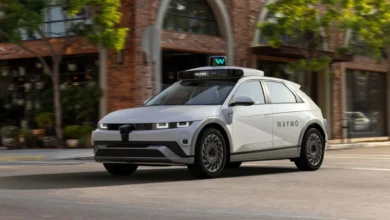
The automotive industry is currently grappling with a divergence in technological maturity. While EVs have reached a state of mass-market adoption, the promise of Level 4 and Level 5 autonomous driving remains elusive. According to recent industry reports, global investment in autonomous vehicle startups dropped by nearly 40% between 2022 and 2024, as investors grew weary of the long time-horizons.
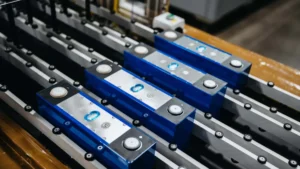
Toyota’s pivot is a direct hedge against this volatility. By diversifying into aerospace and broader energy sectors, the company is effectively mitigating the risk of a "stagnant" autonomous market. If vehicle autonomy takes another decade to mature, Toyota’s investments in energy-efficient battery chemistry or robotic logistics will ensure that the capital remains productive elsewhere.
Official Stance and Market Reaction
While Toyota officials have maintained a guarded stance on specific deal flow, the broader strategy is clear: integration. The company has repeatedly stated that its venture activities are designed to "bridge the gap between Silicon Valley innovation and Japanese manufacturing rigor."
Industry analysts have generally responded positively to this shift, viewing it as a necessary evolution for a firm that has historically been criticized for being "slow to electrify." By embracing the venture model, Toyota is attempting to inject a "startup mindset" into a company that employs over 370,000 people globally. The challenge, however, remains organizational. Integrating a small, agile robotics startup into the massive, hierarchical structure of Toyota requires a delicate balance of autonomy and oversight.
Broader Economic Impact
The implications of Toyota’s move extend well beyond the automotive sector. As a global economic titan, Toyota’s capital allocation signals to the broader market which technologies are considered "safe" or "critical." When Toyota invests in a specific sensor technology or battery-recycling startup, it effectively provides a seal of approval that can attract further rounds of funding from institutional investors.
Furthermore, the focus on aerospace and advanced energy underscores a macro-trend: the convergence of the transport and energy industries. With the integration of Vehicle-to-Grid (V2G) technology, the car is no longer just a transport device; it is a mobile energy storage node. Toyota’s venture strategy reflects this, looking for startups that can harmonize the relationship between the vehicle, the power grid, and the urban infrastructure.
Conclusion: Future-Proofing the Legacy
Toyota’s strategy represents a sophisticated attempt to prevent the "Kodak moment"—the risk of becoming obsolete in an era of rapid technological disruption. By betting on the foundational layers of the future—AI, energy, and robotics—Toyota is building an ecosystem that is independent of its ability to sell internal combustion engines or even passenger vehicles.
As the company continues to deploy its capital through Woven Capital, the focus will likely remain on deep-tech startups that offer high barriers to entry. In a world where software is eating the world, Toyota is ensuring that it owns the hardware that carries the software, maintaining its status as a critical architect of the future of mobility. The upcoming years will serve as a test of whether this massive legacy manufacturer can successfully pivot into a technology-first entity, setting a template for how traditional industrial giants might survive the next century of innovation.