Samsung S90H Review: A Mid-Range OLED Contender That Balances Brightness and Gaming Performance

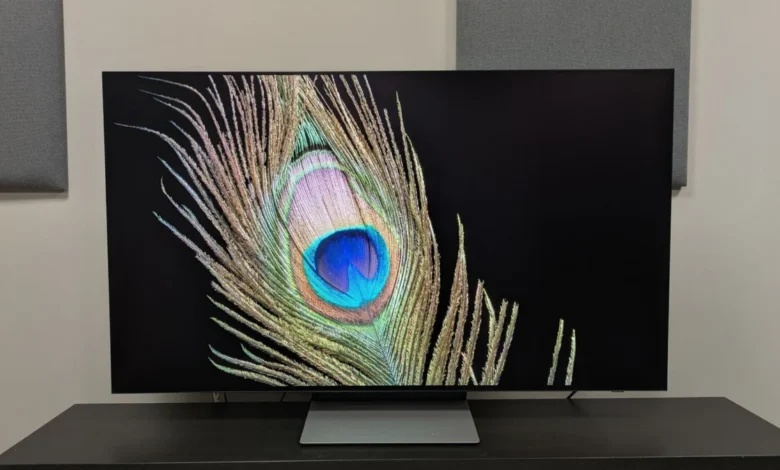
The consumer electronics market continues to evolve rapidly, and television manufacturers are constantly pushing the boundaries of display technology. As OLED panels become more accessible and refined, mid-range offerings are bridging the gap between exorbitant flagship prices and high-end cinematic performance. Within this fiercely competitive landscape, Samsung has introduced the S90H, positioned as its mid-range OLED television for the 2026 model year. Sitting comfortably between the entry-level S85H and the ultra-premium S95H (marketed as the S99H in the United Kingdom), the S90H aims to deliver elite visual fidelity without demanding top-tier investment.
Positioning and Market Landscape
When evaluating the current television ecosystem, consumers are routinely forced to weigh the merits of competing panel technologies and brand philosophies. The S90H enters the arena directly challenging established powerhouses such as the LG C6. While manufacturing practices vary by region and size—with the reviewed 55-inch model utilizing a standard WOLED panel rather than a QD-OLED configuration—the performance metrics tell a compelling story of engineering efficiency.
Priced competitively upon its mid-2026 launch at $1,999 / £1,799 / AU$2,995 for the 55-inch iteration, the S90H has since seen strategic price adjustments. By late 2026, the retail cost dropped to $1,199 / £1,199 / AU$2,995 in the United States and United Kingdom, aligning it more closely with market realities. Although the rival LG C6 undercuts it slightly in select international territories, the Samsung S90H offers a comprehensive feature set that justifies its price tag for cinephiles and competitive gamers alike.
Picture Quality and Visual Performance
At the core of any television evaluation is its ability to render accurate,
captivating imagery. The Samsung S90H relies heavily on the brand’s NQ4 AI Gen 3 processor—the same sophisticated silicon driving flagship models like the S95H. This processor empowers the display with advanced features including Real Depth Enhancer Pro and AI 4K Upscaling Pro.

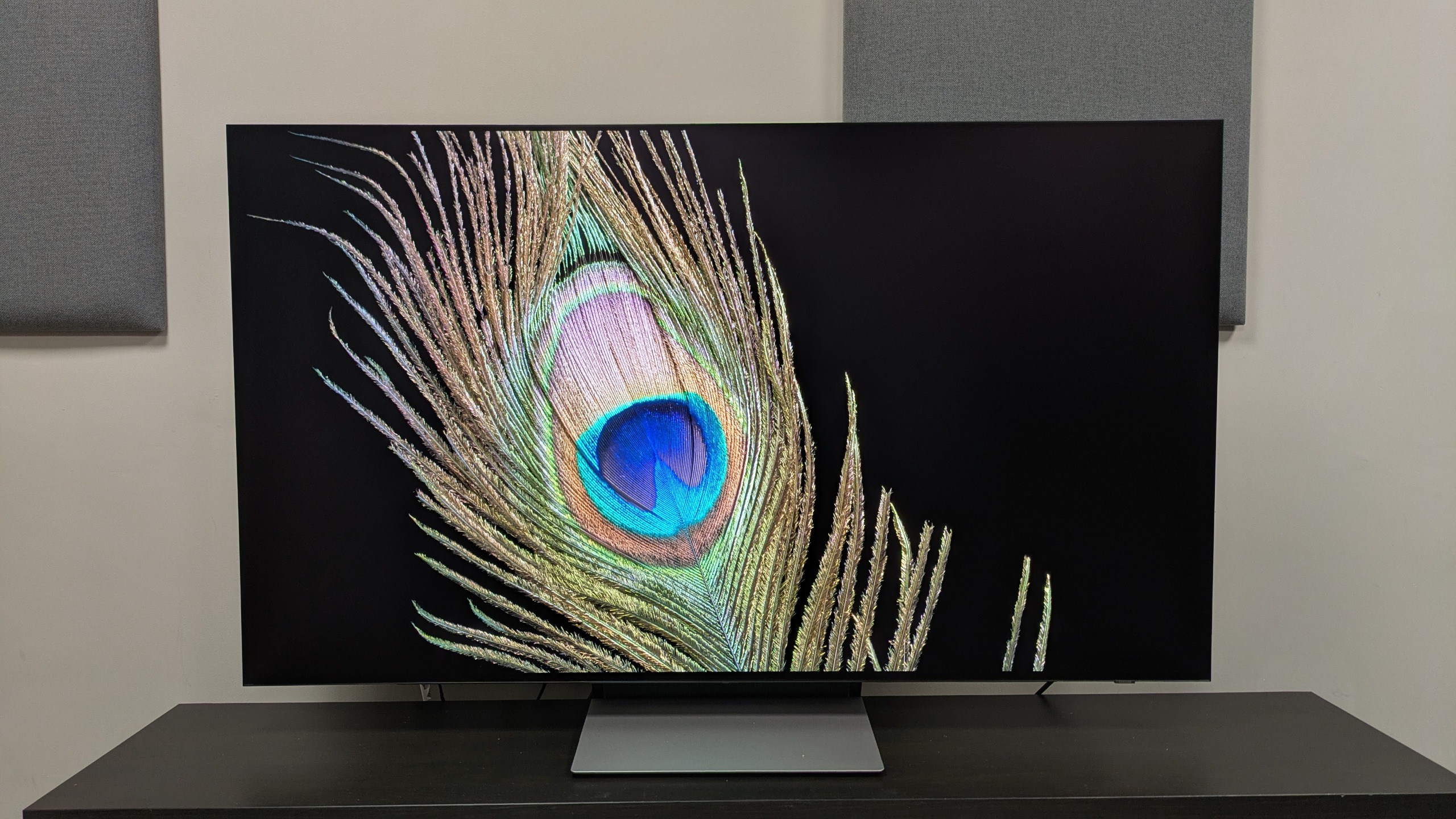
In objective laboratory testing, the S90H registered an impressive peak HDR brightness of 1,689 nits on a 10% white window within Filmmaker Mode, outperforming the LG C6’s measurement of 1,427 nits under identical conditions. Fullscreen HDR brightness similarly favored the Samsung model, clocking in at 305 nits compared to the C6’s 249 nits.
Despite these higher objective measurements, real-world perception can occasionally differ due to image processing algorithms. Side-by-side evaluations reveal that the LG C6 sometimes projects a higher perceived brightness, largely driven by its proprietary tone-mapping approach. Nevertheless, isolated viewing of the S90H yields a brilliantly bright and dynamic picture, even within the traditionally subdued Filmmaker Mode. Movie Mode introduces Active Tone Mapping by default, further elevating the perceived luminance.
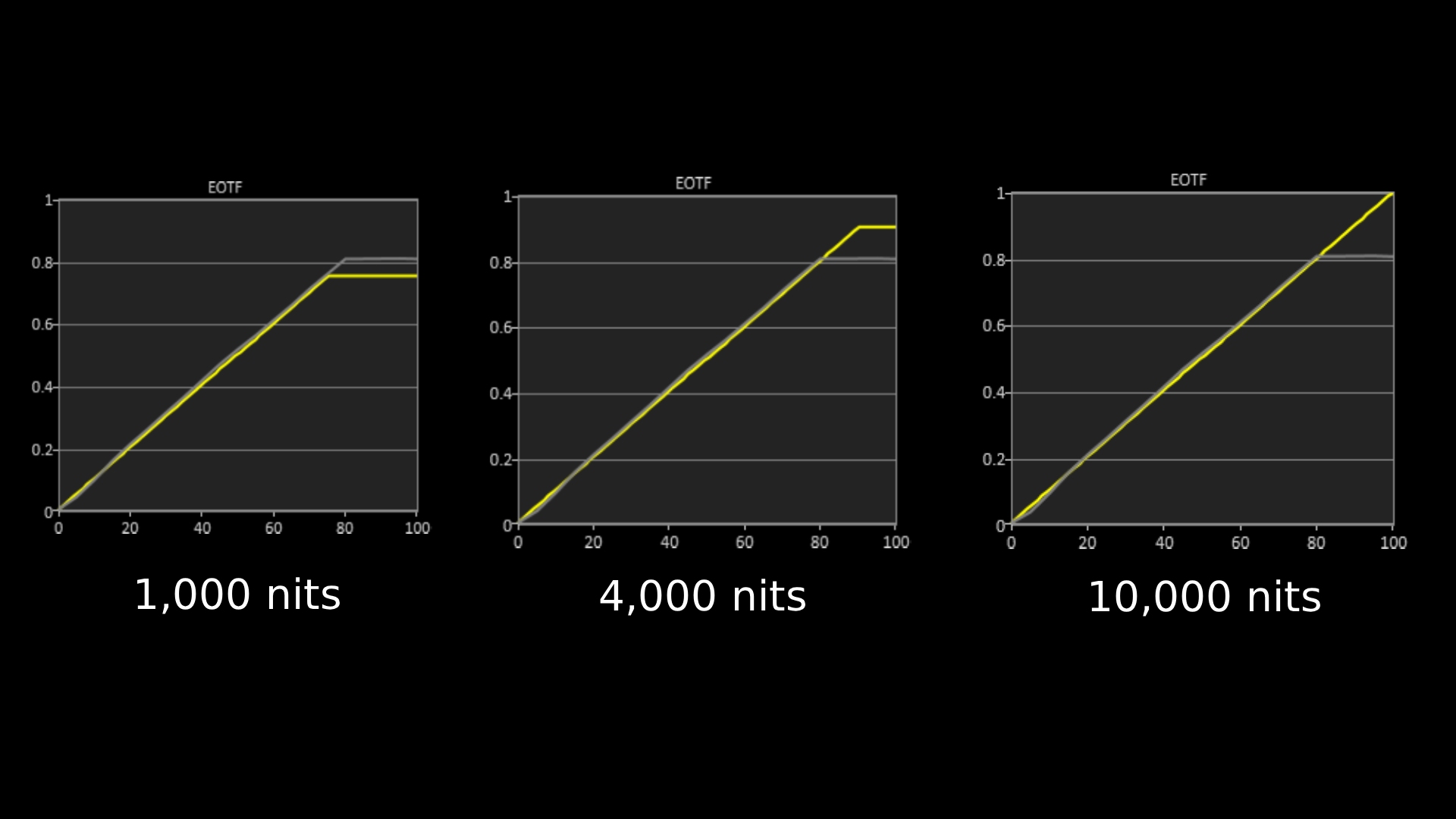
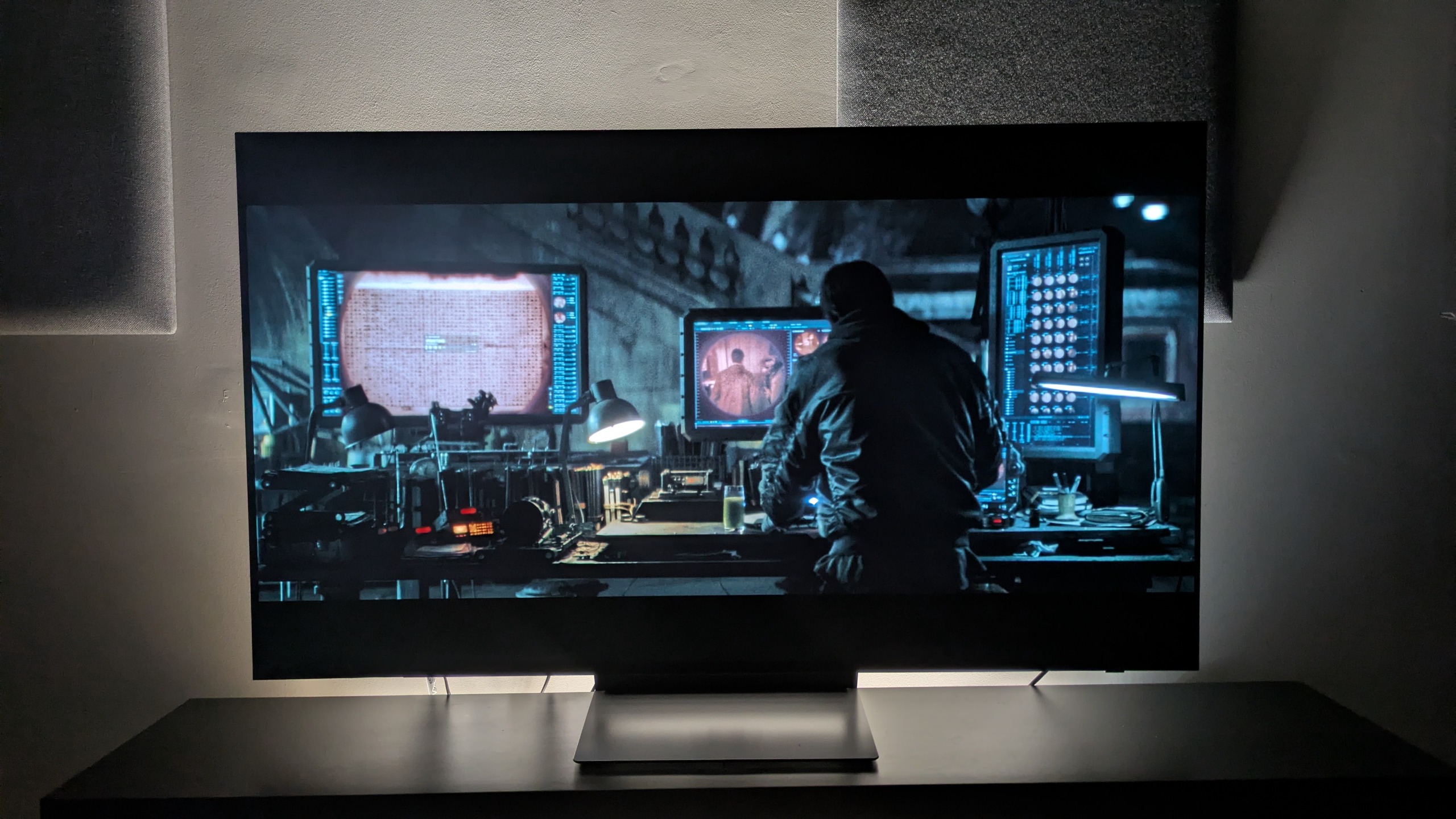
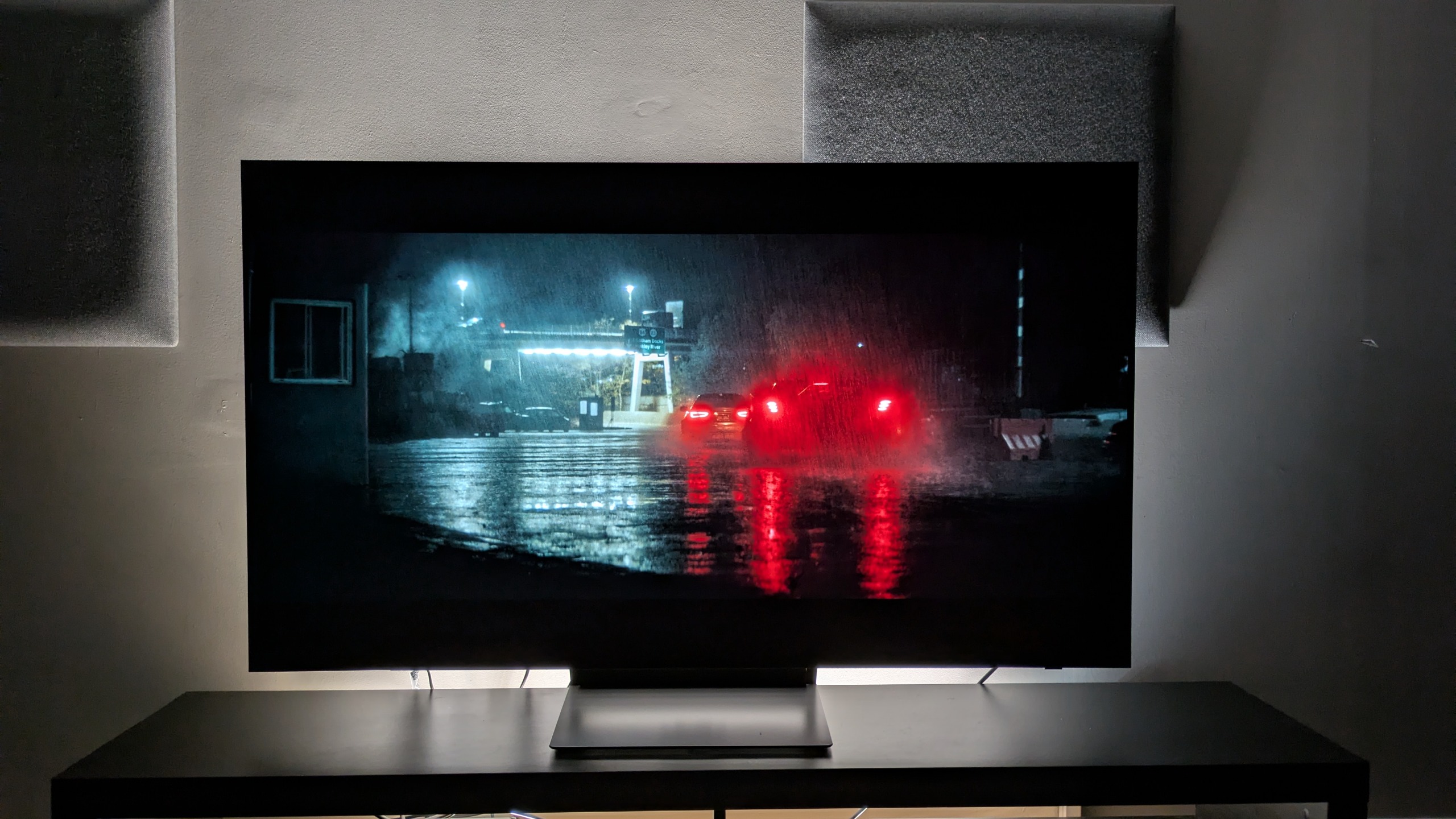
A notable hardware inclusion is Samsung’s OLED Glare Free screen technology. Traditional OLED panels can occasionally struggle with mirror-like reflections in well-lit living spaces. The S90H mitigates this optical challenge effectively, allowing viewers to discern intricate details in dark cinematic sequences—such as notoriously shadowy scenes from The Batman—without disruptive ambient glare.
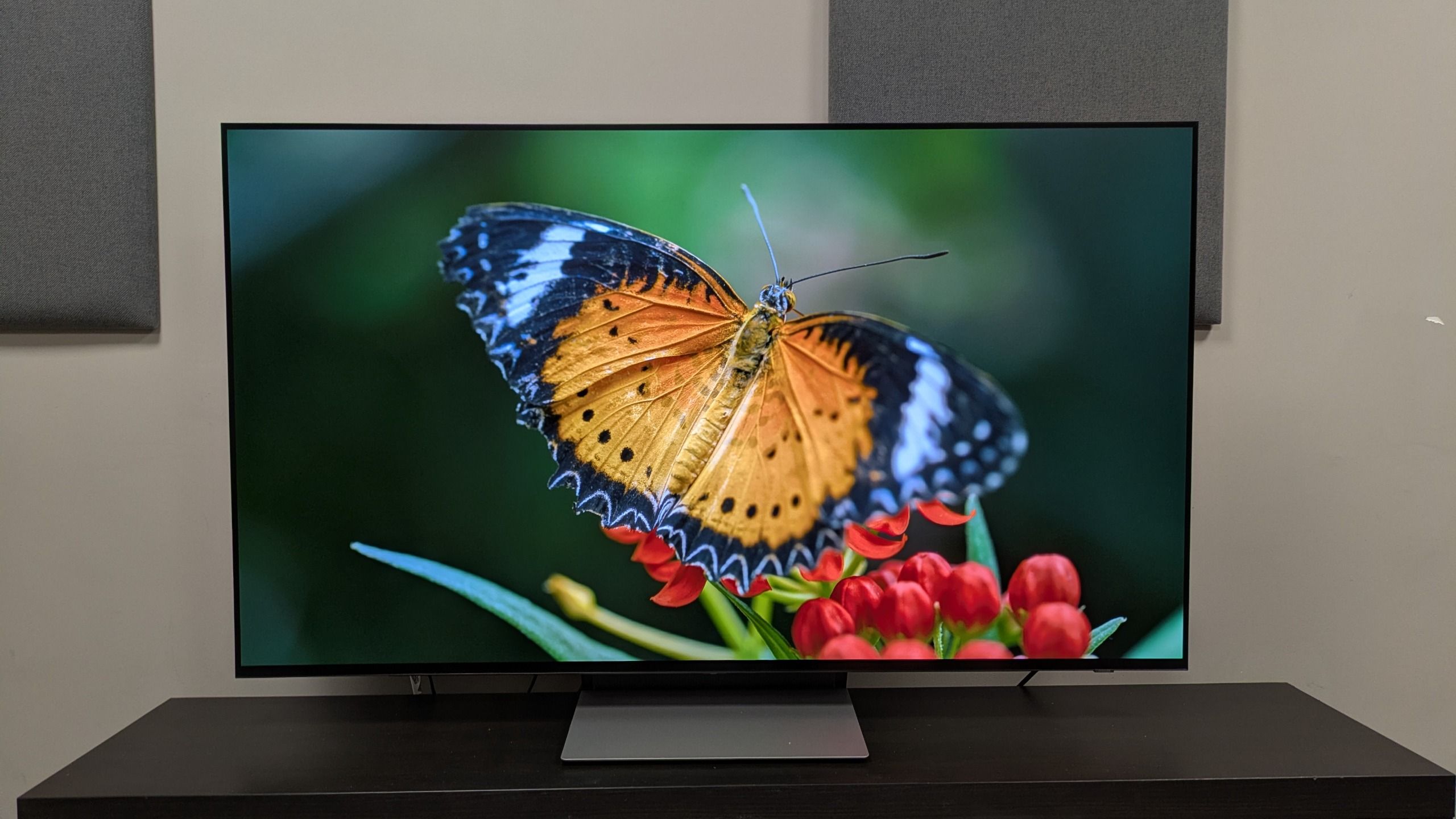
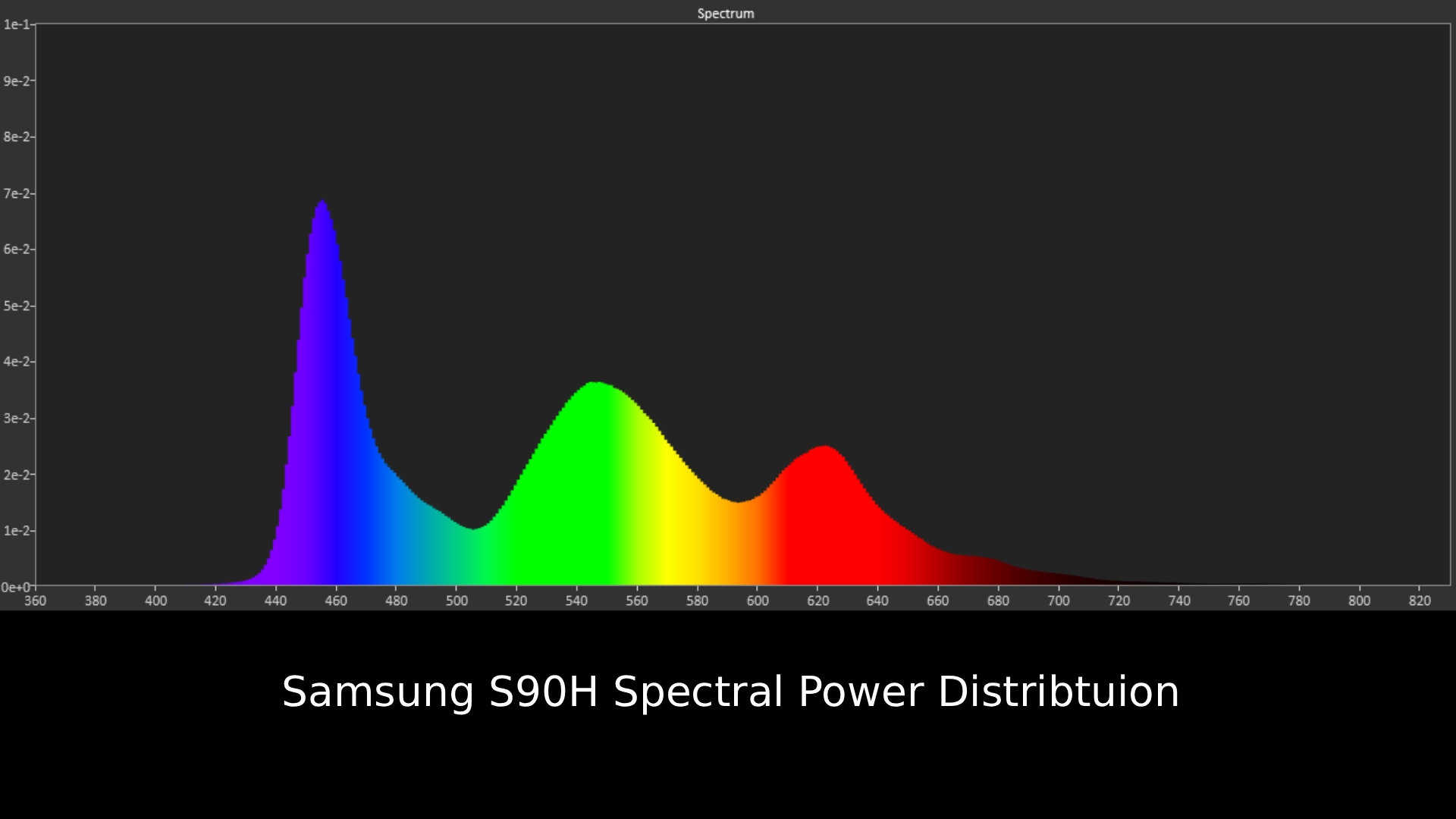
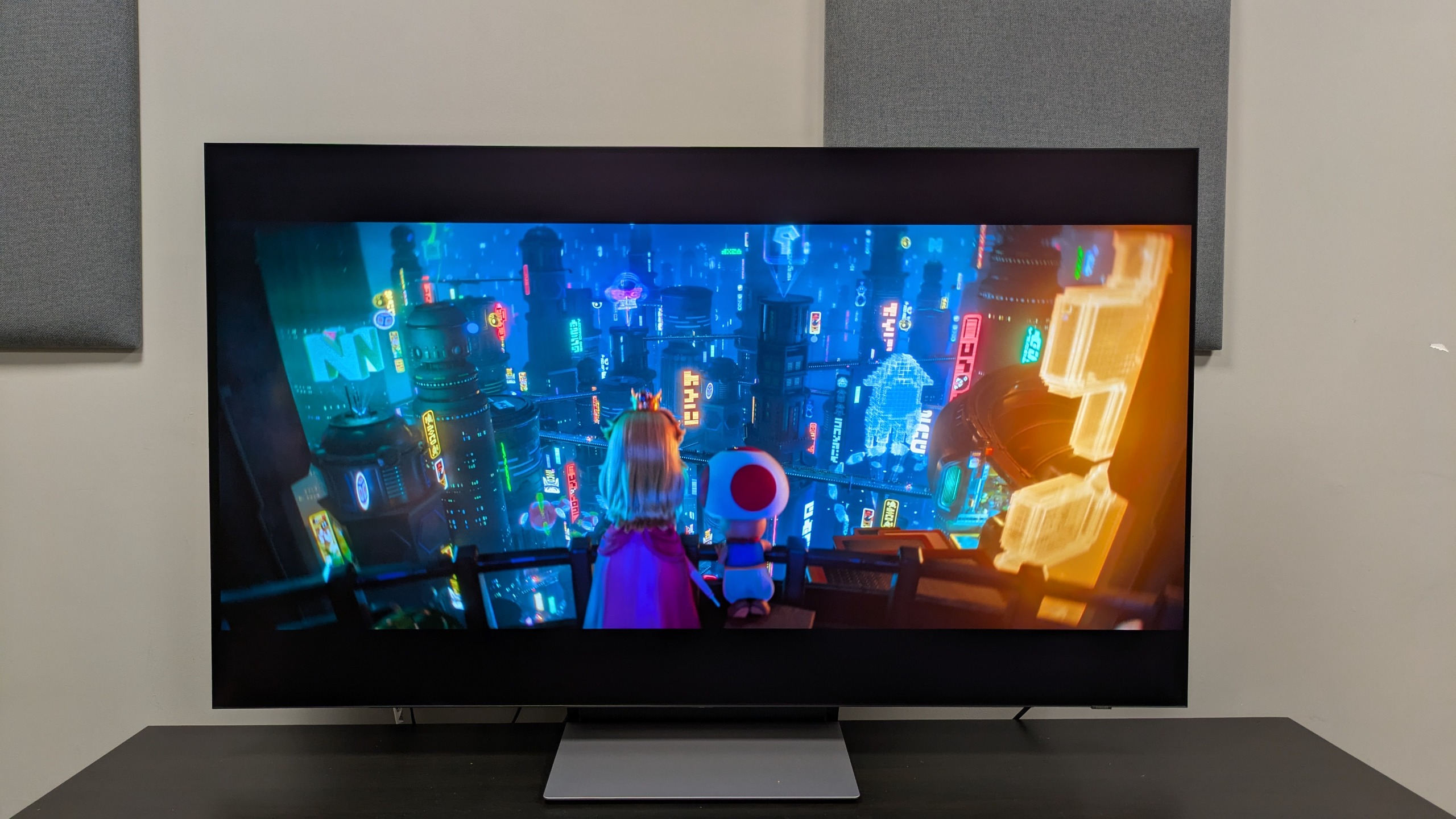
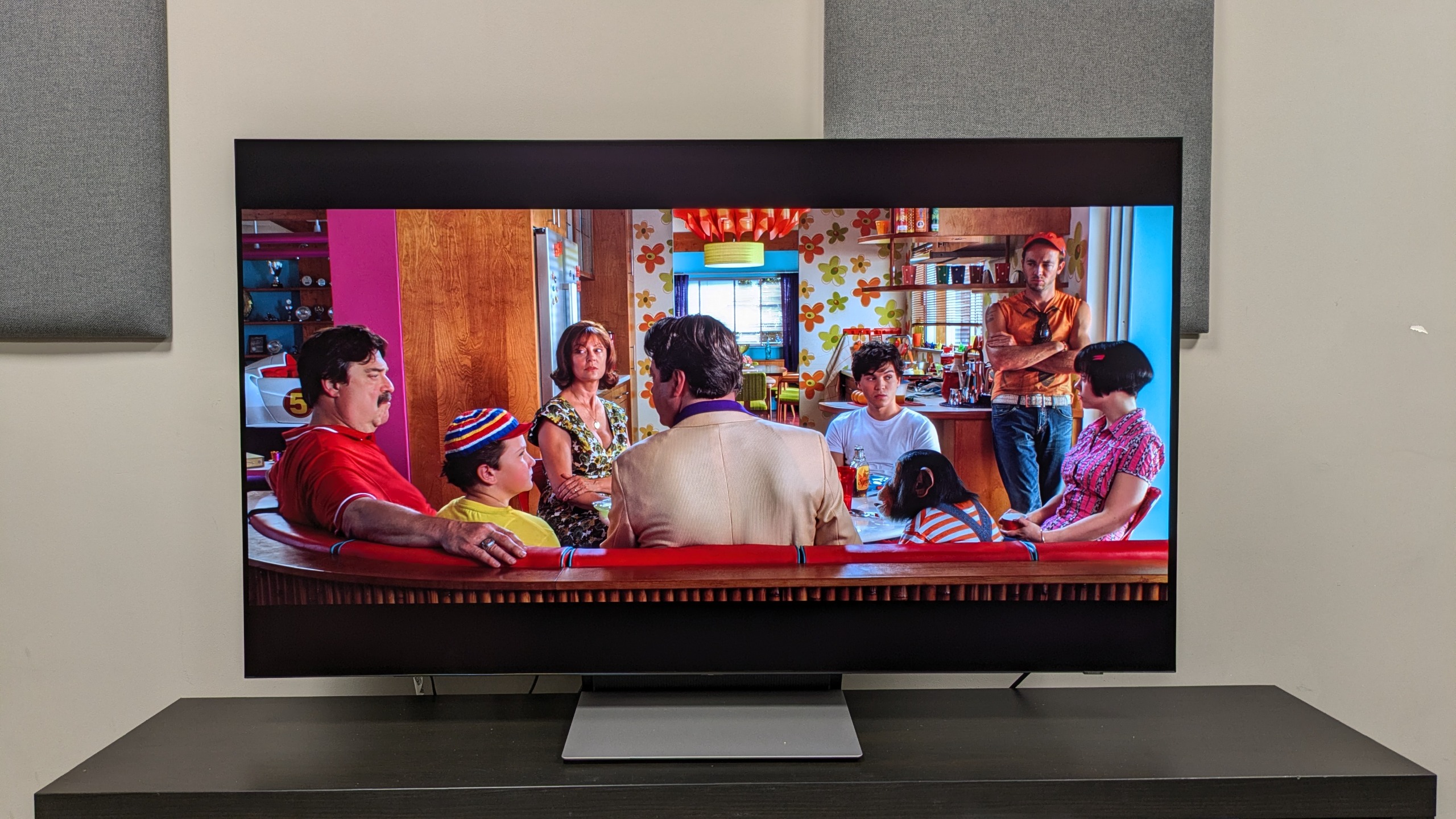
Color reproduction is another robust strength. The panel achieves 99.3% coverage of the UHDA-P3 color space and 76.5% of the wider BT.2020 color space. When viewing reference 4K Blu-ray discs, the television renders vibrant, saturated hues with remarkable precision. Palette-heavy films like Speed Racer showcase vivid pinks, yellows, and oranges, while animated features like The Super Mario Galaxy Movie benefit from striking, high-contrast character designs.
Despite its stellar contrast and deep, inky blacks—expertly demonstrated during cosmic sequences in Project Hail Mary—the S90H is not entirely immune to performance quirks. Out-of-the-box settings in Filmmaker Mode can occasionally introduce black crush, resulting in a loss of shadow detail in exceedingly dark environments. Fortunately, users can easily remedy this by manually increasing the Shadow Detail setting, restoring visibility to dimly lit backgrounds. Motion handling is similarly customizable; reducing default blur and judder settings prevents artificial soap-opera effects while eliminating motion artifacts during fast-paced sports broadcasts and high-speed vehicular chases.
Audio Capabilities and Built-in Sound
While visual fidelity often commands the spotlight, built-in acoustic performance remains a critical component of modern slim-profile displays. The Samsung S90H is equipped with a 2.1-channel, 40-watt speaker system featuring Object Tracking Sound Lite (OTS Lite) and Dolby Atmos support. DTS audio formats, however, are notably absent, maintaining a long-standing omission across Samsung’s product catalog.
The integrated audio system delivers commendable baseline performance. Engaging the default Amplify sound mode produces a surprisingly robust low-end response, accurately capturing the guttural rumble of cinematic engines and mapping positional effects to on-screen action. Dialogue remains largely clear, though chaotic cinematic mixes can occasionally muddy mid-tones and obscure spoken lines during high-intensity sequences.
Users seeking a more expansive soundstage can activate Adaptive Sound Pro within the advanced AI settings. This feature widens the acoustic projection beyond the physical boundaries of the chassis, increases overall volume, and sharpens transient details. While casual television viewing and daily broadcasts are adequately served by the internal speakers, audio enthusiasts and movie collectors will undoubtedly want to pair the S90H with a dedicated standalone soundbar to properly match its magnificent visual prowess.
Gaming Performance and Connectivity
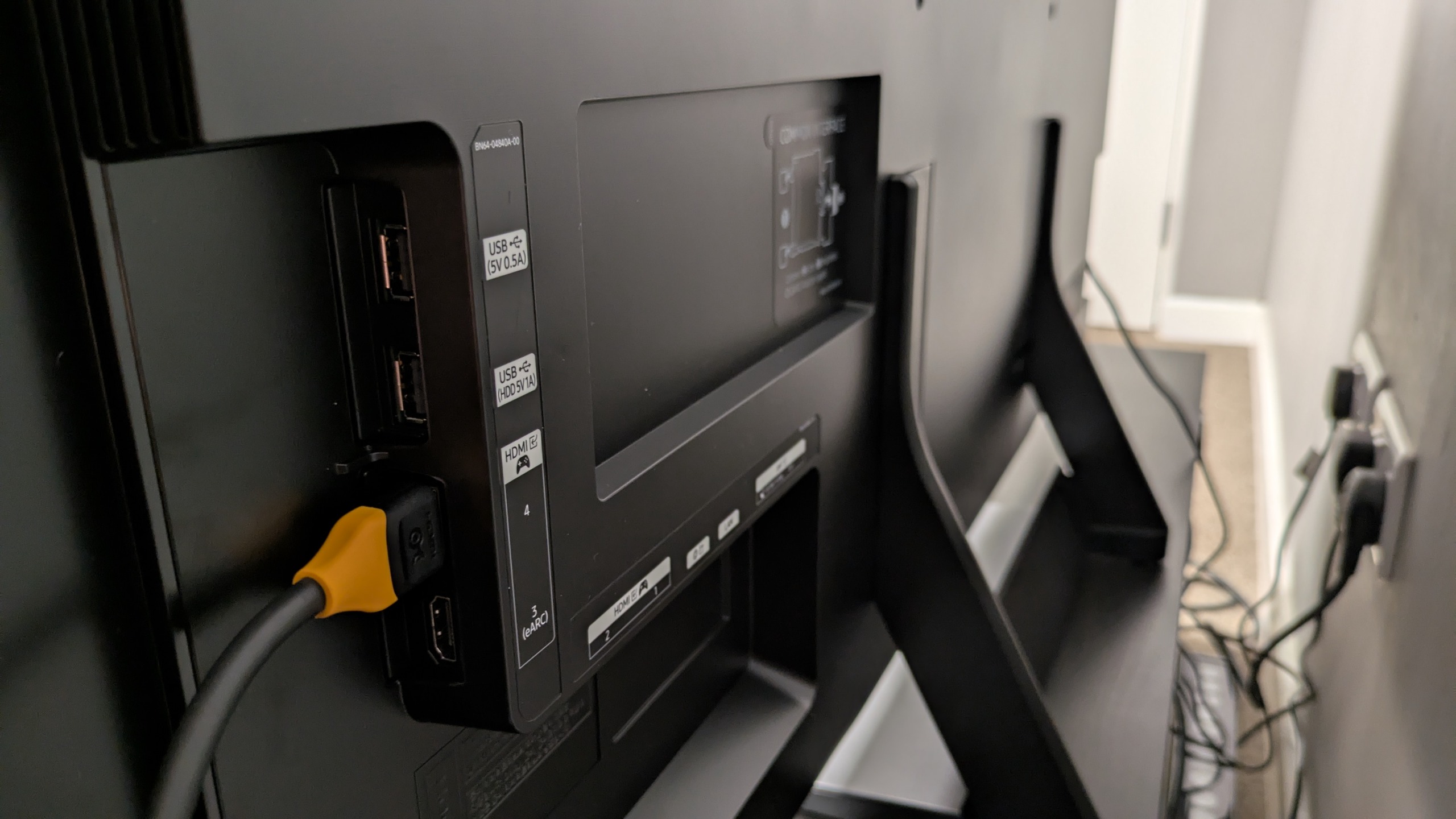
For modern console and PC gamers, the Samsung S90H stands out as an exceptionally capable display. Equipped with four fully fledged HDMI 2.1 ports, the television supports high-refresh-rate gaming up to 4K at 165Hz. Furthermore, comprehensive Variable Refresh Rate (VRR) capabilities—including AMD FreeSync and Nvidia G-Sync integration—ensure tear-free, responsive gameplay.
Input lag measurements are remarkably low, recording 9.2ms at 4K 60Hz and dropping to an ultra-fast 4.8ms at 1080p 120Hz. In practical application, fast-paced titles like Battlefield V run with buttery smoothness. Rapid camera movements, frantic firefights, and precise target tracking benefit immensely from the combination of low latency, rapid response times, and the inherently deep contrast of OLED technology. Additionally, Samsung’s centralized Game Hub provides instant access to cloud-native gaming applications such as Xbox and Nvidia GeForce Now, alongside direct streaming integrations.
Design, Smart TV Interface, and Usability
Physically, the S90H embraces the contemporary demand for ultra-slim aesthetics. The top portion of the display is extraordinarily thin, though a slightly thicker rear housing accommodates the internal power supply, speakers, and connection ports. The review model utilized a central pedestal stand; while entirely functional and visually clean, the plastic construction feels somewhat less premium than the solid metal stands favored by competitors.
Navigating the smart TV ecosystem relies on Samsung’s proprietary Tizen platform. Tizen offers a well-organized menu structure divided into distinct hubs, such as the primary Home hub for applications and recommendations, and the dedicated Game hub. App support is comprehensive, covering all major international and regional streaming services.
However, the user experience is not entirely frictionless. The Tizen home screen incorporates prominent banner advertisements that consume significant screen real estate, pushing core applications downward. Additionally, aggressive auto-play features on integrated services like Samsung TV Plus can occasionally prove intrusive when switching input sources. While Tizen is responsive and feature-rich, competing operating systems like LG’s webOS or Roku maintain a slight edge in intuitive simplicity.
The hardware remote supplied with the television is Samsung’s signature SolarCell controller. Compact and ergonomically streamlined, its standout attribute is integrated solar-charging capability alongside a standard USB-C port, effectively eliminating the need for disposable alkaline batteries.
Verdict and Market Implications
The Samsung S90H solidifies its position as a formidable mid-range OLED contender for the 2026 product cycle. By delivering exceptional peak brightness for its class, an effective anti-glare screen for bright-room environments, and a stellar array of next-generation gaming features, it successfully addresses the primary compromises historically associated with OLED technology.
While prospective buyers must contend with the lack of Dolby Vision support and the occasional necessity of manual picture calibration to eliminate black crush, the overall package is undeniably compelling. For consumers seeking a versatile, high-performing display that transitions effortlessly from sunlit daytime viewing to immersive nocturnal gaming and cinematic marathons, the Samsung S90H represents one of the most balanced and rewarding value propositions in the current television marketplace.