Maison Lineti and the Scientific Revolution Transforming the Future of Whisky

The vineyards of Bordeaux’s Right Bank, long celebrated for their Merlot-dominant blends and storied limestone soils, are traditionally synonymous with the history of viticulture. Roman legions and settlers first cultivated these plots in the first century CE, establishing a legacy of winemaking that has endured for two millennia. However, in the heart of this ancient terroir, a quiet revolution is taking place—one that trades the grape for grain. Maison Lineti, a boutique distillery located near the Dordogne, is challenging the established norms of spirit production by replacing centuries of tradition with the precision of oenological science.
While the Scottish Highlands and the Emerald Isle have long held the global mantle for whisky production, Maison Lineti is carving a new path. By applying rigorous wine-science methods to fermentation, distillation, and maturation, the company is effectively rewriting the chemistry of single malt. Their approach, which prioritizes the chemical profile of the wash over the traditional reliance on long-term barrel aging, has caught the attention of global experts, positioning the distillery as a focal point for the future of spirits.
The Genesis of a Scientific Approach
The foundation of Maison Lineti is rooted in the intersection of chemistry and craft. The company was founded in 2018 by Magali Picard, a chemical engineer with a doctorate in oenology from the University of Bordeaux, and her partner, Alex Cosculluela. They were joined by Xavier Payan, a specialist in wine and spirits management.

The distillery’s methodology was born during the global lockdowns of 2020. While much of the industry remained dormant, Picard utilized her background as a spirits development project manager at the renowned barrel-maker Demptos to investigate a more scientific, data-driven approach to distillation. Her research focused on shifting the burden of flavor development from the cask to the fermentation process itself.
Picard’s philosophy is grounded in the belief that a superior spirit is determined long before it enters a barrel. "Whisky makers are very focused on the style of cask," Picard explains. "It is not our vision. We work on the quality of the wash—the liquid issued from the fermentation, just like in the wine industry." By adopting techniques such as lees aging—a process typically reserved for Champagne or Chardonnay to enhance texture—and the introduction of lactic bacteria, Lineti has created a profile characterized by floral, mineral, and textured notes that defy traditional expectations of young whisky.
Engineering the Fermentation Process
The centerpiece of the Lineti facility is what the founders call their "egg box." This space houses seven massive, egg-shaped concrete fermenters that extend to the ceiling. Unlike the stainless-steel vats found in most distilleries, these concrete vessels allow for precise thermal regulation. Their shape, lacking internal ridges, facilitates a natural, constant movement of the liquid, ensuring uniform fermentation and consistent yeast performance.
The production timeline is equally unconventional. While typical Scotch production involves a fermentation cycle of two to three days, Maison Lineti extends this to seven days. Following this, the wash remains in contact with dead yeast cells—the lees—for an additional two weeks. This prolonged contact is designed to draw out deeper, more nuanced aromatic compounds.

Perhaps most provocative is the use of malolactic fermentation. In this process, lactic acid bacteria convert sharp, tart malic acids into creamy, softer lactic acids. While EU regulations strictly prohibit such manipulations in the production of Scotch, the flexibility of French spirit laws has allowed Lineti to experiment. The result is a mouthfeel that is remarkably soft, providing a level of depth that typically requires significantly longer maturation periods.
Data-Driven Distillation and Efficiency
Maison Lineti’s commitment to precision is evidenced by the staggering volume of data collected during every batch. Each production run generates approximately 10,000 lines of data. From the pump yield and water additives to the minute-by-minute temperature logs and the specific speed of the Charentais copper pot stills, every variable is recorded.
This hyper-analytical approach serves a dual purpose: it ensures total quality control and provides a roadmap for future innovation. By changing only one parameter at a time, the team can isolate the impact of specific variables on the final flavor profile.
This scientific rigor also addresses one of the industry’s most significant economic hurdles: the "angel’s share." In traditional whisky making, roughly 2 percent of the spirit evaporates annually through the porous walls of wooden casks. By optimizing the spirit to reach a state of peak drinkability in just three and a half years, Lineti significantly reduces the volume of lost product, saves on warehouse energy costs, and shortens the production cycle. "If you work on the drinkability to get something really tasty and balanced in three years, you save a lot of raw material, a lot of space in your warehouse, and a lot of energy," Cosculluela notes.

Challenges and the Path to Market
The road to commercialization has not been without adversity. In July 2024, the business faced a critical juncture when its primary financial backer, a wine producer, withdrew support, forcing the company into liquidation. The survival of the distillery was secured only through the intervention of a new, private French investor with a background in the luxury sector.
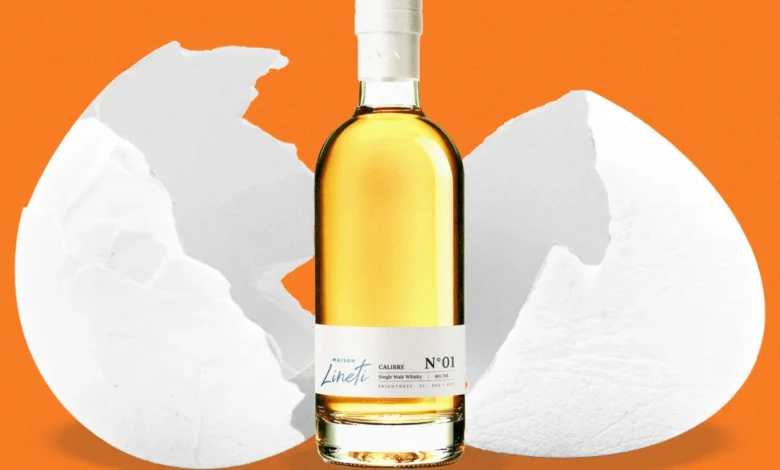
This financial stability allowed the brand to debut its products in the United Kingdom in early 2025. The current range features the "Calibre No1" core expression, alongside two limited editions dubbed "Complications"—a nod to the intricate mechanical movements of high-end Swiss watches. The nomenclature highlights the distillery’s positioning: it is not competing for the mass market, but rather targeting the sophisticated enthusiast who values engineering and process innovation.
Industry Reception and Global Implications
The unveiling of these techniques at the World Whisky Forum in June 2025 served as a catalyst for widespread industry discussion. Experts have been quick to recognize the potential shift in the global spirits landscape.
Becky Paskin, a prominent drinks writer and former editor of The Spirits Business, has lauded the distillery’s work as the most significant innovation in the sector in decades. "By leaning on their own background and oenology, they’ve created whisky that is completely unique," Paskin says. She suggests that the distillery has established a "DNA" for its brand, one that balances malty character with a signature floral undertone, and predicts that other producers will soon scramble to study and potentially adopt Lineti’s fermentation methodologies.

Dave Broom, an award-winning author on the subject of spirits, characterizes the work as "genuinely groundbreaking." He emphasizes that the distillery’s focus on the molecular interaction between wood, air, and spirit marks a departure from traditional "age-statement" marketing. "In terms of flavor production… that is innovation," Broom notes. "I think Maison Lineti is one of the most important distilleries in the world at the moment."
The Future of the "Wine-Whisky" Hybrid
As Maison Lineti prepares to scale its production and eyes a 2028 expansion into the United States market, the implications of their model extend beyond their own warehouse. They have demonstrated that the "terroir" of a spirit is not limited to the soil where the grain is grown, but can be synthesized through the sophisticated application of microbiology and data science.
For the broader industry, the Lineti experiment offers a glimpse into a future where the constraints of tradition are no longer a barrier to quality. While the traditionalists will continue to value the slow, steady oxidation of the cask, the success of Maison Lineti provides a compelling argument for a more modern, efficient, and science-led approach. By proving that a three-year-old spirit can achieve the complexity and balance of a decade-old single malt, the distillery has forced a re-evaluation of what defines "premium" in the global whisky market.
Ultimately, Maison Lineti is not merely making whisky; they are conducting a continuous experiment in the science of flavor. Whether this leads to a broader, industry-wide shift remains to be seen, but the distillery has firmly established that the future of spirits may well be found in the intersection of a Bordeaux laboratory and a copper still. As they continue to pull the levers of fermentation, the world of whisky watches closely, waiting to see what "Complication" they will engineer next.
Related posts: