2026 Zeekr 7GT Privilege Review: Redefining Electric Luxury and Performance Value

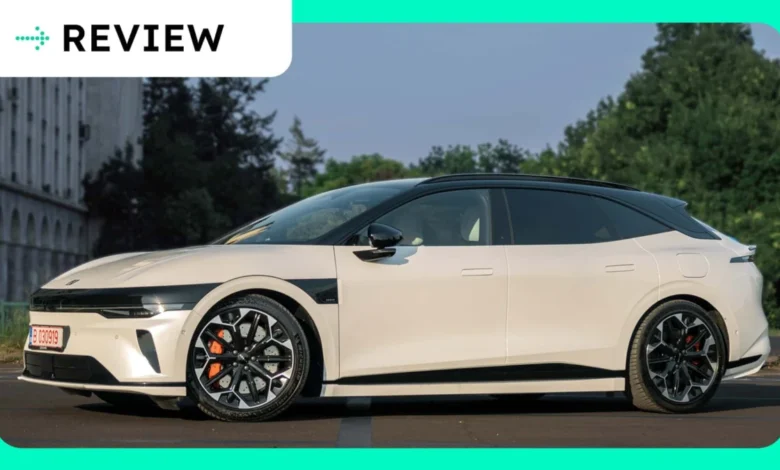
The global automotive landscape is undergoing a profound structural transformation, driven largely by aggressive competition from Chinese manufacturers entering legacy-dominated Western markets. Among the vanguard of this shift is Zeekr, the premium electric vehicle subsidiary of Geely Holding Group, which shares corporate lineage with Volvo, Polestar, and Lotus. The introduction of the 2026 Zeekr 7GT Privilege all-wheel-drive electric wagon represents a direct challenge to established European luxury marques. Priced significantly lower than its German competitors, the 7GT attempts to disrupt the traditional luxury hierarchy by offering opulent interior appointments, high-capacity battery architectures, and supercar-level performance. However, while the vehicle showcases exceptional engineering in cabin craftsmanship and charging speeds, it also exposes the growing pains typical of software development cycles and dynamic chassis calibration in nascent high-performance EV platforms.
Market Context and Strategic Positioning
For decades, European consumers have accepted compromises in high-end vehicles, often rationalizing higher price points through brand heritage, weight-saving material choices, or driver-focused minimalism. Premium German competitors such as the BMW i5 Touring, Audi A6 Avant e-tron, and Volkswagen ID.7 Tourer command six-figure sums when heavily optioned. In contrast, the Zeekr 7GT enters the European market with a base price of approximately €46,490, while the top-tier Privilege AWD variant tested reaches €61,890.
Measuring 189.6 inches (4,817 millimeters) in length with a 114.2-inch (2,900-millimeter) wheelbase, the 7GT occupies the same physical footprint as the BMW 3 Series Touring and the upcoming i3 Touring. Despite its compact-to-midsize wagon dimensions, Zeekr has engineered the interior to rival full-sized luxury limousines. The vehicle’s Swedish design influence is evident in its minimalist aesthetic, though its manufacturing and supply chain leverage China’s mature EV ecosystem to keep production costs competitive.
Interior Craftsmanship and Spatial Design
The interior experience of the 2026 Zeekr 7GT Privilege sets a new benchmark for material consistency in its price bracket. While legacy manufacturers often downgrade rear-passenger materials past the B-pillar, Zeekr maintains high-grade surfaces throughout the cabin. The upholstery features a seamless blend of genuine Nappa leather and high-grade synthetic materials, complemented by laser-cut patterns in the door trim that double as acoustic speaker grilles for the 23-speaker audio system.
Passenger accommodation is exceptionally generous for a vehicle of this size. Front occupants benefit from seats equipped with physical adjustment switches, extending thigh supports, ventilation, and massage functions. Rear passengers enjoy expansive legroom, allowing a six-foot-tall adult to comfortably tuck their feet beneath the front seats and recline the backrest. However, the under-floor battery pack elevates the cabin floor, causing passengers’ knees to sit slightly higher than ideal. Furthermore, unlike its stablemates—the Zeekr 001 and the 7X crossover—the 7GT lacks a rear-seat touchscreen for climate and media controls, requiring front occupants to manage rear seat heaters.
Cargo practicality is compromised slightly in favor of exterior styling. The 7GT offers 16.1 cubic feet (456 liters) of trunk space, which trails the BMW i5 Touring’s 20.1 cubic feet (570 liters). Rear-wheel-drive variants include a 2.3-cubic-foot (65-liter) frunk, while dual-motor models see that storage reduced to 1.1 cubic feet (32 liters).
Powertrain Performance and Driving Dynamics
Underneath its sleek, aerodynamic exterior, the top-tier Privilege AWD variant packs a formidable punch. The dual-motor setup pairs a 310-kW rear motor with a 165-kW front motor, generating a combined output of 475 kW (637 horsepower) and 524 pound-feet (710 Nm) of torque. This enables the 5,300-pound (2,405-kilogram) wagon to accelerate from 0 to 62 mph (100 km/h) in a blistering 3.3 seconds.
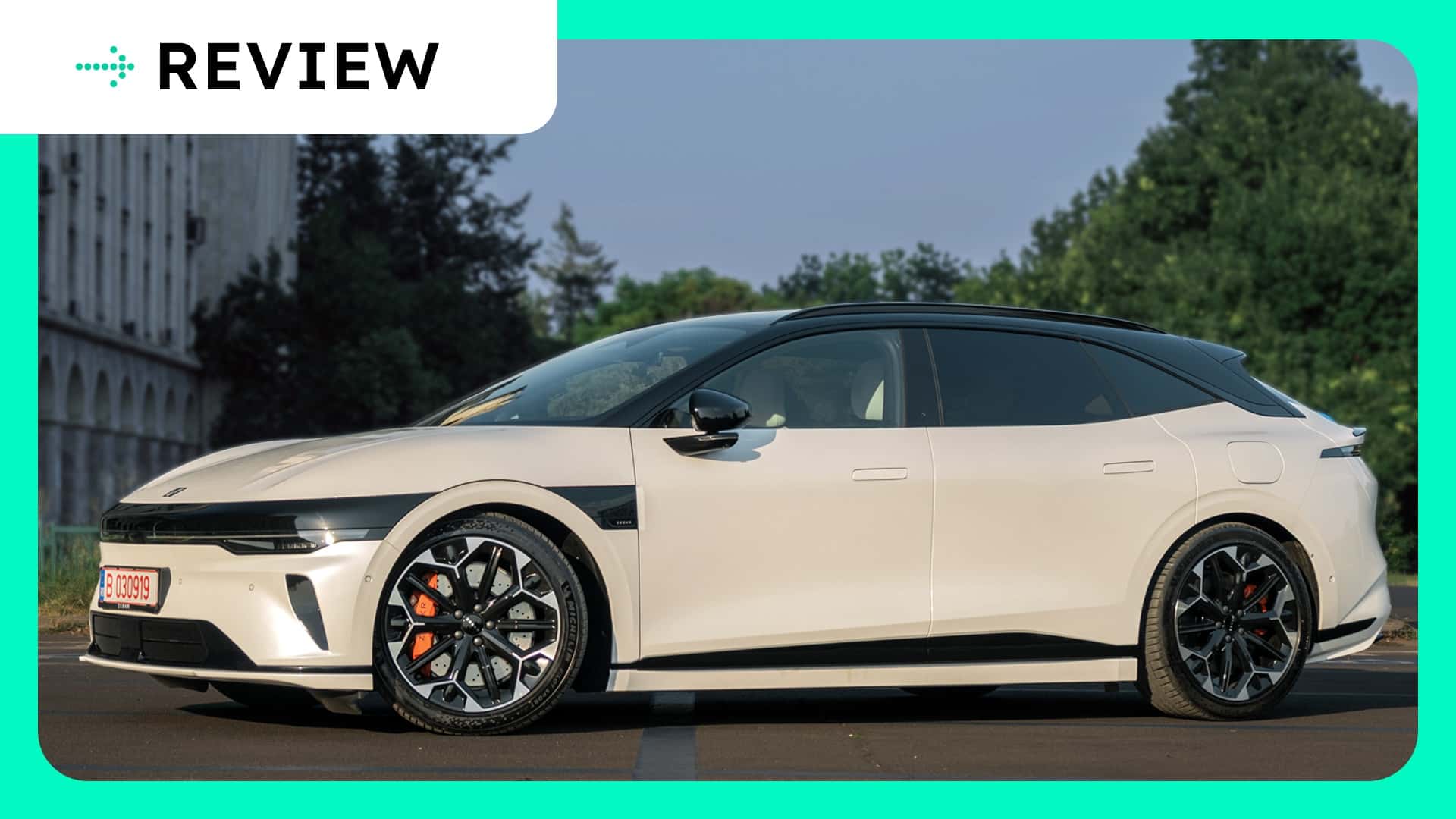
Despite utilizing a sophisticated double-wishbone front suspension setup—a design typically reserved for motorsport applications to maintain consistent tire contact patches—the vehicle exhibits dynamic quirks during aggressive acceleration. When launched at maximum power, particularly with softer suspension settings engaged, the front end tends to go light, resulting in a disconnected steering feel and a less-than-settled rear axle. The vehicle easily overwhelms its 255-section Michelin Pilot Sport EV tires, requiring active steering corrections from the driver.
Conversely, normal driving conditions reveal the benefits of the Privilege trim’s adaptive air suspension. In Comfort mode, the 7GT delivers a floating, limousine-like ride quality over 20-inch wheels, while Sport mode firms and lowers the chassis without sacrificing ride composure.
Battery Architecture and Ultra-Fast Charging Capabilities
The 7GT offers two distinct battery configurations. Standard models utilize a 75-kilowatt-hour lithium-iron-phosphate (LFP) pack, yielding up to 322 miles (519 km) of WLTP range. Long-range and dual-motor variants upgrade to a 100-kWh (97-kWh net) nickel-manganese-cobalt (NMC) battery. The rear-wheel-drive NMC model achieves a maximum WLTP range of 407 miles (655 km), while the dual-motor Privilege variant delivers 347 miles (558 km).
Charging performance is a standout attribute. LFP-equipped models support peak charging rates of up to 480 kW, enabling a 10% to 80% charge in approximately 11 minutes. The NMC-equipped variants support peak charging speeds of up to 420 kW. During real-world testing at a high-output Megawatt charging station, the 7GT successfully achieved its claimed 420-kW peak, completing a 10% to 80% charge in roughly 14 minutes and maintaining a session average exceeding 158 kW.
Software Integration and Driver Assistance Shortcomings
Despite its mechanical and interior excellence, the Zeekr 7GT reveals its status as a developing platform through its software and driver assistance systems. Key operational controls—including mirror adjustments, steering column positioning, and side-window operation—are heavily reliant on the central 15-inch OLED touchscreen or non-intuitive switch logic.
Furthermore, driver assistance features require software refinement. The adaptive cruise control system exhibits erratic behavior on highways, occasionally reducing speed unnecessarily when detecting passing traffic. Lane-centering assistance can also prove abrupt, dropping out unexpectedly before re-engaging with a sudden tug at the steering wheel. Additionally, regenerative braking settings offer a narrow band of adjustment between normal and strong modes, failing to deliver true one-pedal driving control. Industry analysts suggest these deficiencies are software-bound rather than hardware-bound, indicating they could be resolved via future over-the-air (OTA) updates.
Industry Implications and Market Outlook
The arrival of the 2026 Zeekr 7GT Privilege underscores a broader shift in the global automotive sector. Traditional luxury manufacturers can no longer rely solely on brand prestige to justify six-figure pricing structures when new entrants offer superior interior luxury, advanced charging infrastructure compatibility, and high-output performance at a fraction of the cost.
While the 7GT requires software calibration and dynamic refinement to match the chassis cohesion of established European benchmarks, it successfully democratizes high-end automotive features. As Geely and its subsidiary brands continue to scale their international presence, vehicles like the 7GT serve as a clear warning to legacy automakers: the definition of luxury is rapidly evolving, and consumer expectations are shifting toward value, innovation, and immediate gratification.