PieceMakers Makes Strong Debut on Taiwan Emerging Stock Board as Nanya-Backed DRAM Designer Targets AI Inference Memory Niche

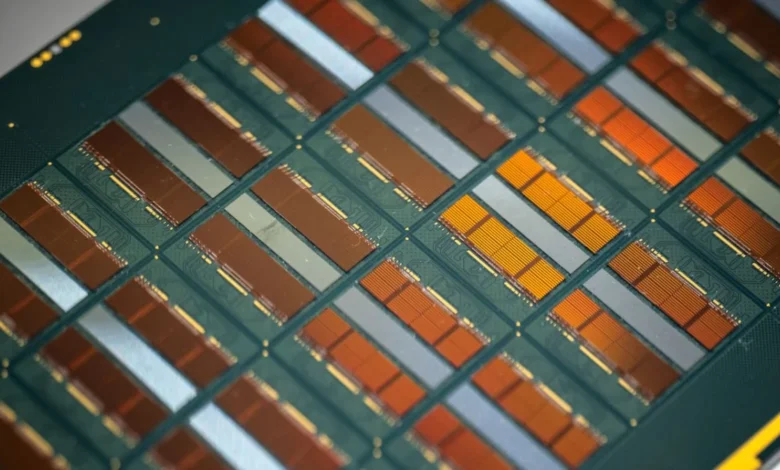
The semiconductor landscape witnessed a significant market entry as PieceMakers, a specialized DRAM designer backed by memory giant Nanya Technology, officially began trading on Taiwan’s Emerging Stock Board. Commencing with a reference price of NT$740 per share, the company’s market debut drew intense investor interest, reflecting soaring market enthusiasm for specialized artificial intelligence hardware solutions. Unlike many of its contemporaries focusing squarely on mainstream High Bandwidth Memory (HBM) architectures, PieceMakers is carving out a distinct strategic path by concentrating on the specialized demands of AI inference memory, positioning its technology as a vital bridge between high-speed processor caches and traditional memory modules.
With approximately 60.4 million shares outstanding, the company’s initial NT$740 reference price established an initial market valuation of roughly NT$44.7 billion, equivalent to approximately $1.4 billion USD. Taiwan’s Emerging Stock Board functions as a pre-listing market managed by the Taipei Exchange, serving as a vital stepping stone where equities are traded via designated market makers ahead of any formal, primary board initial public offering (IPO). During its first trading session, market demand pushed the equity well beyond its initial benchmark. After opening at NT$1,035, the stock surged to an intraday high of NT$1,205 before ultimately settling its premier session at NT$915, marking an impressive 23.6% gain over the baseline reference price and signaling robust institutional and retail confidence in the firm’s technological roadmap.
Strategic Vision: Targeting the AI Inference Memory Gap
The core thesis driving PieceMakers centers on a fundamental divergence within the artificial intelligence hardware ecosystem. According to company leadership, the memory requirements for AI model training differ substantially from those required for AI inference—the phase where trained models process live data to generate predictions or responses. While HBM has become the ubiquitous standard for heavy-duty AI training workloads due to its massive data throughput, the economics and technical constraints of inference demand alternative paradigms.
During briefings with financial media outlets, PieceMakers President Lee Hsiao-wen articulated the company’s core philosophy, explaining that memory architectures optimized for inference must solve different bottlenecks than those prioritized during training. To address this, PieceMakers is developing advanced DRAM solutions designed to be stacked directly on top of the processor using hybrid bonding technology. This architectural approach allows the memory to sit strategically between Nvidia’s SRAM-only Groq Large Language Processing Unit (LPU) architectures and conventional HBM setups. By bringing memory closer to the compute logic through vertical stacking and hybrid bonding, the company aims to drastically reduce latency and power consumption—two critical metrics for data centers handling high-volume inference queries.
Financial Structure and Revenue Timeline
Despite the high-flying valuation and intense market interest observed during its trading debut, PieceMakers remains in a transitional phase regarding its primary revenue streams. At present, the company’s profitability is primarily driven by design fees rather than direct volume shipments of silicon products.
Financial disclosures reveal that custom AI design services accounted for approximately 40% of PieceMakers’ total revenue during the first half of the year. This business model relies heavily on collaborative engineering engagements with major technology firms seeking custom silicon solutions tailored to specific workloads. Addressing the broader commercialization horizon, company Chairman Joseph Ting noted that its inaugural high-volume customer program is not expected to materially contribute to the firm’s financial statements until 2027 at the earliest. This forward-looking timeline underscores the long-term nature of semiconductor development, where initial design wins, prototyping, and validation phases precede mass production by several years.
Contextual Background: The Nanya Backing and Taiwan’s Semiconductor Ecosystem
The genesis of PieceMakers is deeply rooted in Taiwan’s robust semiconductor manufacturing and design ecosystem. Backed by Nanya Technology—one of Taiwan’s premier dynamic random-access memory manufacturers—PieceMakers benefits from deep technical synergies, institutional stability, and access to legacy memory expertise. Nanya’s strategic investment provides the startup with a solid foundation to navigate the capital-intensive world of advanced semiconductor packaging and design.
Taiwan continues to serve as the epicenter of global semiconductor fabrication and packaging innovation. The introduction of PieceMakers to the Emerging Stock Board highlights the growing diversification of local firms moving beyond traditional commodity memory production into high-value, application-specific integrated circuit (ASIC) design and advanced packaging paradigms. As global tech giants race to secure supply chains and custom silicon architectures to reduce reliance on off-the-shelf accelerators, specialized design houses like PieceMakers have become prime targets for both venture capital and public market investment.
Chronology of Events and Market Progression
The path leading to PieceMakers’ public market entry represents a methodical progression through early-stage development, strategic positioning, and regulatory preparation:
- Founding and R&D Phase: PieceMakers was established with a clear mandate to innovate beyond conventional DRAM architectures, focusing heavily on the intersection of memory stacking, hybrid bonding, and AI inference acceleration.
- Strategic Backing: The firm secured critical backing from Nanya Technology, aligning its development goals with established memory manufacturing expertise while maintaining an independent design focus.
- Service Revenue Expansion: Throughout successive financial reporting periods, the company established a steady revenue stream derived primarily from custom AI design fees, which constituted roughly 40% of its top-line figures in the first half of the year.
- Pre-Listing Preparation: Management pursued a listing on Taiwan’s Emerging Stock Board to enhance corporate transparency, broaden its capital-raising capabilities, and establish a public market valuation ahead of future primary exchange listings.
- Market Debut (September 16): PieceMakers officially commenced trading at a reference price of NT$740 per share, ultimately closing its first active trading session up 23.6% at NT$915 after peaking at NT$1,205.
Industry Implications and Future Outlook
The enthusiastic reception of PieceMakers’ stock offers broader insights into the current state of investor sentiment regarding artificial intelligence hardware. While the broader market has heavily rewarded primary GPU and HBM suppliers, investors are increasingly looking downstream for specialized players addressing efficiency bottlenecks in data centers.
Inference workloads are projected to scale exponentially as enterprise AI adoption transitions from pilot programs to continuous, real-time deployment. Consequently, innovations that reduce memory latency and improve energy efficiency without relying solely on expensive HBM configurations are commanding significant attention. By targeting the architectural space between SRAM and HBM, PieceMakers is addressing a vital engineering challenge.
However, challenges remain. The company must successfully transition from a design-fee-dependent engineering firm into a high-volume product supplier. As Chairman Joseph Ting noted, volume-based financial contributions are slated for 2027, meaning that market valuation in the interim will rely heavily on the successful execution of its design pipelines, technological milestones in hybrid bonding, and the broader macroeconomic climate governing technology investments.
Ultimately, PieceMakers’ debut on Taiwan’s Emerging Stock Board underscores the relentless appetite for specialized semiconductor innovation. As the artificial intelligence sector matures and demands greater specialization across training and inference, companies pioneering alternative memory integration strategies will play a pivotal role in shaping the next generation of computing infrastructure.