Tesla is scheduled to release its financial results for the second quarter of 2026 this evening, following the close of market trading. This earnings report arrives at a critical juncture for the electric vehicle manufacturer and artificial intelligence powerhouse, as investors seek clarity on the company’s transition from a pure-play automotive firm to a robotics and autonomous transport leader. As the market anticipates the release of the Shareholder Deck at 4:00 p.m. ET and the subsequent conference call at 5:30 p.m. ET, the focus has shifted beyond mere delivery numbers toward the long-term viability of the Robotaxi program and the integration of the Optimus humanoid robot into Tesla’s industrial ecosystem.
Financial Forecast and Historical Context
Wall Street analysts have established a consensus expectation for Tesla’s financial performance in Q2 2026. The consensus Earnings Per Share (EPS) is pegged at $0.53, while total revenue is projected to reach approximately $26.4 billion. These figures represent a significant year-over-year expansion compared to the second quarter of 2025, during which Tesla reported an EPS of $0.39 on revenue of $22.19 billion.

The trajectory suggests a recovery in margins and a stabilization of the company’s core automotive business. In the preceding quarter (Q1 2026), Tesla reported an EPS of $0.41 and revenue of $22.387 billion. While that performance exceeded analyst expectations, the market responded with a 3% decline in share price the following day, illustrating the high bar investors have set for Tesla’s forward-looking guidance. The current quarter’s expectations reflect a 35% increase in EPS compared to the same period last year, a metric that will be closely scrutinized to determine if Tesla has successfully navigated the pricing pressures and global supply chain shifts that defined the previous 18 months.
Strategic Shift: Robotaxis and Autonomous Infrastructure
A central theme of this evening’s earnings call will likely be the status of Tesla’s autonomous driving initiatives. According to data from the Say Technologies platform, which Tesla utilizes to aggregate investor questions, the most pressing concern for retail shareholders involves the perceived delays in Robotaxi deployment. Investors have noted that Tesla has adjusted its short-term guidance on Robotaxis over three consecutive earnings reports, moving from a target of 50% geographic coverage in the United States by the end of 2025 to a more recent target of seven new cities in the first half of 2026.
Questions from the retail side specifically address what factors are hindering the accomplishment of these goals and how the production ramp for the "Cybercab"—Tesla’s dedicated autonomous vehicle—aligns with current operational constraints. The company’s ability to transition from Level 2+ supervised Full Self-Driving (FSD) to a fully autonomous, geofenced, or un-geofenced Robotaxi network remains the primary driver of Tesla’s premium valuation.

The Optimus Gen 3 and Industrial Robotics
Beyond the automotive sector, the Optimus humanoid robot has moved to the forefront of Tesla’s technological roadmap. Institutional and retail investors alike are demanding updates on the Optimus Gen 3 production ramp. Key areas of interest include the initial deployment of these units within Tesla’s own Gigafactories and the projected timeline for external sales.
Analysts are looking for specific volume targets for 2027 and a breakdown of the tasks the Optimus units will be capable of performing by that time. The development of Optimus is increasingly viewed as a solution to manufacturing labor shortages and a potential multi-trillion-dollar revenue stream. However, institutional investors have raised concerns regarding data availability. While Tesla’s automotive fleet provides billions of real-world driving miles to train its FSD neural networks, a similar data advantage does not yet exist for humanoid robotics. Management is expected to address how the company plans to bridge this data gap to maintain its lead in the robotics race.
The SpaceX Synergy: Terafab and Data Integration
In a development that blurs the lines between Elon Musk’s various ventures, institutional investors are seeking clarity on the "Terafab" project. Previous communications suggested that Tesla would lead the Research and Development (R&D) for these advanced manufacturing facilities, while SpaceX would oversee production. This evening’s call is expected to provide an update on this division of responsibilities and the capital contributions expected from each entity.
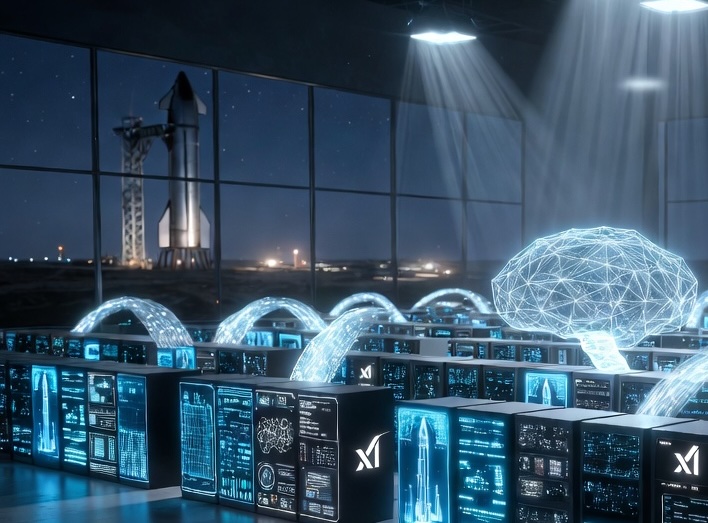
This synergy extends to the realm of artificial intelligence. It was recently revealed that SpaceX will feed its internal engineering data into the training run for the next iteration of Grok, the AI model now integrated into the broader Musk ecosystem following the recent merger and SpaceX’s Nasdaq debut. Elon Musk confirmed that SpaceX’s "massive corpus of world-class engineering data" will be added during the supplemental training of the "2T run"—a reference to a model with roughly two trillion parameters.
While material restricted under the International Traffic in Arms Regulations (ITAR)—such as sensitive propulsion details for Merlin and Raptor engines—will be excluded, the inclusion of manufacturing knowledge and materials science is expected to dramatically improve Grok’s engineering capabilities. This move follows a pattern of cross-pollination where Tesla provides real-world driving data, X provides conversational data, and SpaceX contributes aerospace and hardware design insights.
SpaceX’s Public Market Volatility and Short Seller Warnings
The earnings report for Tesla comes amid a period of significant volatility for SpaceX, which recently went public under the ticker $SPCX in what was described as the largest Initial Public Offering (IPO) in history. After reaching a peak market capitalization of over $2.6 trillion—briefly surpassing tech giants like Amazon and Microsoft—the stock experienced a 30% correction.

This downturn allowed short sellers to realize approximately $8.7 billion in gains, prompting a characteristically stern warning from Elon Musk. On July 17, 2026, Musk stated on X (formerly Twitter) that firms maintaining significant short positions in SpaceX face a "very low" survival probability over the long term. This warning echoes previous statements Musk made regarding Tesla short sellers, whom he famously taunted before significant rallies in 2018 and 2024.
The bullish thesis for SpaceX, and by extension the interconnected Tesla ecosystem, rests on the cost reductions enabled by the Starship launch system. Analysts argue that Starship could unlock a $100 trillion space economy, encompassing orbital data centers, asteroid mining, and Mars terraforming. In this framework, SpaceX acts as the foundational infrastructure provider—a role comparable to Amazon Web Services (AWS) in the cloud computing era.
Broader Impact and Market Implications
The outcome of tonight’s earnings call will have implications far beyond Tesla’s stock price. It will serve as a barometer for the broader "Musk Economy," testing investor appetite for high-capital-expenditure projects with long-dated returns.
If Tesla can demonstrate that its revenue growth is being driven by higher-margin software and robotics rather than just vehicle volume, it may silence critics who argue the company is overvalued compared to traditional automakers. Conversely, if the company continues to miss short-term guidance on autonomous milestones, it may face increased pressure from institutional shareholders to refocus on its core EV market share.
The timeline for Tesla and its sister companies is increasingly focused on 2027 as a pivotal year for "volume production" of both the Cybercab and Optimus. As the Shareholder Deck is released at 4:00 p.m. ET, the market will be looking for concrete evidence that the engineering data from SpaceX and the software breakthroughs from the Cursor acquisition are translating into tangible progress for Tesla’s autonomous future.
Chronology of Key Events Leading to Q2 2026 Earnings
- June 2026: SpaceX completes the largest IPO in history, debuting on the Nasdaq as $SPCX.
- Late June 2026: SpaceX closes a $60 billion all-stock acquisition of the coding startup Cursor to bolster xAI and Grok’s capabilities.
- July 8, 2026: Grok 4.5 is launched, utilizing training data from the Cursor acquisition.
- July 17, 2026: Elon Musk issues a survival warning to SpaceX short sellers following a 30% dip in $SPCX stock.
- July 21, 2026: Musk announces that SpaceX engineering data will be used to train the upcoming 2-trillion-parameter Grok model.
- July 22, 2026 (Today): Tesla reports Q2 2026 earnings, with expectations of $26.4 billion in revenue.
As the evening progresses, the financial community will be parsing every word of the earnings call to determine if the "exponential technological leaps" Musk frequently references are nearing commercial reality or if they remain a distant horizon for the world’s most watched company.