Pentagon Seeks $30.3 Million for AI-Powered Polygraph Next Initiative Amid High-Stakes Leak Probes

The United States Department of Defense is seeking a congressional appropriation of $30.3 million over the next five years to develop and field an advanced generation of lie detection technology. According to budget justification documents released by the Pentagon, the initiative—formally designated as Polygraph+ or Polygraph Next—aims to modernize federal credibility assessment protocols through the integration of artificial intelligence, machine learning, and non-contact sensing modalities. Spearheaded by the Defense Counterintelligence and Security Agency (DCSA), the project is slated to focus heavily on automated scoring algorithms and "standoff sensing," a technique designed to capture physiological metrics without physical attachments to the subject.
This financial and technological push arrives at a time of acute internal sensitivity within the defense establishment. Under the direction of Defense Secretary Pete Hegseth, the Pentagon has increasingly relied on polygraph examinations as an aggressive investigative instrument to trace the sources of unauthorized disclosures to the press. In September, public reporting highlighted that approximately 50 high-ranking officers on the Joint Staff were subjected to polygraph testing following media reports concerning the depletion of critical United States weapons stockpiles amid ongoing military engagements related to Iran. While the DCSA maintains that the forthcoming Polygraph+ tools will be systematically deployed for prospective employee vetting and insider threat identification, critics, civil liberties advocates, and legal scholars argue that the initiative represents a high-tech continuation of flawed, pseudoscientific practices designed more for intimidation than truth-seeking.
A Century of Questionable Science
To understand the scope and controversy surrounding the DCSA’s new venture, it is necessary to examine the historical trajectory of the polygraph itself. Invented in the 1920s, the traditional lie detector has experienced virtually no foundational evolution in its core mechanics over the past century. Examiners operate on the premise that deception triggers autonomic nervous system arousal, measuring physiological fluctuations in blood pressure, pulse, respiration, and galvanic skin response.
During a standard examination, subjects are asked a series of control or baseline questions—such as whether the sky is blue—alongside target questions directly related to the investigation, such as inquiries into past criminal behavior or security violations. Examiners then evaluate whether physiological responses to target questions significantly diverge from baseline reactions.
Despite the federal government administering tens of thousands of these tests annually for security clearances and employment screening, the scientific validity of the polygraph has faced rigorous and sustained skepticism for decades. In 1983, the Office of Technology Assessment (OTA) conducted a landmark review for Congress, concluding that there was insufficient scientific evidence to establish the validity of polygraph testing for personnel security screening. Two decades later, a comprehensive 2003 report by the U.S. National Research Council (NRC) reiterated these findings, determining that the empirical evidence supporting the efficacy of the polygraph was "weak at best."
Legal systems have similarly treated the polygraph with extreme caution. Results from conventional lie detector tests are rarely admissible in federal or state courts due to their unreliability. Research consistently indicates that untrained human observers can detect deception approximately 54% of the time—barely above random chance. While the American Polygraph Association (APA) asserts that polygraph accuracy ranges between 80% and 94%, the NRC report cautioned that deploying a screening tool with even a modest error rate across a massive workforce carries profound systemic consequences. With the Department of Defense employing approximately 2.8 million personnel, a system with a single-digit error rate could generate thousands of false positives, erroneously casting suspicion on loyal service members and civilian employees.
Furthermore, traditional polygraphs are hindered by subjective interpretation. Different examiners reviewing the same chart data frequently arrive at divergent conclusions, and studies indicate that individuals from certain minority and demographic backgrounds may experience higher rates of false-positive readings due to cultural or physiological variations in baseline stress responses. Additionally, interviewees can employ physical or mental countermeasures—such as altering breathing patterns or utilizing hidden stimuli like a tack inside a shoe—to artificially inflate their physiological responses during baseline questioning, thereby invalidating the test results.
Chronology of Modernization Efforts and Prototyping
The Pentagon’s pursuit of next-generation deception detection is not an isolated occurrence but rather the latest chapter in a long-standing government quest for a technological silver bullet. The timeline of federal experimentation with automated and non-contact lie detection reveals a persistent pattern of investment, prototyping, and eventual abandonment:
- 1983: The Office of Technology Assessment publishes a critical evaluation casting doubt on the scientific validity of polygraph screening for federal employees.
- 2003: The U.S. National Research Council releases a comprehensive study declaring the scientific foundation of the polygraph to be weak at best.
- 2000s Era: International and domestic research projects, such as the UK’s Silent Talker system, the European Union’s iBorderCtrl border screening pilot, and the U.S. Department of Homeland Security’s AVATAR project, experiment with multimodal deception detection, incorporating thermal imaging, eye tracking, and voice analysis. All eventually fade from active deployment due to reliability issues.
- 2023: The Pentagon’s Defense Innovation Unit (DIU) launches an open solicitation process to identify commercial technologies capable of automated deception detection.
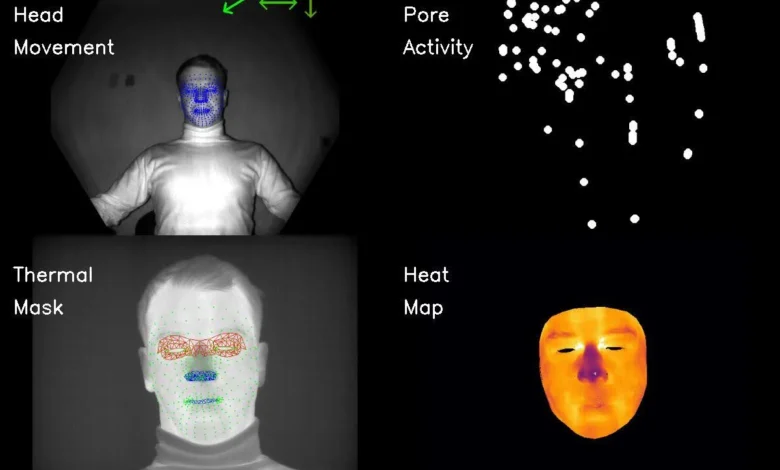
- Late 2023: The DIU selects Presage Technologies and Altec Research to build functional prototypes. Presage focuses on measuring heart and breathing rates via standard cameras, while Altec develops non-contact sensors tracking head movement, facial skin temperature, and micro-pore activity.
- September 2026: Public reports indicate that approximately 50 Joint Staff officers undergo polygraph examinations amid investigations into defense leaks regarding U.S. weapon stockpiles.
- FY 2027 Budget Request: The Department of Defense formally submits a $30.3 million, five-year funding request for the Polygraph+ program under the DCSA.
The Push for AI and Standoff Sensing
The newly proposed Polygraph+ program aims to leap past these historical limitations by enlisting artificial intelligence and machine learning to analyze complex physiological datasets. According to budget documentation, the DCSA intends to incorporate "standoff sensing," a methodology that eliminates the need to strap sensors, blood pressure cuffs, or galvanic plates directly to a subject’s body.

While the DCSA has not publicly disclosed the exact commercial partners or proprietary technologies slated for Polygraph+ integration, recent actions by the Defense Innovation Unit (DIU) provide significant insight into the Pentagon’s technological pipeline. In 2023, the DIU initiated a targeted solicitation seeking advanced commercial prototypes for deception detection. Following the review process, the DIU awarded prototyping contracts to two distinct firms: Presage Technologies and Altec Research.
Presage Technologies asserted the capability to extract vital physiological markers—specifically heart rate and respiration—utilizing standard, off-the-shelf optical cameras. Meanwhile, Altec Research, traditionally a medical sensor manufacturer, developed a non-contact sensing suite designed to monitor subtle physiological phenomena, including involuntary head movements, localized facial skin temperature variations, and microscopic pore activity. Technical disclosures and screenshots released by the DIU demonstrated a system engineered to analyze micro-expressions and autonomic responses without physical contact. Representatives for Presage Technologies, Altec Research, and the DIU declined to comment on ongoing integration efforts.
Theoretical Benefits Versus Empirical Realities
Proponents of integrating artificial intelligence into credibility assessment argue that machine learning models possess the analytical capacity to discern subtle, multi-variable patterns across massive datasets that human examiners are fundamentally incapable of recognizing.
Dr. Sophie van der Zee, an associate professor specializing in deception research at Erasmus University in Rotterdam, notes that deception is driven by three distinct psychological and physiological underpinnings: autonomic stress, cognitive load, and the conscious behavioral control exerted by an individual attempting to conceal a falsehood. Traditional polygraphs measure only physiological stress. In theory, a multimodal artificial intelligence system capable of simultaneously tracking optical, thermal, acoustic, and behavioral indicators could synthesize these disparate data streams into a comprehensive deception score, making the assessment significantly more difficult to manipulate.
However, academic and legal experts caution that applying advanced artificial intelligence to a fundamentally flawed premise does not resolve the underlying scientific crisis. Kyri Kotsoglou, a legal scholar at Northumbria University in the UK who has extensively studied forensic science and polygraph usage in judicial systems, describes the modernization effort as "a misguided effort to reduce the complex to something that is tangible."
Kotsoglou and other legal scholars emphasize a core limitation inherent to machine learning models applied to lie detection: the absence of a reliable "ground truth." For an AI algorithm to be successfully trained to identify deception, it must be fed verified datasets where it is objectively known whether the subject is lying. Because no such definitive ground truth exists for internal cognitive states during security screenings or investigative interrogations, machine learning models run the risk of simply automating and amplifying human biases.
"Even if you have all the records in the world from polygraph tests, you don’t know whether those polygraph tests are right or not," observes Marion Oswald, a law professor who has collaborated with Kotsoglou on research regarding automated lie detection. Oswald argues that the persistent drive toward high-tech surveillance tools is less about empirical accuracy and more about political and organizational control.
Broader Implications and Institutional Culture
The timing of the Polygraph+ budget request underscores a shifting institutional culture within the defense apparatus. Observers note that the escalation in polygraph testing under Defense Secretary Pete Hegseth reflects an environment heavily preoccupied with internal security, institutional loyalty, and the containment of unauthorized information leaks.
Critics contend that regardless of whether the polygraph takes a traditional analog form or incorporates advanced AI-driven standoff sensors, its primary utility within government agencies has always been psychological rather than evidentiary. According to van der Zee, the most profound effect of a lie detector is deterrence and the extraction of pre-test admissions, wherein anxious subjects confess to infractions before the machine is even activated. Yet, she emphasizes, this psychological leverage depends entirely on the pervasive belief among subjects that the technology is infallible.
As Congress reviews the DCSA’s $30.3 million budget request for fiscal years spanning through the late 2020s, policymakers face a critical choice between funding experimental, potentially discriminatory surveillance technologies and addressing the root causes of internal security vulnerabilities through conventional investigative and administrative safeguards. Without a verifiable scientific foundation, legal and technical experts warn that Polygraph+ may ultimately replicate the shortcomings of its 100-year-old predecessor—functioning less as a neutral arbiter of truth and more as an intimidating instrument of institutional pressure.