The Evolution of Ultra-Short Throw Projection Technology and the New Wave of Premium Home Cinema Solutions

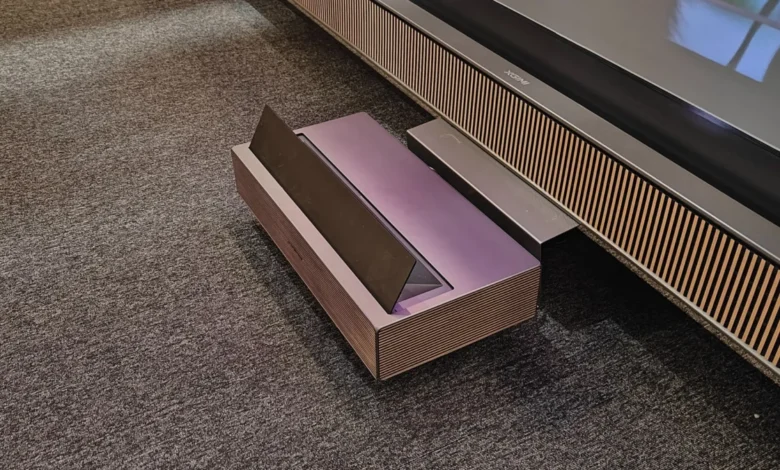
The promise of the ultra-short throw (UST) projector has long been the "holy grail" of home cinema: the ability to achieve a cinematic, 200-inch-plus display without the spatial constraints of traditional long-throw units or the mounting headaches associated with ceiling-mounted hardware. By placing the projector inches from the screen, users can eliminate the need for cabling across the ceiling or furniture in the center of the room. However, the transition from theory to practice has historically been hampered by complex calibration processes, underwhelming black levels, and the inherent physics-based limitations of light projection versus self-emissive display technology.
At the IFA consumer electronics trade show, the industry witnessed a significant shift in this narrative. The unveiling of next-generation hardware from Xgimi and AWOL suggests that the premium UST segment is finally addressing the long-standing complaints regarding image fidelity, setup complexity, and gaming performance.
The Historical Challenges of UST Projection
To understand the significance of these new releases, one must look at the technical hurdles that have defined the UST market over the last decade. Unlike OLED or Mini-LED televisions, which control light at the pixel level to achieve near-infinite contrast, projectors rely on reflecting light off a surface. This fundamental difference often leads to "washed-out" images in ambient light and, more importantly, a lack of true, ink-like blacks.
Historically, manufacturers have attempted to mitigate this by aggressively boosting contrast levels through digital processing. While this makes the image appear "punchy" at first glance, it frequently results in crushed shadow detail, where fine nuances in dark scenes are lost in a sea of gray or overly darkened artificial black. Furthermore, the physical installation of these units has remained a tedious endeavor. Aligning a projection to a fixed frame—often requiring minute adjustments to the unit’s physical position or complex digital keystone correction—has traditionally been a time-consuming process that can degrade the native 4K resolution if not handled with precise optics.
A New Era: The Xgimi and AWOL Breakthroughs
The demonstrations at IFA marked a departure from these persistent issues, focusing on high-refresh-rate capability and mechanical precision. Xgimi introduced the Aura 3 Max, positioning it as the world’s first 4K/120Hz UST projector. By pushing the refresh rate to 120Hz, the device aims to bridge the gap between casual movie watching and high-performance gaming, a sector that has previously struggled with input lag and motion blur on large-format projection screens.
Simultaneously, AWOL showcased the LuxVision, which claims a world-first status for a 4K/120Hz UST projector equipped with optical shift. This feature is of particular interest to home theater installers and enthusiasts. Unlike digital keystone correction—which digitally "stretches" an image to fit a screen, often sacrificing pixel density and sharpness—optical shift allows for the physical movement of the lens or light path. This ensures that the image hits the screen perfectly while maintaining the integrity of the native 4K signal.
Technical Specifications and Performance Data
The shift toward more robust hardware is evidenced by the raw specifications provided by the manufacturers:
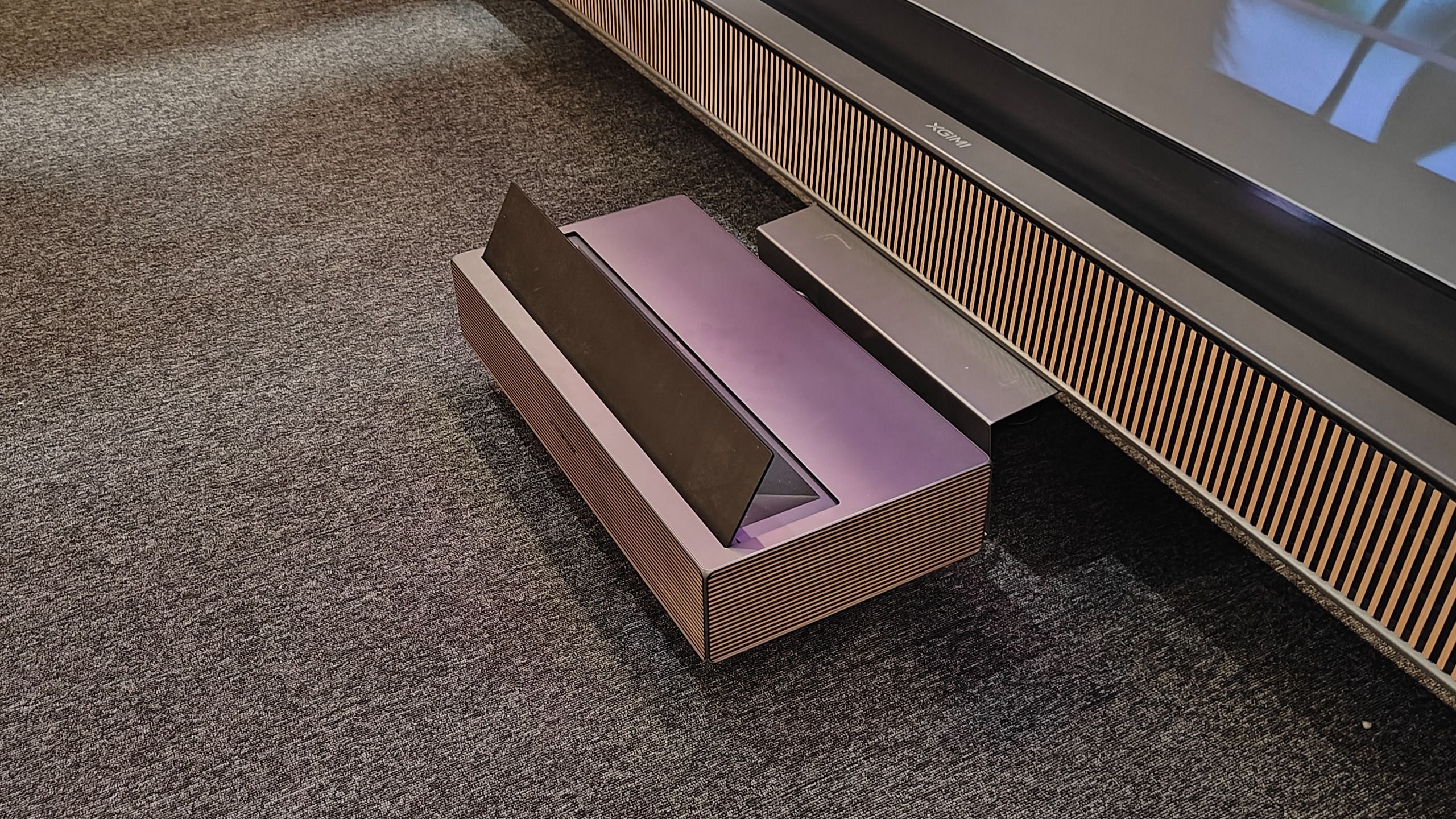
- Xgimi Aura 3 Max: 5,700 ISO lumens of peak brightness, 8,000:1 native contrast ratio, integrated 4K/120Hz support, and Google TV integration.
- AWOL LuxVision: 6,000 lumens of peak brightness, 4K/120Hz refresh rate, optical shift technology, and integrated Dolby Atmos support.
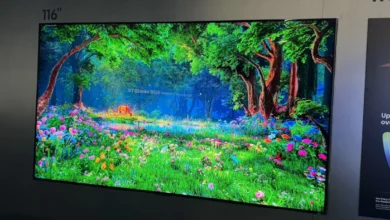
During the exhibition, the Aura 3 Max demonstrated its capability by rendering textures with remarkable precision. In high-definition footage of wildlife, the projector managed to display the fine detail of fur while maintaining a naturalistic color palette. Crucially, the dark areas of the footage showed a level of clarity and depth that indicates an improvement in how the projector manages shadow gradients, though independent lab testing will be required to confirm how it handles high-dynamic-range (HDR) metadata in a controlled, light-controlled environment.
The AWOL LuxVision focused on sheer luminance. In a high-ambient-light setting—a notoriously difficult environment for any projector—the unit produced an image that remained vibrant and legible. The display of music video content showcased the projector’s ability to manage high-contrast, fast-moving imagery without significant artifacting, suggesting that the processing engines in these new units have reached a level of maturity that matches modern display standards.
The Role of Software and Ecosystems
Beyond the optics, the integration of Google TV as a standard operating system across both models highlights a move toward simplicity. The "all-in-one" experience now extends beyond the projection itself to the user interface. By incorporating native streaming apps and robust sound systems supporting Dolby Atmos, these projectors are increasingly being marketed as total replacements for the traditional living room television, rather than just supplemental secondary displays.
This ecosystem approach is critical for the growth of the category. A consumer who is hesitant to purchase a massive, permanent 98-inch TV that dominates a room now has a viable alternative that can be tucked away on a media console. The inclusion of high-end audio hardware further reduces the need for external cabling, reinforcing the aesthetic appeal of the "minimalist" home theater setup.
Broader Industry Implications
The trajectory of these two devices suggests a maturing market. For years, the UST category was defined by "good enough" performance for casual users. The introduction of 120Hz panels and optical shift mechanisms signals that manufacturers are now targeting the enthusiast market—users who demand the gaming performance of a high-end monitor and the calibration precision of a professional projector.
The implications for the broader television market are substantial. As UST projectors become brighter and more color-accurate, the cost-per-inch of screen real estate for high-quality home cinema is dropping significantly. While OLED technology continues to dominate in terms of absolute black levels, the convenience and scale offered by these new UST models present a compelling value proposition that traditional flat-panel manufacturers cannot ignore.
Chronology of Recent Developments
- Early 2024: The market saw a steady increase in 4K UST projector adoption, though many models struggled with high-input-lag gaming and complex setup requirements.
- Mid-2024 (IFA Period): The industry focus shifted toward "feature parity," with brands like Xgimi and AWOL announcing technical milestones in refresh rates and image geometry.
- Late 2024/Early 2025 (Projected): Retail availability of these high-spec models is expected to force a price correction or a feature upgrade cycle among competitors who have yet to implement optical shift or 120Hz support.
Looking Ahead
While the initial demonstrations at IFA provided a compelling look at the potential of these devices, the true test will occur in the coming months within professional testing facilities. The primary question remains: how will these units handle the transition from a bright, noisy exhibition hall to a dedicated, light-controlled home cinema room? Can the increased brightness of the AWOL model be reined in to provide the necessary black levels for a cinematic experience, or will it remain a daytime-only solution? Can the Xgimi Aura 3 Max’s promise of detail hold up when fed complex 4K Blu-ray content with heavy HDR grading?
The technical leap demonstrated by both manufacturers is undeniable. By addressing the fundamental issues of image alignment and motion fluidity, the industry is moving closer to the ideal of the "set it and forget it" projector. If these units perform as expected in laboratory conditions, they may well mark the turning point where the UST projector ceases to be a niche curiosity and becomes a standard centerpiece for the modern, design-conscious home. The coming year will be pivotal in determining whether this technology can finally unseat the traditional television as the primary display device for the high-end consumer. As the competition heats up, the ultimate beneficiary is the consumer, who now has more options than ever to achieve a theater-grade experience in their own living space.